Introduction
In today’s fast-moving technological landscape, digital transformation reshapes traditional industries. The construction sector presents a compelling case to observe how the interplay of technology, interdisciplinary knowledge, human labor, and skills impacts the digitalization of the construction process. Industry reports estimate that 30% of construction cost is attributed to outdated data, human errors, and workflow fragmentation (Cumulus Quality 2025), indicating how inefficiencies in information management and tool integration could lead to project financial loss. Despite digital methods and technologies designed to improve efficiency for construction projects, their integration into everyday practice remains partial and uneven. As Koch, Paavola, and Buhl (2019, 309) have noted, “BIM and Lean methods have the potential to change processes, ways of working…but the challenge was, and still is, to implement them in practice.”
Building Information Modeling (BIM) is a pivotal technology to integrate a 3D building model with extensive information about all parts of a construction project from design, build, to operate (Bazjanac 2006, 199). Decades ago, the emergence of Computer-Aided Design (CAD) software digitalized design and engineering drawings into parametric, 2D, and 3D formats. Autodesk was started in the 1980s and has since been one of the key software vendors in the Architecture, Engineering, and Construction (AEC) industry to provide CAD software. Later in the 2000s, BIM emerged and evolved to connect design with project data, including scheduling, cost, energy calculations, and other relevant project data. However, BIM’s promise to increase efficiency and improve collaboration can only be achieved when all actors actively participate, transfer knowledge, update information, and utilize BIM in their practices. Otherwise, as Dainty et al. (2017, 704) conclude, “BIM has the potential to divide as much as it integrates.” It also indicates that there is a crucial need to better understand how it’s applied in different social, cultural, and organizational contexts, which process makers and software vendors oftentimes overlook.
How BIM is used by office-based professionals like architects, engineers, and BIM Managers has been extensively researched in academia and industry, as well as by Autodesk, but not yet with field-level observations about how BIM gets adapted and embedded in the daily practices of the construction site managers and field workers. The Autodesk Visualization team focuses on BIM Viewer (Viewer), a cloud-based tool that enables the transfer, aggregation, and update of 2D and 3D design data between the office and the field. Using ethnographic methods, we investigate how the Viewer is used and perceived in the field, and how it assists or hinders real-world workflows. These insights help bridge the gap between BIM’s promise and workplace realities, improving the product experience for underserved roles, enhancing efficiency and knowledge sharing, and ultimately increasing customer satisfaction and product usage in the segment where we see the lowest and slowest adoption.
Besides the field-level observations through site visits, this case study also encompasses two design thinking workshops with BIM technologists and ecosystem developers who are driving the innovations of BIM tools by building automations and plugins to augment and customize the BIM experience for their project teams or clients. The “multidisciplinarity” (Koch, Paavola, and Buhl 2019, 312) through group-based discussion from those innovators helps inform longer-term product strategies to leverage and empower the partners and developers to contribute to the tool ecosystem, which posits a necessary shift in business and system openness that is still in debate across divisions inside Autodesk. Nevertheless, combining field observations with workshop findings, we argue that the shift to an open, inclusive, and collaborative system is inevitable and necessary for driving sustained innovation and business growth.
Using the Ethnographic Lens to Examine BIM
Qualitative and ethnographic approaches offer powerful methodologies to “navigate multifaceted dimensions” and reveal complex relationships between people, technology, and their environments (Lim 2025). It proves particularly valuable to examine BIM adoption, where formal processes and standards often diverge from actual practice.
Many studies at the intersection of construction management and social sciences have enriched the normative approaches to BIM process in the construction sector by focusing on “complex and iterative conditions of implementation” (Koch, Paavola, and Buhl 2019, 312). Andersson and Eidenskog (2023) analyze BIM through a knowledge infrastructure framework to understand its impact on socio-technical knowledge practices and the reasons behind its slow adoption. They find that it often privileges standardized workflows over discipline-specific flexibility and can reinforce power imbalances by marginalizing certain roles. Mäki and Kerosuo (2015, 166) reveal a persistent gap between BIM’s formal protocols and the informal, improvisational realities of on-site work, where “muddling through,” tacit knowledge, and face-to-face communication remain essential. These findings emphasize the context-dependent nature of socio-technical systems. This body of work establishes the need for ethnographic approaches that can “break with taken-for-granted assumptions” about technology adoption (Volker 2019). Building on the existing research, our study employs site visits to five US-based construction jobsites and two design workshops to examine how BIM is experienced, enacted, and adapted into practice.
Site Visits
Short-term site visits are an effective method for investigating real-world problems and digital tool usage on the jobsite, provided there is good coordination and communication between the researcher and participants. Unlike traditional long-term ethnography, which involves extended periods of immersive participant observation, or researcher as “apprentice to learn field competence,” newer ethnographic approaches are designed for limited project timelines and budgets (Pink et al. 2010, 648). The Construction UX research team at Autodesk has established effective practices for conducting half-day or one-day site visits through a “top-down” setup by customer success managers or customer representatives. These visits involve connecting the product team with the construction project team for targeted and product-specific investigations that quickly surface contextual insights.
During these site visits, the researcher acts as a facilitator, employing ethnographic methods while collaborating with a subject matter expert who possesses a construction background and product knowledge. Sometimes an experienced researcher can act in both roles. This allows building trust and finding relevance quickly with the project contacts, typically a site manager with roles such as Project Engineer, Project Manager, and Site BIM Manager. They care for the field team productivity, project delivery schedules, and on-site safety while ensuring their time spent with visitors like us proves value for both their teams and Autodesk.
Our team decided it would be important to partner with site managers because they play crucial roles in organizing the visit agendas, shadowing activities, and interviews with on-site personnel who interact with the tools differently. They ensured that the presence of researchers and visitors was transparent and approved by the field team. Despite clarifying observational intent rather than training or promotion, site managers often seek learning opportunities, viewing researchers simultaneously as building novices and Autodesk product experts. Pre-visit interviews were sometimes conducted to align the purpose and product focus. Quick interviews before site observations and lunch-and-learn sessions were other effective practices to raise participant questions and align expectations, ensuring more field time observing things that don’t get verbalized in online interviews or manifested in the digital interface.
Building rapport with site managers significantly influenced the outcomes of the short visits. They are typically early adopters of new technologies and BIM experts, actively using digital tools for quality assurance, progress tracking, and preparing drawings or models for field use. They served as key communicators between the office and the field, addressing problems promptly. During one site visit, a site manager provided Spanish-English translation and asked the field crew follow-up questions, like a second researcher. At the same time, a foreman demonstrated adding references to drawings on an iPad, helping us understand the underlying dynamics of knowledge sharing in the field.
Site visits provided researchers and site visit team members with immersive learning about underlying needs and factors at play. Following each site visit, we did quick debrief sessions among the Autodesk site visit team, followed by close analysis of the field notes, photos, and video clips captured by facilitators and observers. We then conducted an insights activation workshop to brainstorm design principles for the field condition, and new concepts and interactions that accommodate the field’s needs and improve how they perceive our products. This process yielded both short-term product improvements addressing immediate needs, as well as long-term strategies creating field-centric and role-based design principles.
Design Thinking Workshops
To validate and deepen the understanding of BIM maturity and future needs of model-based workflows grounded in organizational realities, we also conducted design thinking workshops with innovator roles from the AEC industry. The first workshop occurred at Autodesk’s annual customer conference with end users who engage with model-based workflows, including visualization specialists, designers, engineers, traditional BIM enforcers, software buyers, and administrators. The second workshop included BIM technologists and third-party developers who identify project-based challenges and automation needs, build tools, automations, and plugins to improve efficiency. These participants are not the primary end users of BIM tools, but function as ecosystem “intermediary users” who, in Chesluk and Youngblood’s (2023, 531) terms, work through the friction of existing BIM systems to produce local ease.
By sharing implementation challenges faced by their stakeholders, including project teams, clients, owners, and local government, the workshop participants were able to provide diverse disciplinary perspectives and create a holistic understanding of the need for flexible tool ecosystems, grounded in organizational realities. BIM technologists’ experience and knowledge from working with construction teams of various BIM maturity levels and project phases indicate the importance of adapting and customizing BIM technologies to meet the unique needs of different construction projects. As such, the workshop outcomes provide novel insights into how resistance from construction project teams may be mitigated and how the Viewer could evolve to become the mediator of ecosystem intelligence.
Current Challenges of BIM Viewer’s Adoption in the Field
Despite the development and implementation of BIM in the construction industry since 2010, BIM software’s prevalence remains primarily among office professionals, as its process has given them a more central role than other downstream users on a construction project, such as fabricators, subcontractors, facilities managers and other roles involved in construction and building maintenance. Architects and Engineering professionals who are trained and have practiced designing and working with virtual 3D space experienced a more natural shift to use the BIM tools and play a key role in establishing the process. When standardized BIM processes, optimized for controlled office settings, encounter the dynamic, high-risk, and improvisational reality of the jobsite, they often disrupt embedded knowledge-sharing rituals and collective intelligence practices essential for construction work in the field. Jobsite field crews perceive BIM tools as prioritizing office efficiency over field efficacy, fueling distrust with defensive attitudes and “misperceptions” (Andersson and Eidenskog 2023).
During the five site visits, we focused on the moments when site managers from General Contractors coordinated with jobsite field crews and trades during different activities and examined when the Viewer may facilitate and hinder their collaboration and efficiency in the field. Our field observations and interviews revealed that the adoption challenges stem from socio-technical misalignment across three key dimensions: environmental and usability barriers, the persistence of 2D, and knowledge fragmentation. In the analysis of the field activities between site managers and jobsite field crews, we’ve identified different expertise and intelligence in social, embodied, and situational forms. We argue that the neglect or marginalization of the various kinds of intelligences contributes to the misalignment, distrust, and under-utilization of the Viewer in the field.
Challenge 1: Environmental and Usability Constraints
We could feel a sense of tension and urgency when we put on hard hats and set foot on the jobsite. Noise from welding, dust from formwork, piles of materials, heavy equipment swinging overhead: all signaled a fast-moving and high-risk environment. Jobsite field crews, including foremen, specialists and laborers, spend more time in building with their expertise and crafts, following the schedule and plans set by site managers (Table 1). When they have to spend time on digital screens, the tool must be easy and fast to use. In most projects we visited, the foremen were provided with an iPad to access the 2D drawings and 3D models for checking dimensions, specifications, and other references, as well as raising and adding “issues” to the file when there’s an error or potential clash onsite. However, due to the poor internet coverage and the older mobile devices provided to jobsite field crews, 3D models sometimes failed to load, or syncs failed to be updated and cached before getting in the field. When such situations occurred, foremen often bypassed the Viewer altogether, making a phone call to the site manager directly, as it would take less time than waiting or a trip back to the trailer.
Due to such environmental constraints and tool inefficiencies, jobsite field crews revert to direct human communication, and some of the field updates, such as “missing equipment” or “wrong dimensions”, may not make their way back to the system in a timely manner, if at all. To ensure a shared understanding of the latest plans and communicate field updates back to the trailer/office, site managers and jobsite field crews engage with knowledge-sharing rituals, like daily standups or toolbox talks. Besides exchanging information, these rituals also help to enact trust, clarify accountability, and make critical field knowledge visible by practicing informal and social intelligence. As one safety manager explained, these meetings served as both information circulation and accountability mechanisms.
We also have a great communication tool, which is the foremen’s meetings twice a week on Tuesdays and Thursdays. We have a foremen’s meeting where we get all the foremen involved from this scope of work, and we get them to talk about what hazards they have on, what the critical works coming up in the schedule are. It’s construction, so there’s a lot of one-offs, pushing the schedule back or pushing it forward. Obviously, we want to push it forward where it’s possible, but we want to make sure everybody’s in line with the signoff and simultaneous communication because there’s a lot of different parts moving… Just getting together and communicating. Their voice is important. They might have missed it in an email but when they stand around in a circle talking about it, it’s a little bit more visible.
As Andersson & Eidenskog note (2023, 927), “knowledge becomes actionable when made visible, audible, and tangible within shared contexts”. When the Viewer and digital tools fail to make valuable field knowledge accessible and visible, the in-person rituals create a space for clarifying unknowns and reinforcing responsibilities and quality expectations. Our observations suggest two design implications that strengthen socio-technical alignment by respecting environmental realities and elevating the informal intelligences that shape decision-making in the field.
Firstly, environmental constraints such as no or low-internet coverage reveal an underlying need that field users want assurance that they are working with the most up-to-date information. Clear and persistent indicators of when models or drawings are last synced, paired with an estimated time for the next sync, may help foremen plan when and where to refresh data and avoid acting on outdated plans. Explicitly showing data completeness builds transparency and trust, while automatic syncing or prompts to upload pending updates once online ensure that critical field knowledge, such as onsite issues and progress updates, re-enters the shared system without delay.
Secondly, while in-person rituals like daily standups and toolbox talks build morale, accountability, and situational awareness, digital tools can “join the conversation” by making field knowledge visible and actionable in those moments. When visiting a hospital project that underwent hot work, a category of tasks involving flames, sparks, or heat that can potentially start fires or explosions, the safety team and electrician foreman emphasized their safety-first mindset and their use of a project portal app. The app is a Smartsheet-based website aggregating safety docs, photos, and forms into a mobile-friendly “one-stop shop.” Its broad adoption among the field team comes from its technical simplicity aligned with social practices, and from integrating field-generated knowledge into the same environment as reference materials. “I add hyperlinks as buttons if I need to create a new section…No programming needed,” explained one safety manager.
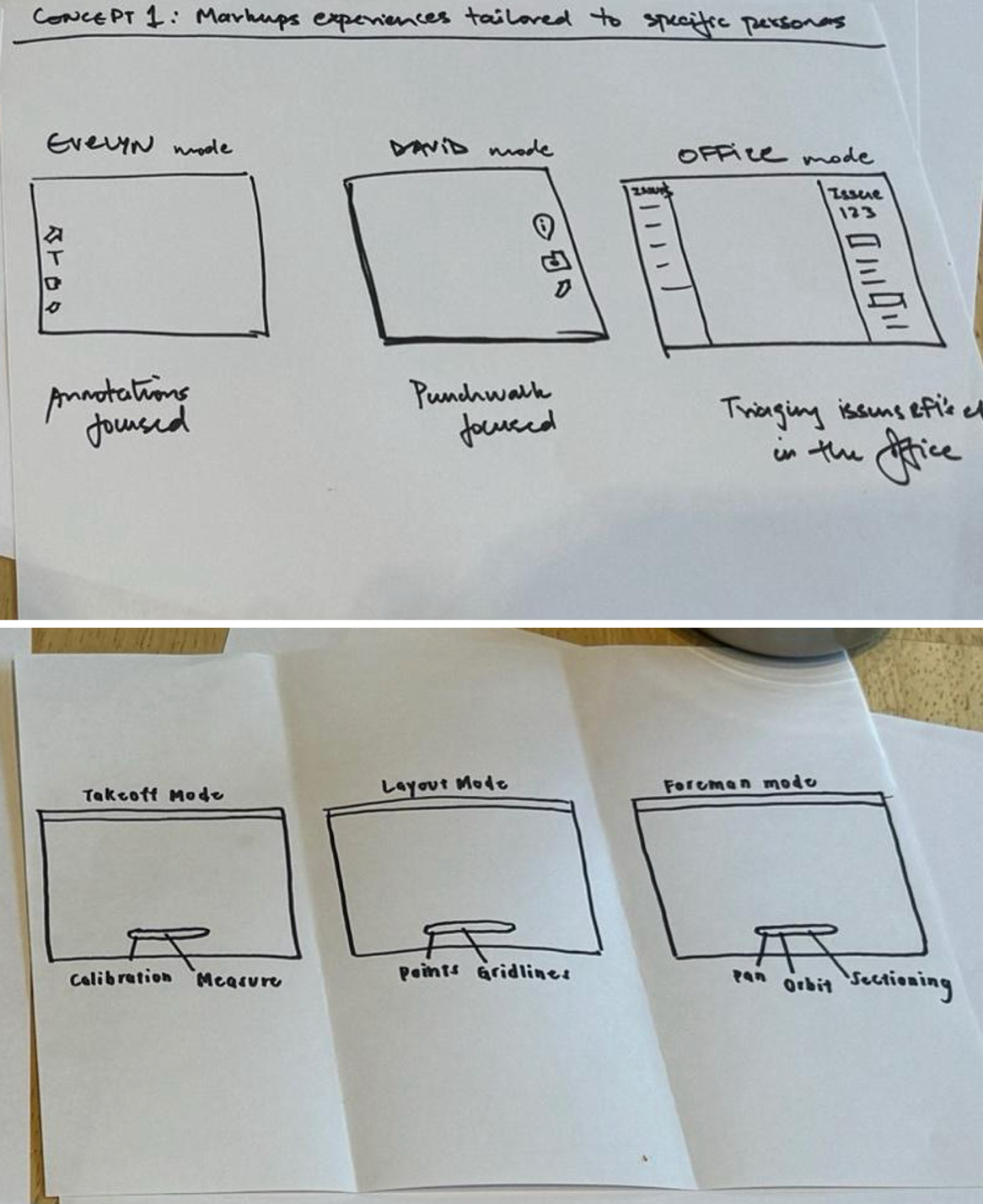
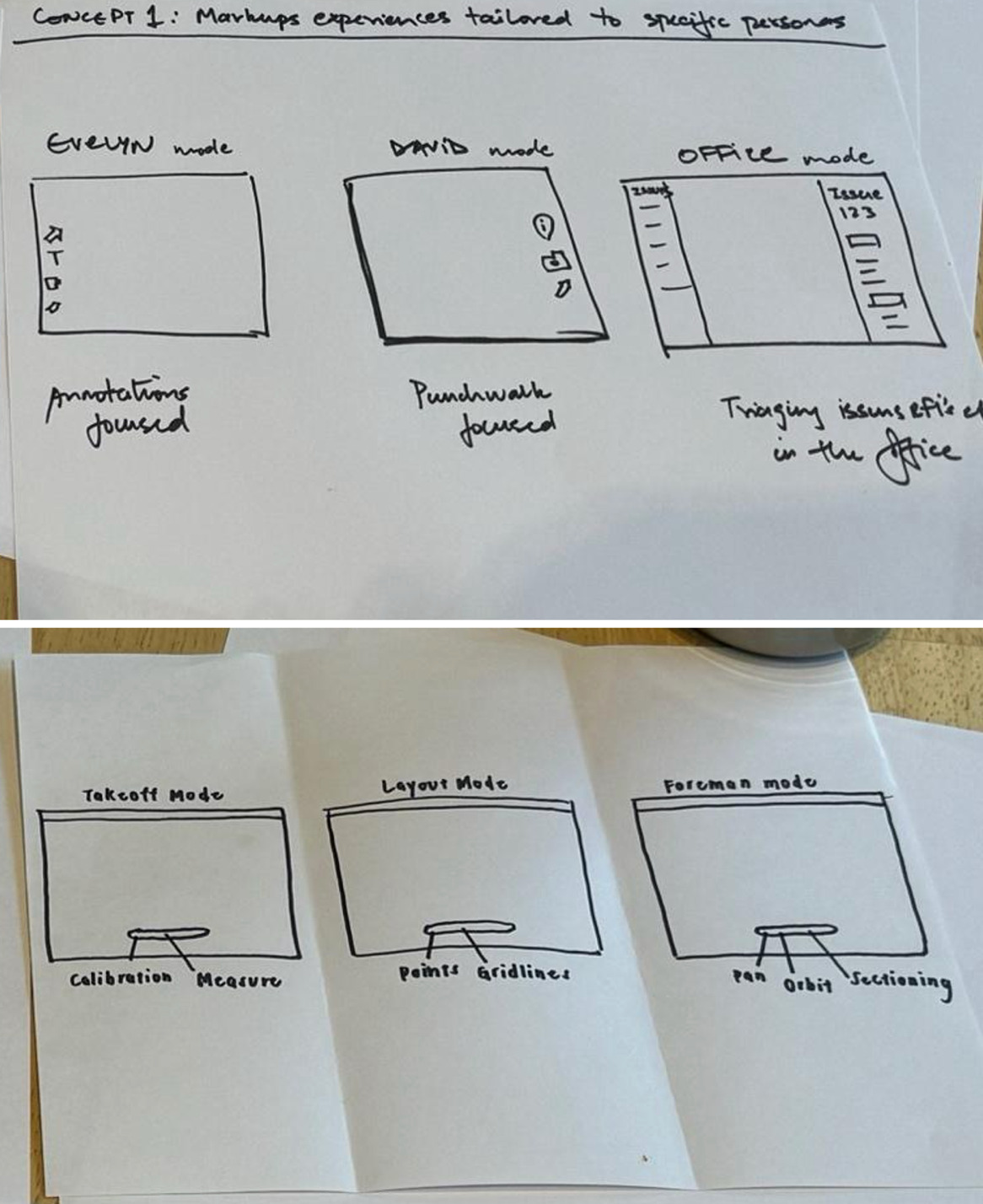
Our analysis points to a system that is simple and fast in the field, yet adaptive to roles, contexts, and tasks. As seen in the project portal example, simplicity and alignment with existing practices drive adoption. For the Viewer, this could take the form of dedicated modes based on the tasks, such as Punchwalk Mode, Annotation Mode, etc. (Fig. 1), which surface only the most relevant tools and curated model views for the task at hand. In office settings, the same system could expand to expose a fuller feature set. By adjusting to context in this way, the Viewer can remain lightweight and efficient on site while still supporting deeper functionality when appropriate, amplifying rather than obscuring the informal and situational intelligences that keep projects moving.
Challenge 2: Persistence of 2D as a Cultural Barrier
BIM adoption is as much a cultural phenomenon as it is a technical shift, shaped heavily by policy. In regions like Scandinavia, the UK, the Netherlands, and Singapore, public-sector projects must be delivered in BIM, making the model the contractual source of truth and accelerating BIM adoption. In the U.S., however, there is no federal mandate, and requirements vary by agency and state (Paul 2018). Without a unified policy positioning BIM as a contractual deliverable, most jobsite field crews default to 2D-based workflows. Foremen and specialty contractors, trained in reading shop drawings and specifications, continue to rely on 2D in printed form or on mobile devices. As one site manager shared, “2D is still king in the field,” adding that software companies like Autodesk should help lobby the government to require BIM mandates to leverage external forces to drive adoption.
When mandates are not in place, the use of the 3D model is more driven by client or owner requirements and project types. For example, when a project comes with complex geometries, like a parking lot ramp or a butterfly-shaped rooftop, and 2D drawings alone are not enough to convey the design intent, site managers would curate model views to help orient the field crews and show the sequence of work. This curation step lowers the barrier for foremen who are less familiar with 3D navigation to access information from the digital model. After the initial work package is curated, site managers want to enable field crews to create and update the model views, as the task laid out in the curation is to be enacted by the field team. It would also take less time for field crews to update the field insights back to the system.
However, some field crew members still distrust the model or do not recognize that 2D drawings and 3D models represent the same design. The persistence of 2D reflects deeply ingrained forms of field intelligence. Foremen’s fluency in reading drawings is a form of visual-spatial and mathematical intelligence honed over years of embodied practice. Although tools like the Viewer provide both 2D and 3D views, the connection between them is often not obvious, making it harder for field crews to validate and navigate between 2D/3D representations. As Hutchins (1995, 354) notes, “culture is a cognitive process and cognition is a cultural process,” the acceptance and adoption of BIM models and the Viewer is inherently cultural, rooted in the ways knowledge is produced, shared, and validated on site. In this view, 2D and 3D are not just different file formats. Instead, they are different cultural artifacts that embody distinct, but interrelated intelligences.
Hence, the systems need to seek ways to use 2D as a gateway to introduce and aid with 3D experience to enable adaptive learning. Strengthening the link between 2D and 3D, where possible and appropriate, could preserve trusted knowledge practices while expanding BIM literacy. Our analysis highlights potential ways to make the links more visible through:
-
Overlays that place a 3D model directly on top of its corresponding 2D sheet, so elements align visually and affirm their equivalence.
-
Cross-highlighting so selecting an object in one view automatically highlights it in the other, making the shared knowledge explicit.
-
Direct navigation from a drawing detail or callout to the exact location and viewpoint in the 3D model, removing the friction of manual searching.
Through explicit connections, the Viewer would not simply introduce new technical functionality but also help bridge two knowledge systems. This approach affirms the cognitive processes by which crews make sense of their work, ensuring that 3D acts as an augmentation of existing knowledge rather than a displacement of it.
Challenge 3: Knowledge and Tool Fragmentation
Construction projects bring together multiple disciplines, trades, and organizations, each contributing through tools that reflect their expertise and workflows. A mechanical engineer consultant may use clash-detection BIM tools (e.g., Navisworks, Solibri) to coordinate their models with the architectural model to avoid potential clashes. A field engineer leverages photogrammetry tools (e.g., OpenSpace, Pix4D) to track project progress and update as-built conditions to the digital models. A layout technician uses hardware and software (e.g., Trimble or Leica total stations) to translate model coordinates into precise site markers. These tools mediate how knowledge is captured, structured, and transferred. When connected to a BIM system, the multi-disciplinary knowledge can contribute to the collective intelligence of model coordination and updates.
For disciplines to collaborate effectively on the digital model, tools must evolve beyond passive data repositories into dynamic enablers of contextual workflows. The vision for data exchange and bidirectional interoperability is formalized in international standards such as ISO 19650, which requires structured information management across the project lifecycle through a Common Data Environment (CDE). Interoperability, according to ISO 19650, is to ensure information is consistently and reliably exchanged, shared, and reused across different systems, organizations, and project stages (ISO 19650-1:2018). However, while many tools offer import/export capabilities using standardized file formats, such as IFC, BCF (buildingSMART International, “BIM Collaboration Format”), true interoperability remains limited in practice.
One example is when the layout technician tried to translate digital coordinates into the field by adding physical markers (stakes, paint, or stickers) as reference points for field installation. They first extracted scan data from Trimble (Tool A), only to find that the coordinates and gridlines did not align correctly when viewed in the Viewer (Tool B). This misalignment required a project engineer to manually recreate the grids in Revit (Tool C), introducing rework and delays. These kinds of tools and data fragmentation not only introduced inefficiencies but also eroded the professional and domain agency of specialty contractors whose intelligence is sidelined by BIM systems that failed to accommodate it.
Tool choice also reflects pragmatic constraints of what is already available and what field crews have been trained on. Consider the earlier example when a safety manager continued using Smartsheet to collect safety forms, despite already having access to Autodesk Docs with the equivalent feature set. “Smartsheet already works for us,” they explained, “we don’t want to bother to migrate everything and onboard the crew to a new tool.” This decision had less to do with the technical capabilities of each tool; it’s more about minimizing disruption to established routines. Then a larger question for us is: When BIM systems assume a centralized model of data authority, yet users remain accustomed to existing information management systems, how might we provide connections to other systems and CDEs?
Ethnographic immersion at the point where digital models meet physical construction has revealed BIM adoption challenges as symptoms of deeper socio-technical misalignment. Distrust and resistance arise not simply from technical friction, but from how the Viewer fails to account for the environmental constraints, embodied rituals, and specialist intelligences that shape how construction work gets done. As Pink and coauthors (2010, 650) argue, the value of ethnography lies in surfacing the “invisible,” the “unsaid,” and even the “unsayable”, those tacit practices and contextual adaptations that formal systems oftentimes overlook. The socio-technical gaps exposed here call for a fundamental rethinking of how digital systems support construction collaboration, not through tighter control, but through adaptive alignment.
Opportunity: Toward Adaptive, Open and Collaborative Ecosystems
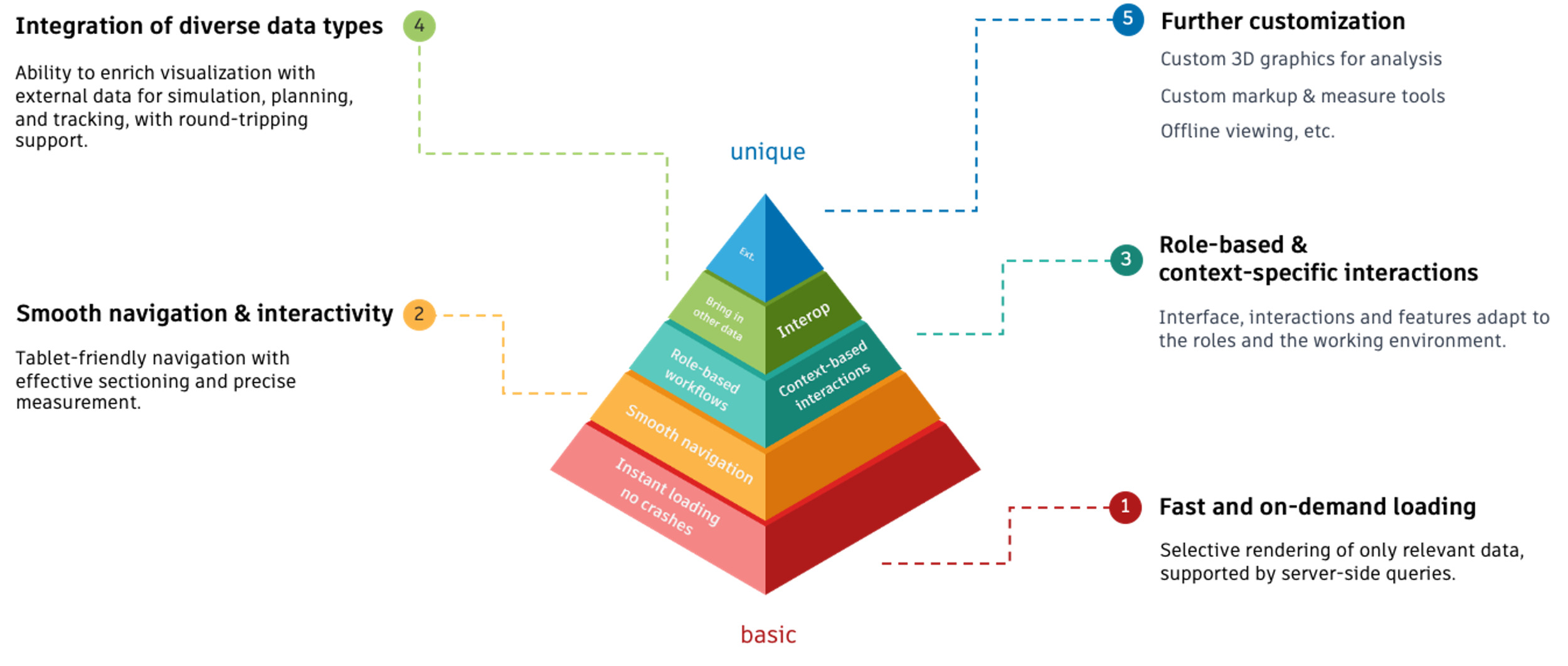
As discussed above, barriers to adoption are rarely about tools in isolation. They stem from deeper misalignments between standardized digital tools and the social and environmental realities of construction work. At a basic level, field crews need tools that load quickly, navigate smoothly, and operate reliably under site conditions. Yet once these foundational needs are met, broader opportunities emerge.
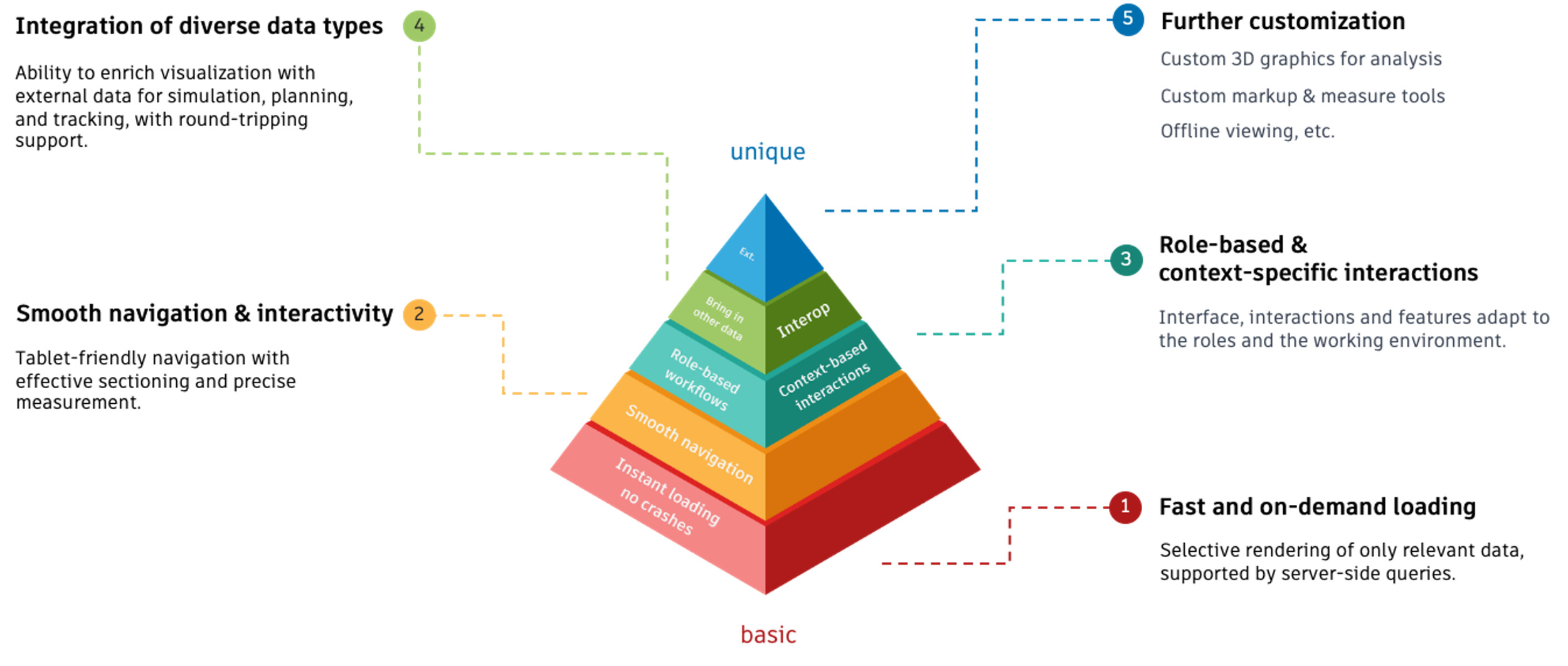
The Viewer should then provide multiple role-specific entry points and surface the proper representation for the right actor, without overwhelming users with full-model complexity. For a field engineer, this may mean lightweight, mobile-first interfaces that highlight their immediate tasks. For a BIM manager, it may mean configurable dashboards that aggregate models into a federated digital twin, enabling slice-and-dice analysis for phasing, sequencing, or asset handover. We proceed to outline three key principles designed to meet the evolving customer needs for the Viewer, extending beyond fundamental performance and navigation considerations (refer to layers 3-5 in Figure 1).
- Role-Based Adaptivity
Enable user-configurable interfaces that prioritize context-specific needs. Field crews could access stripped-down, task-focused workflows (e.g., quick markups, measurement tools), while office teams retain advanced functionality, all within the same ecosystem.
- Open Interoperability
Embrace tool-agnostic data flows. Subcontractors using preferred software (e.g., Smartsheet for safety portals, Excel for cost tracking) seamlessly integrate with BIM environments without disruptive onboarding.
- Distributed Expertise
Reject centralized “BIM authority” models. Empower field crews to lead within their “zone of genius”. Collaborative intelligence emerges when specialized tools preserve domain agency while feeding metadata back to shared models through customization and integration.
To achieve open and collaborative ecosystems, a particular segment of users, BIM technologists (system integrators, in-house software developers, and independent software vendors), play an important role. Unlike typical primary users of the Viewer, BIM technologists treat the Viewer as a component within larger workflows and engage with the Viewer to improve it for a better experience of the primary user. Through scripting, automation, and plug-in development, they extend the Viewer into digital twin platforms or project-specific delivery systems. Their work demonstrates that project-wide intelligence does not reside in any single tool, but in the connective infrastructure that allows tools, data, and practices to interoperate. Considering such “intermediary users’” experience and perception highlights the need to design not only for usability at the interface level, but also for openness at the architectural level, through robust APIs, flexible data models, and configuration options that allow innovation at the edges of the ecosystem.
For BIM technologists, the challenge is not whether a model can be viewed, but whether it can be enriched, overlaid, and recontextualized (Table 2). They need to federate project schedules with procurement data, overlay safety information on phasing models, or connect IoT (Internet of Things) sensor feeds to operational handover processes. In this sense, the Viewer becomes a data federation layer and a means of stitching together different data sources without redundant manual translation and interpretation. Just as jobsite field crews and specialists need adaptive and role-specific entry points, BIM technologists need APIs and modularity that let them customize workflows. Their contributions ensure that the Viewer evolves beyond vendor-defined boundaries and becomes part of a broader and networked environment of knowledge exchange. As Doe et al. (2024, 356) argue, open ecosystems thrive when tools can act as mediators across distributed data infrastructures, unlocking value through interoperability rather than control.
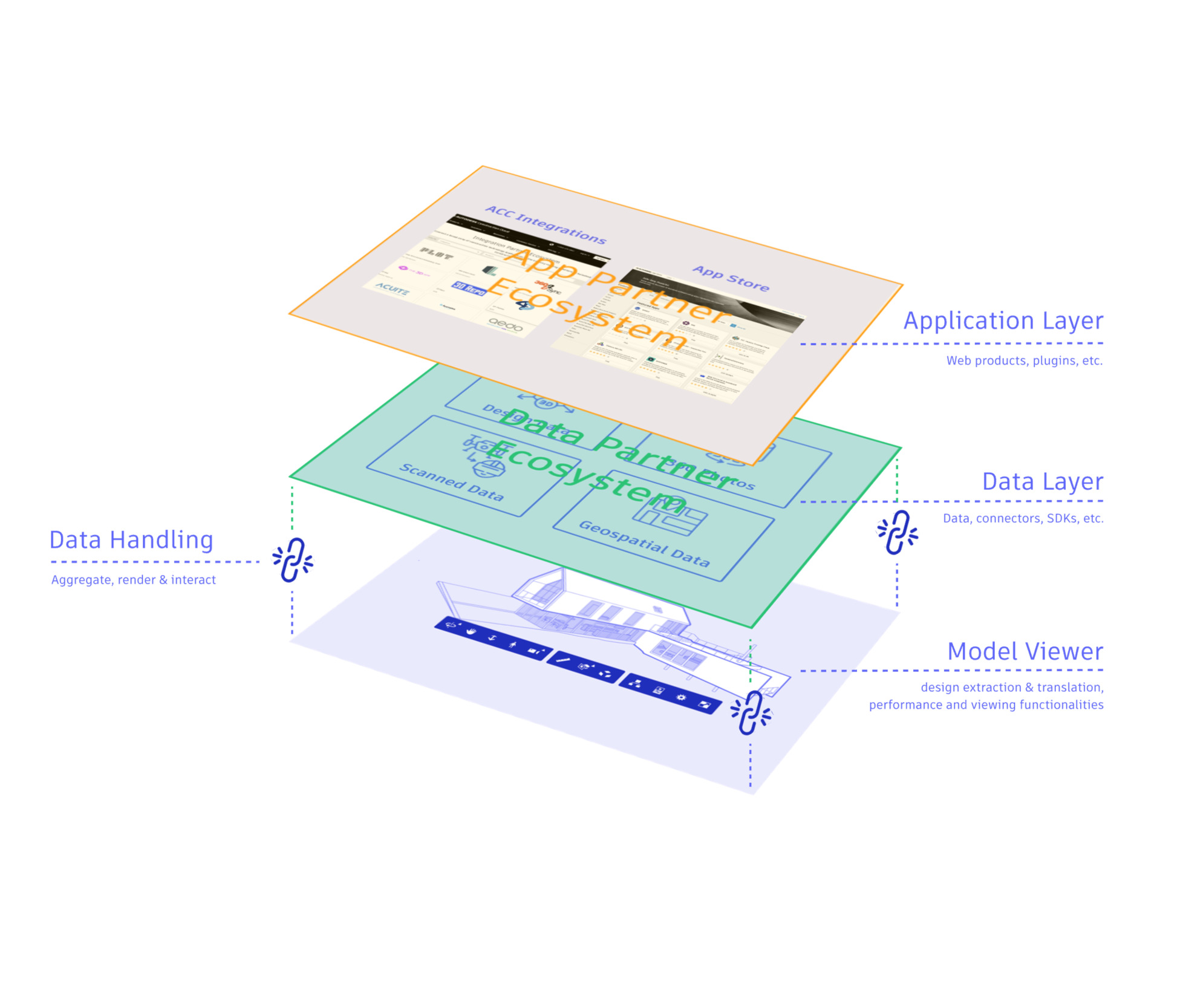
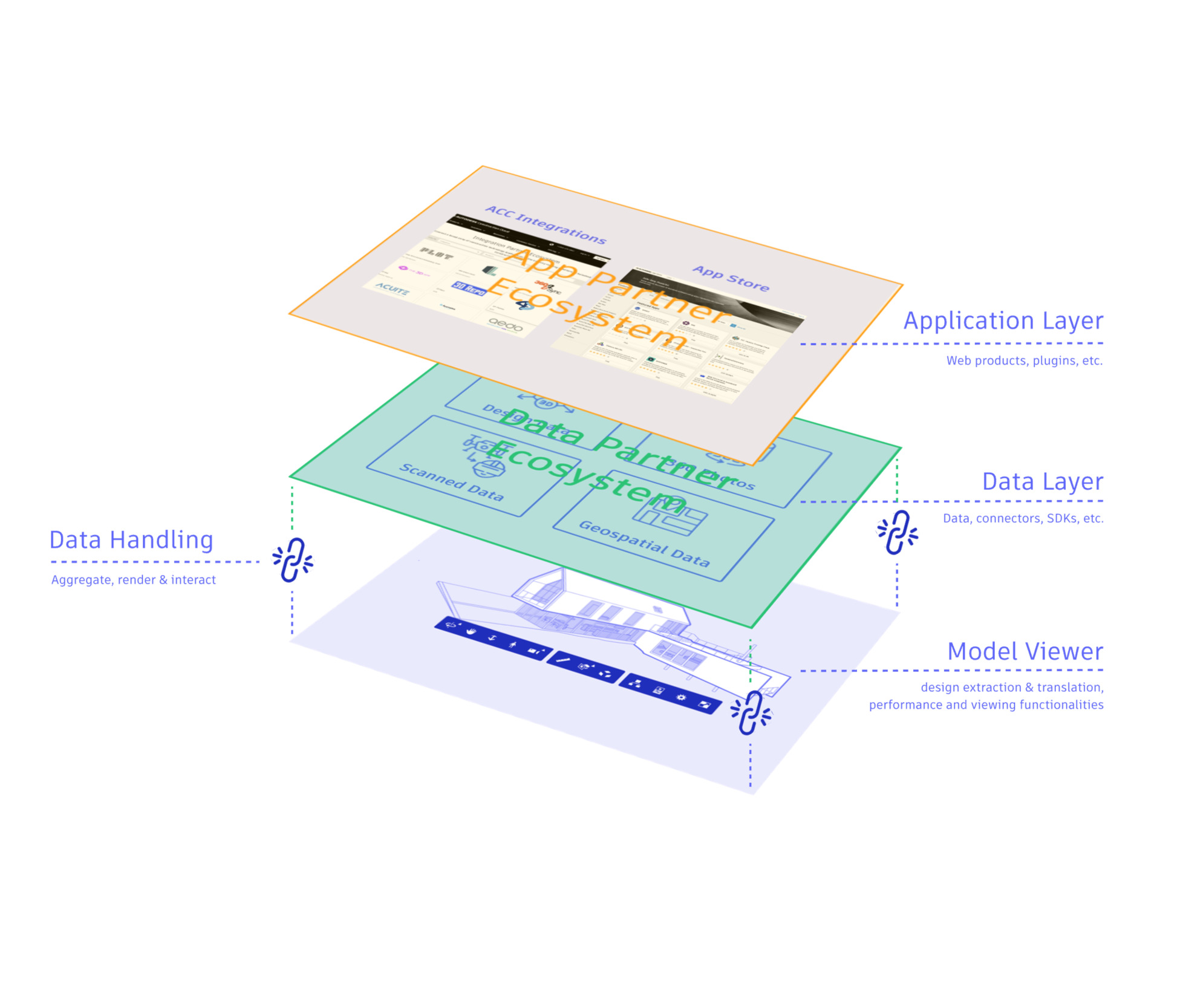
Within this architecture (Fig. 3), the Viewer shifts its role from a rendering interface to a mediator of ecosystem intelligence:
-
A gateway for accessing, manipulating, and extracting project data, regardless of its source.
-
A data layer that surfaces the right abstractions for field engineers, BIM managers, or fabricators, without flattening the diversity of perspectives.
-
A Visualization platform on which intermediary users can build applications, plugins, automations, and custom workflows that extend value into specific project contexts.
This also raises critical questions for future research: How should APIs and data models balance openness with governance? How can knowledge graphs be designed to respect both global standards and local practices? Moreover, how might the Viewer evolve from a product into an ecosystem node — a place where cognition is federated across people, artifacts, and intelligent systems?
Conclusion
This case study demonstrates how ethnography and a socio-technical lens can add depth to the understanding of tool adoption challenges in complex settings. By situating BIM Viewer’s usage within the lived realities of construction projects, the research shows that what often appears as resistance is better understood as misalignment between standardized digital tools and the diverse and situated intelligences that shape the project delivery.
For researchers and designers, three implications stand out. Firstly, applying a socio-technical lens makes it possible to surface what is often “unsaid” or “unsayable,” such as rituals, tacit practices, and local adaptations that formal processes overlook (Pink et al. 2010, 650). Secondly, designing for complex systems requires enabling adaptive and role-specific entry points that support informal intelligences that are critical to safety management and frontline coordination. Lastly, systems should support ecosystems of tools rather than enforcing a single centralized workflow, bringing together multiple streams of intelligences from environments, machines, people, artifacts, and cultures.
The broader relevance extends beyond construction to other industries where multiple roles engage with the same system and information flows break down across boundaries. In many industries, from healthcare to logistics to manufacturing, tools are often designed for administrators or compliance, leaving frontline users to develop ad-hoc strategies to keep daily operations on track. In healthcare, clinicians may rely on informal notes or verbal handoffs alongside electronic health records. In manufacturing, operators often maintain parallel spreadsheets or handwritten logs for quality checks when enterprise platforms are in place. Socio-technical analysis can reveal how these adaptations preserve accountability, efficiency, or safety, and how digital systems could amplify rather than overlook them.
Looking ahead, further research could examine how adaptive ecosystems protect the integrity of local practices while enabling global interoperability. This includes exploring how agentic workflows, supported by open data models and AI, might help organizations surface, circulate, and act on distributed forms of intelligence without erasing the contexts that produce them.
About the Author
Huan Deng is a Senior UX Researcher at Autodesk, where she has spent the past 5 years conducting mixed-methods research to improve visualization experiences and support the developer ecosystem across the AEC industry. She holds a background in sociology and digital media, with expertise in VR/AR and web design.
Research Ethics
The research presented in this case study was conducted as part of my role as a UX researcher at Autodesk, in collaboration with the Autodesk Visualization Design team. The study adhered to Autodesk’s internal ethical guidelines for user research, ensuring all participants provided informed consent and that their privacy and data were protected throughout the process. Research activities, including site visits, interviews, and workshops, were designed to minimize disruption and respect the rights and dignity of all participants. Findings were anonymized and aggregated to maintain confidentiality.
Notes
I am grateful to colleagues including Michelle Walker, Chantal Jandard, Nicki Lessard, and Sam Newman, who helped site visit planning and facilitation, as well as Jess Ruefli, and Rohan Singh, Zeng Lai, Ruizi Wang, Hinal Shah, Kelly Ngai, who contributed to note-taking and post-visit analysis. Their expertise and insight profoundly influenced the process and impacts of this work. The perspectives and opinions expressed in this paper are those of the author, and do not necessarily reflect the views of Autodesk.
Special thanks to Mike Youngblood, editor of this case study, whose thoughtful feedback across multiple drafts of the paper and presentation sharpened the socio-technical framing. And to Annie Lambla and Guillaume Montagu, our session curators, for their guidance and preparation in shaping a meaningful panel discussion. Finally, I am deeply appreciative of colleagues and mentors whose conversations, critiques, and encouragement were instrumental in developing the narrative and preparing the conference presentation.