
Introduction
Social impact investors can face an important tension. To deliver returns, the solutions they back must scale, and scaling often entails standardization. Yet many social goods depend on seemingly inefficient, decentralized forms of problem-solving – that is, on the local and often social exercise of intelligence as people reason about what to do, how to do it, and why. Solutions that resolve such inefficiencies can be helpful, but if they go too far in displacing thoughtful problem-solving, social impact investors risk collateral damage or even undercut the impact they intend.
This trade-off between standardization and intelligence is relevant wherever learning is at stake, but it also matters more broadly for cultural reproduction – when it comes to building shared identities, sustaining communities, or shaping norms and values. The question for impact investors is how to back solutions that protect or strengthen these processes of culture-creation and reproduction where they matter most – building human intelligence rather than replacing it.
With this in mind, an education-focused social impact investor, and ReD Associates, a strategy consultancy specializing in the social sciences, undertook a foundational investigation of the US primary education market to develop criteria for assessing investment targets that can improve student outcomes at scale.
Teacher quality is well-established as a key driver of student outcomes (e.g. Hattie 2012). Yet many products intended to raise those outcomes narrow the scope for teachers to exercise their professional intelligence, and thereby risk eroding professional judgment and identity. We used ethnography to understand the trade-offs involved in educational solutions to improve student outcomes at scale while preserving the individual and collective exercise of teacher intelligence that underwrites good teaching.
This case study outlines the context, research design, methods, key findings, and application of our investigation – and argues that ethnography can increase the impact of social impact investment more broadly.
Context
Over the past decades, US primary education has struggled in many areas. Since the early 1990s, student proficiency levels have either plateaued or decreased. In 2024, on average, only 30-31% of fourth- and eighth-grade students were proficient in reading. Math proficiency in both grades reached its highest point in 2013 (42% for fourth graders and 35% for eighth graders) but has since dropped to 39% for fourth grade and 28% for eighth grade (National Center for Education Statistics 2025). Student engagement – in school and beyond – is also in crisis: 47% of children are either not engaged or are actively disengaged in the classroom (Gallup 2018), and there have been significant increases in reported mental health issues (Centers for Disease Control and Prevention 2024).
And it’s not just students – teachers are acutely pressured, too. US teachers report lower well-being than the general US adult population, with a full 60% expressing burnout and citing a high degree of stress and professional disappointment (Doan et al. 2024). A full 35% of US teachers anticipate quitting in the next two years (Sawchuk 2023), contributing to a serious national teacher shortage (Tan, Arellano, and Patrick 2024).
The issues both teachers and students face are intimately connected: teacher quality has been identified as the single biggest causal factor in improving learning outcomes (Hattie 2012).
Districts are attempting to reverse these negative trends, in particular with increased investment in high-quality instructional materials (HQIM)s (Bush-Mecenas et al. 2025). High-quality programming is most often accessed through modern Curriculum & Instruction (C&I) products, which are tech-driven, often highly integrated, platform-based solutions that offer a wide variety of functionality. These products generally span a wide range of functions in this context, from content provision (e.g., lessons and media) to guidance on pacing (i.e. how fast to move through units and lessons), to guidance for teachers on delivery. On the whole, HQIMs are widely perceived by both districts and teachers alike as providing better support and guidance for enabling students’ learning outcomes. In some cases, this guidance, which can include word-for-word scripts and to-the-minute pacing, can be highly prescriptive.
The impact on teachers and students is still unclear. Tighter control, or even standardization, of lesson planning and delivery may raise the floor of poor teaching, but it also diminishes teachers’ ability to adapt to their students’ needs and interests – and to hone their craft as they do so. For students, standardized materials, scripted lessons, and mandatory pacing may increase exposure to high-quality content, but it may also diminish engagement. In other words, attempts to standardize not just curriculum (ongoing since at least 2000) but also instructional materials and lessons themselves risk undermining the exercise of critical intelligence that would help both teachers to get better at their craft and students to engage more deeply with the material if not executed well.
AI does not fundamentally alter this picture, but it may exacerbate it. AI-generated lesson plans, just like prefabricated ones made by humans, “offload” the cognitive work that might help teachers improve over time (Gerlich 2025). Given the rapid integration of AI tools into core curricular products, this adds another layer of criticality. Solution developers – and the investors who support them – are faced with the urgent need to understand how best to support teaching and learning in US classrooms.
Research Design and Methodology
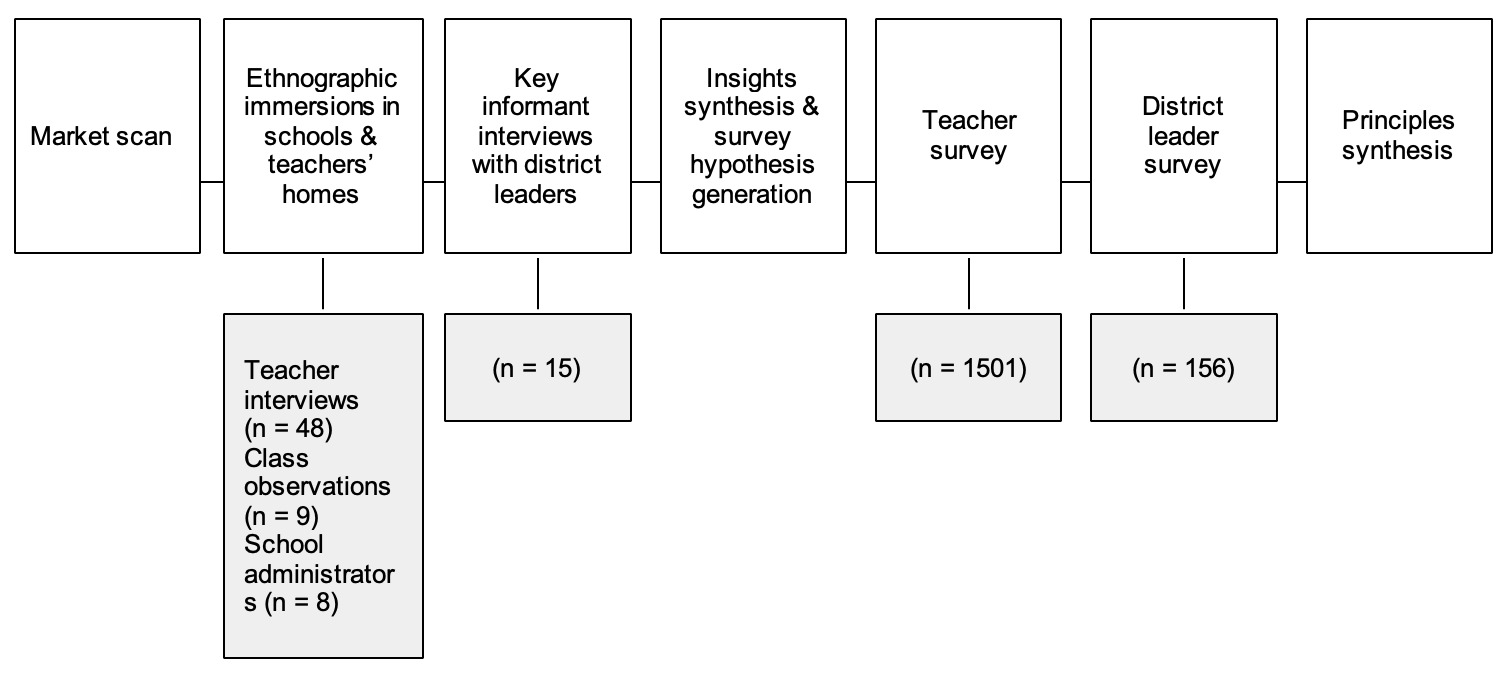
To better understand the promise and pitfalls of technology in education, we studied the education ecosystem (administrators, teachers, and students) in schools across three diverse US states. Ethnographic methods focused on a subset of states were used to develop a deep understanding of context and priorities. Surveys were then used to determine the ‘scale’ and cross-state applicability of these insights.
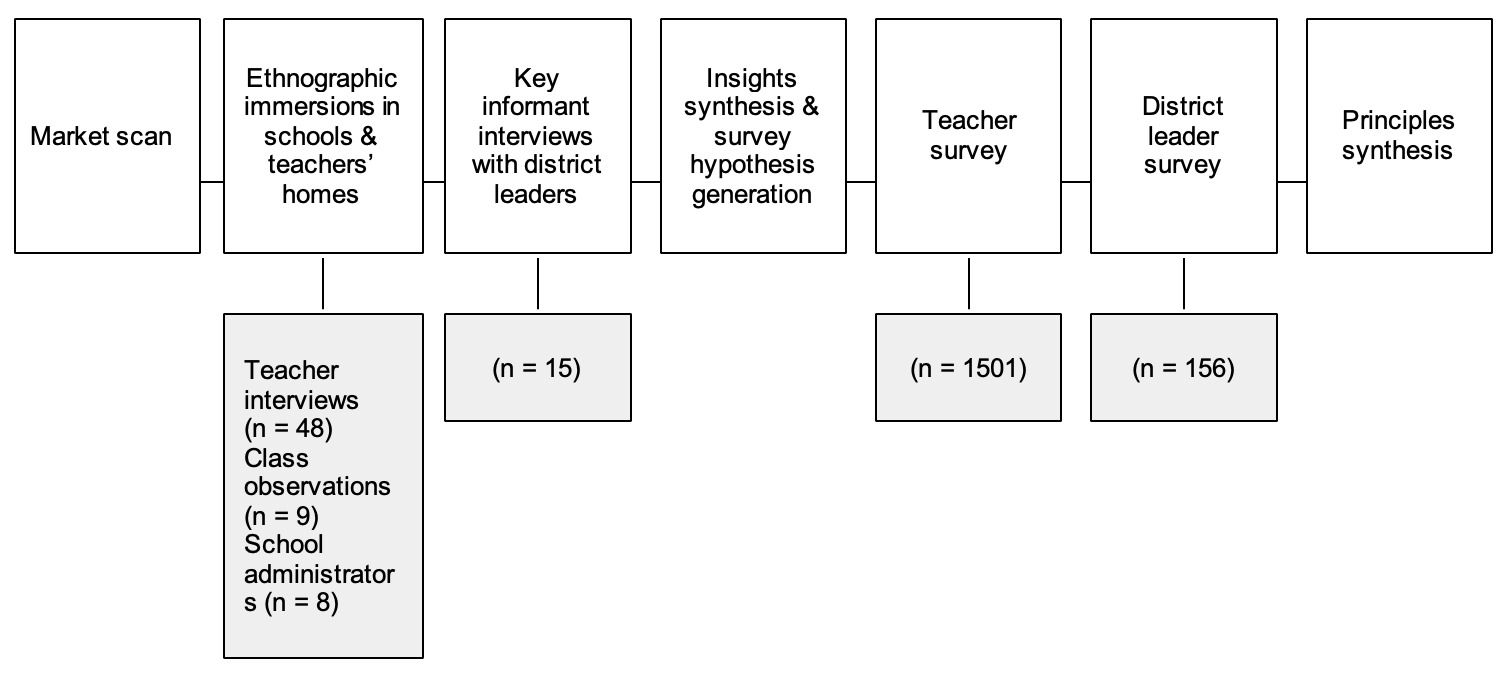
Ethnographic research was conducted with K-8 teachers and administrators across California, Illinois, and Texas. These three states were selected based on the following criteria:
-
High Commercial Relevance: all three states are among the top 6 most populous in the US
-
Across the Political Spectrum: states where statewide education policy is driven by different parties and where individual districts may diverge from the dominant political culture
-
Distinct Cultural Contexts: west coast, mid-west, and southern markets embody distinct sub-cultures and attitudes towards learning/education
-
Diverse State Compositions: among the most diverse in terms of geography (urban, sub-urban, rural populations), ethnic/racial mix, and income
-
Range of Education Spending: Low to high per-pupil spending according to World Population Review (also with careful consideration of districts, as district funding changes the picture greatly)
Initial ethnographic immersions were focused on collecting a broad range of perspectives from classroom ecologies, with a focus on teachers as primary decision-makers. This part of the study involved 56 teachers and administrators and included nine school observations, allowing researchers to build a broad dataset. The team interviewed 48 teachers from a diverse range of subjects, grade levels, and experience levels, spending more than 244 hours in classrooms and teachers’ homes. Additionally, the study incorporated interviews with eight school administrators (principals, assistant principals, superintendents). A range of school types were included: 7 elementary schools, 7 middle schools and 3 K-12 schools, as well as small, medium, and large districts (5, 6, and 6 respectively). Given the scale of the US public school system, the majority of the sample was composed of public schools, with two private or charter schools per state for additional perspective. The grade and subject distribution included kindergarten through eighth grade, and subjects such as social studies, math, language arts, science, language/ESL, and others.
District Leaders (DLs), while not integrated into the everyday classroom ecosystem, play a pivotal role in classroom technology and curriculum procurement. As such, their perspective is critical for investor understanding: without DLs on board, solutions will not achieve scaled adoption. Ethnographic research was therefore conducted with DLs, including superintendents, assistant superintendents, and curriculum and instruction (C&I) directors. The research involved 15 deep-dive interviews of approximately 2-4 hours each.
Initial insights were developed based on qualitative findings across these two datasets (classroom ecosystems and DLs). These insights included an overview of teacher and district priorities when choosing and using curricular products, key barriers and challenges to the use of these products, and product characteristics likely to drive higher adoption and increased student learning. Given the heterogeneous nature of the US education system, two surveys were then conducted to ensure that these insights retained relevance beyond the three states initially in focus.
A district leader survey targeted 156 DLs across 31 states, ensuring a diverse sample in terms of gender, urban/rural locality, and Title I eligibility. An additional teacher survey included 1,501 K-8 teachers from all states, sampled for diversity in years of experience, academic performance, and district size.
Insights, combined with quantitative input on prioritization, relative importance, and insight generalizability, were then used to uncover a set of impact investment opportunities, and corresponding principles to guide product, commercial, and investment portfolio development.
Key Findings and Direct Impact
This ethnography-grounded, ecosystem approach allowed for the exploration of a wide variety of challenges and needs within US primary classrooms. In total, the work uncovered nine major opportunities to support teachers with scalable solutions that enhance, rather than diminish, their exercise of professional judgment. Each opportunity comes with a different set of investor implications. One example, explored in more detail in the following section, is the opportunity within US primary classrooms for impact investors to drive ‘supported teacher agency’.

By “teacher agency,” we mean teachers’ professional capacity to make decisions about how and what they teach. Such agency is a core aspiration for teachers. Motivated by the sense that their decisions can make a big difference in students’ lives, many teachers go to great lengths to plan lessons and source the right materials to engage their students. Furthermore, given the increasing diversity of US classroom needs (e.g. rising numbers of English Language Learners, according to the National Centre for Education Statistics) teachers feel a responsibility to ensure that the “standardized” materials they have received from districts are adapted to their class to meet each child’s needs, while also engaging and motivating each child.
Agency is not merely an aspiration for teachers – it can also be a condition of effective teaching. A substantial body of research shows that teacher agency can positively impact student learning outcomes. Hattie’s meta-analysis suggests that ‘teacher quality,’ which is the most important driver of learning, is largely reducible to the ability to monitor teaching impact and adapt instruction intelligently on that basis (2012). Studies also show that when teachers have greater agency, they are more likely to adapt instruction to meet diverse student needs, innovate in response to classroom challenges, and foster higher engagement and achievement among their students. For example, Priestley, Biesta, and Robinson (2015) found that teacher agency is closely linked to instructional quality and responsiveness, which in turn improves student learning. Similarly, Ingersoll (2007) and OECD’s TALIS studies highlight that empowered teachers report higher job satisfaction, lower burnout, and greater commitment to improving student outcomes. Agency is thus a necessary condition for the exercise of teacher intelligence.
However, that does not mean there should be no limits to teacher agency. While high-performing teachers may know how to make the best of it, others might make decisions misaligned with learning science or state standards, potentially damaging student learning. Scholars caution that teacher agency is most effective when paired with strong professional support, clear frameworks, and collaborative school cultures (Vangrieken et al. 2017), as excessive autonomy without guidance is likely to lead to inconsistencies and inequitable learning experiences. Our research also suggested that teachers make better decisions when they discuss and adapt their teaching with their peers, especially through structured communities of practice. What teachers need, in other words, is the right combination of support and agency that allows them to deliver effective lessons while also honing their craft as teachers.
Our research revealed many ways in which teacher agency risks becoming counterproductive. For example, many teachers – even when they have access to HQIMs – adapt a large majority of classroom materials themselves. They supplement or even replace these materials with other curricular materials they deem more appropriate for their specific students. This practice was widely observed during our ethnography and is also documented in additional research (Zahner, Skarin, and Pelaez 2024). For example, in Texas, we met a 4th grade math teacher who admitted that even though she was provided with lesson plans – the implementation of which was forcefully encouraged through random classroom observations – she still executed her own lessons, with a little help from her students: “It’s scripted now and the pace is fixed. But kids know the drill. When observers come in, whatever we’re doing, I just say, ‘turn to page 17’ and they play along.” This degree of independence may work well for highly skilled teachers, but it is unlikely to yield good results in most cases.
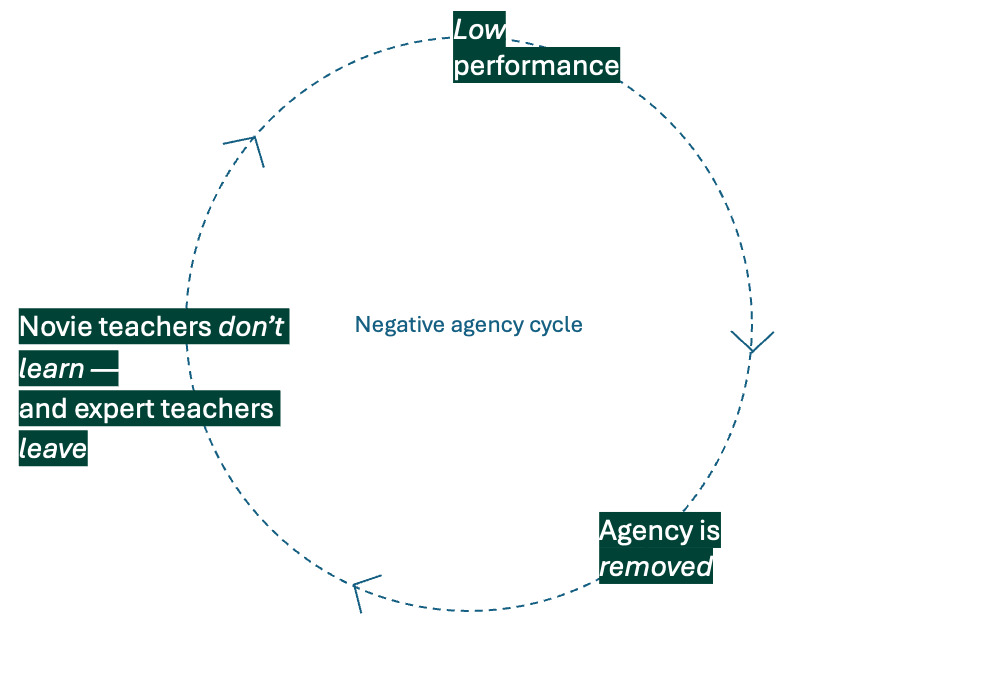
However, we also observed a tendency to over-correct this problem by eliminating teacher agency entirely. In response to low fidelity to suggested or prescribed C&I materials, district decision-makers have responded in recent years with increasing force. Curriculum mandates are increasingly common, including in some cases mandated teacher adherence to prescribed in-classroom pacing and scripts. In Houston, for example, teachers are increasingly given scripted lessons, and compliance is ensured by unannounced observations as often as twice per day. Such measures can “raise the floor” in the short run (Lehrer-Small 2024), but our research highlighted the risk of longer-term declines in teacher quality and retention by constraining professional growth and motivation. As one 8th-Grade English teacher in Illinois put it: “If I’m told what to do and how to teach in my classroom, I’ll quit.” In our sample, all Houston-based teachers planned to leave at the end of 2023-24. District-level data now shows that one third of teachers in Houston ISD exited, while the share of inexperienced, first-year teachers has doubled (Lehrer-Small 2024).
Aside from being demotivating, overly prescriptive mandates also reduce opportunities for teachers to hone their craft. When lesson planning and adaptation are removed from teachers’ work, they do less monitoring of impact, talk less about lesson design with their peers, and consequently learn less about how to improve – risking plateauing or declining outcomes over time.
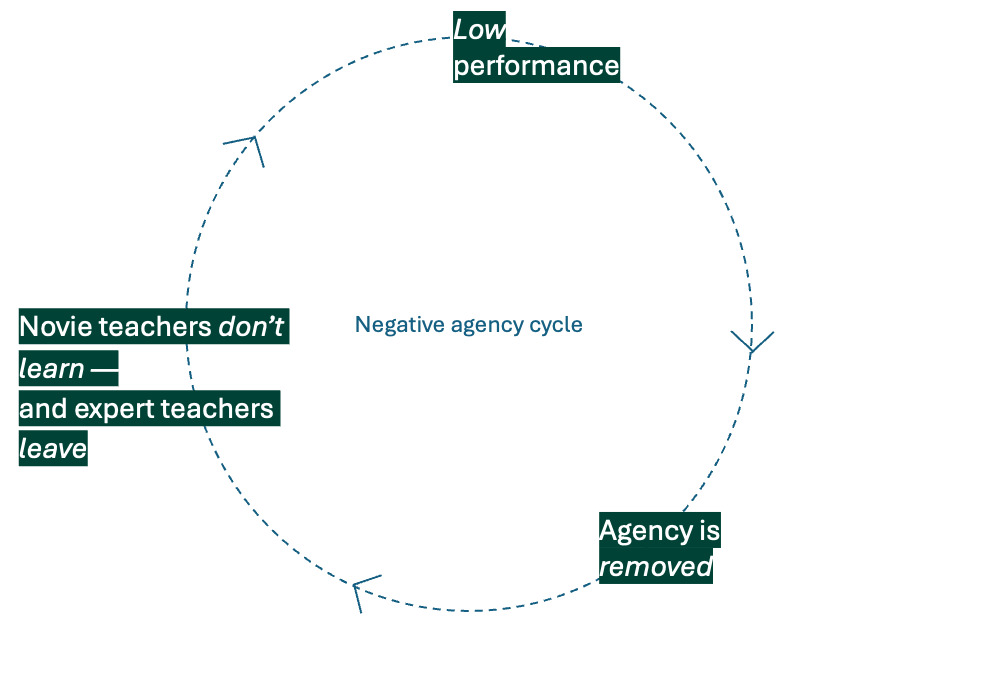
Our research showed a large variance in how curriculum providers handle the need for providing teachers with both agency and support. Some products allow for a high degree of teacher customization – with components from lesson planning to classroom presentations being fully editable. Others are much more prescriptive, with very little to no customization possible at the individual teacher (or even school) level. And there are also gaps in the market: no products available during the period of this research facilitate real-time teacher learning, e.g. by using AI to generate feedback and explain pedagogy decisions as teachers customize lesson plans or presentations.
The way to get agency right is neither to maximize nor to eliminate it. A better path is supported agency – through products that anchor in HQIM and help teachers make smarter, faster, more informed, and more aligned choices. For example, to support teacher agency, products could offer:
-
Real-time, classroom-level data and suggestions for evidence-based interventions
-
Tools to scaffold adaptation of HQIM (e.g., for differentiation) while maintaining alignment to standards and learning progressions
-
Feedback that builds teacher knowledge – e.g., AI-generated “explainers” that connect pedagogical choices to learning science as teachers customize lesson plans
-
etc.
Such findings allowed for the development of a set of opportunities to help guide continued investment in US education. These opportunities include input on promising investment areas, overall criteria which can be used to assess product quality, and specific metrics which can be used to measure the impact of investments on student learning outcomes over time.
Our opportunities set was developed not to determine features that we should look for in due diligence, but rather serve as design characteristics that could address the unmet needs we saw in the market (e.g. supported agency for teachers). As an investor, it was critical to develop an approach which allowed a perspective on the market, and of balancing impact and commercial returns, without predetermining what solutions should look like. Ensuring opportunities served as design characteristics (rather than predetermined features) helped provide this balance.
The opportunities are currently being used to identify and perform an initial assessment of investment targets, guiding capital towards opportunity areas where the financial and social returns of education solutions genuinely reinforce each other.
Broader Application
While developed in education, this approach has broader implications for social impact investing. Social impact investing is a diverse field. Unlike traditional investing, which focuses solely on profit, social impact investing targets projects, organizations, or companies that address pressing societal challenges, while also aiming to deliver competitive or concessionary financial gains. In all cases, the goal is to generate positive, measurable social or environmental outcomes.
Various standards exist to measure the positive social and/or environmental impact of investments, e.g. the Global Impact Investing Rating System (GIIRS), Impact Reporting and Investment Standards (IRIS+), Social Return on Investment (SROI), and the more well-known Sustainable Development Goals (SDGs). These frameworks break impact down into measurable components and provide standards on the data types and data quality required to measure the positive or negative effect of an investment within each component. These standardized approaches are critical for fostering comparability across different types of impact investments, and for ensuring that a breadth of impact categories is considered.
As we encountered in US education, however, there are also sectors in-focus for social impact investors where measuring positive impact is less straightforward than standard frameworks may suggest. These areas are typically characterized by complex social ecologies, where the individual or shared exercise of human intelligence is indispensable not because we lack better alternatives but because it generates, supports, or just is the intended impact.
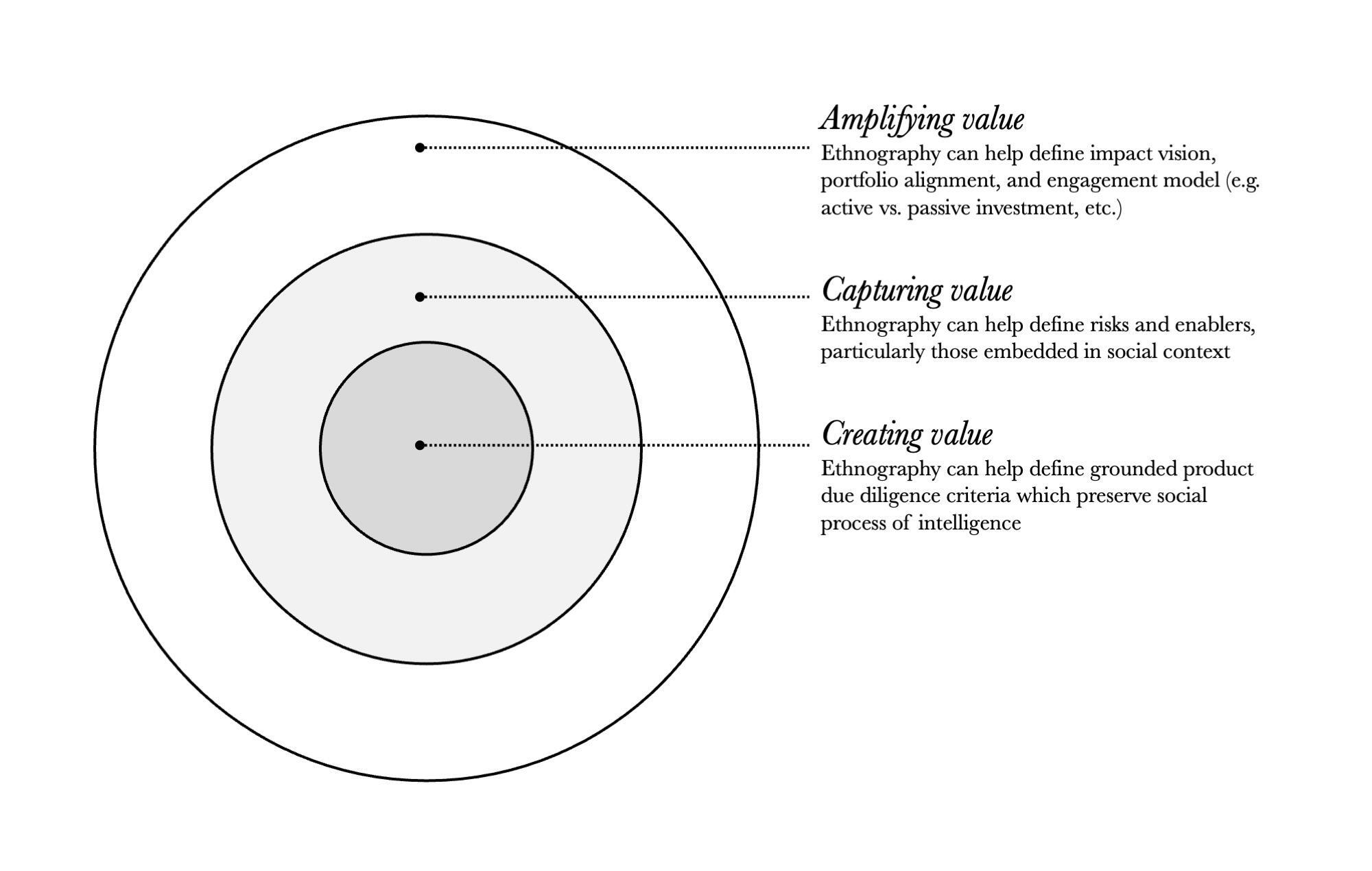
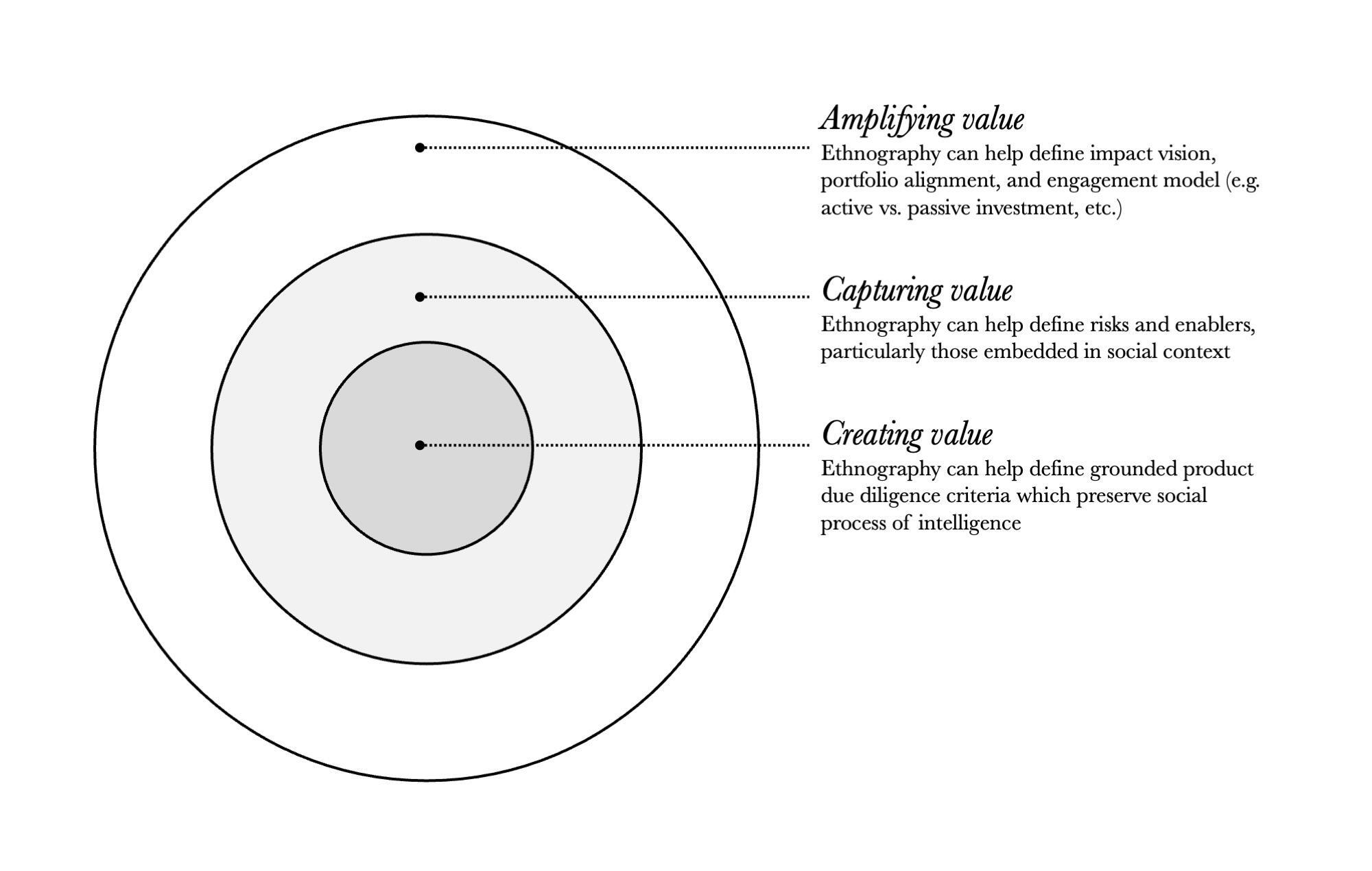
Our experience highlights that ethnographic research is uniquely suited to identifying such areas, making it a valuable addition to social impact investors’ due diligence toolkit across three major areas:
-
Value creation: what should products solve for in order to drive value in the market, from both a social and commercial perspective?
-
Value capture: which business models best capture the value these solutions create?
-
Amplifying value: how should investors provide support across their impact portfolio?
When it comes to value creation, ethnography provides a valuable tool for identifying socially grounded, nuanced product evaluation criteria. In the case described above, these criteria became the foundation for product due diligence (combined with more standard criteria, e.g. target organization leadership), with each criterion linked with overall investment principles. ‘Supported agency’, one of the defined opportunities, resulted in initial criteria, such as:
-
Products should allow different levels of customization for lesson plans and presentation materials, depending on teacher and district needs
-
Products should provide teachers with feedback on lesson development
-
Products should facilitate teacher collaboration
For value capture, ethnography has the potential to play a more targeted role in two major areas: the identification of enablers and of risks. While the assessment of business models and commercialization strategies is largely quantitative and was run in a parallel process, ethnography is well-suited for identifying areas where human behaviour is likely to drive – or threaten – revenue generation. In the case described above, the role of ethnography was more limited when it came to value capture. A few risks and enablers were identified, however, linked with ‘supported agency’, including:
-
Products which limit teacher agency completely are often pushed back against by more experienced teaching staff. While teachers themselves aren’t product decision-makers, their adoption and use of products do often matter, particularly for re-purchasing decisions
-
Though product purchase decision-making is generally through committee, district leaders do play an important role. Ensuring that they understand the importance of providing teachers with enough decision-making power (with guardrails and support) will be key for securing their buy-in during the procurement process
Finally, ethnography can also inform amplifying value. Ethnographic insights have the potential to shape investment approaches by suggesting longer-term principles or guidelines for product and portfolio development, aligned with the social reality of the investment area. These can be more practical, e.g. input on an under-developed area which would require more active engagement from an investor to drive, or more inspirational, e.g. input for overall investor impact goals and direction. In the case described above, ‘supported agency’ became part of a larger vision for investor direction: ensuring that all parts of the education ecosystem – from students, to teachers, to district leaders – are supported to unlock system thriving.
Conclusion
This case study demonstrates that social impact investing in complex sectors like education requires more than just financial analysis and standard impact metrics. By integrating ethnographic research into the early-stage investment process, the project team was able to uncover crucial insights about how classroom realities and teacher agency shape the effectiveness of educational products. The findings highlight that maximizing both impact and financial returns depends on supporting – not replacing – human expertise, and that “supported agency” is key: the most effective solutions empower teachers with data and guidance while preserving their ability to adapt for local needs.
The application of ethnography in this context not only improved the identification and assessment of promising investment targets but also provided a replicable model for other social impact investors. In sectors where social reasoning processes are critical, and collective and individual intelligences are core to the intended impact, ethnographic methods can reveal hidden dynamics, clarify trade-offs, and offer actionable guidance for both product design and investment strategy.
As social impact investing continues to evolve, the case for embedding deep, context-driven research methods into standard due diligence grows stronger: helping investors ensure that their solutions achieve meaningful, measurable, and sustainable positive impact.
About the Authors
Lara Casciola is an Associate Partner at ReD Associates, specialized in strategy consulting with a focus on social impact. She advises organizations focused on doing good (e.g. philanthropists like the Gates Foundation & Wellcome Trust, impact investors like KIRKBI, and major brands like adidas). She holds an Msc in Service Systems Design from Aalborg University, is a guest lecturer at the University of British Columbia, and previously worked at e.g. Bang & Olufsen, Kontrapunkt and Nendo.
Bue Fisker is Senior Investment Manager at KIRKBI A/S and holds board positions at Euro Cater A/S (board member) and Falck (board observer). His career includes roles at EY and Clearwater International Corporate Finance. He completed his master’s in finance at Aarhus BSS, with additional studies at Bocconi University and the London School of Economics. A former teaching assistant at Aarhus University, Bue has experience in M&A, corporate finance, and investment management.
Yosha Smita Gargeya is Head of Impact, Product, and Partnerships KIRKBI Education at KIRKBI A/S, leading its impact, product and influencing approach in education investments. She was previously VP of Learning through Play at the LEGO Foundation.
Julian Petri is a Senior Consultant at ReD Associates.