
Introduction
The once-ambitious visions of fully autonomous, intelligent vehicles-those that are electrified, connected, and capable of fully automated drive-are increasingly met with scepticism and recalibration. Industry once promised imminent, large-scale integration of self-driving cars into our cities and societies, but today’s discourse has shifted towards a more tempered realism: from “autonomous cars are just around the corner” to “this is a slow and complex journey.” After more than a decade of hype, the imagined future of self-driving vehicles is being re-evaluated. This coincides with a wider societal context, where some of the very societal problems that self-driving cars were originally hyped as offering a contribution to solving, are exacerbated. Self-driving cars were seen as mitigating climate change through electrification and improving everyday life and road safety through automation and artificial intelligence. Instead, we live in a so-called “polycrisis” world where climate change, economic crisis, geopolitical insecurity and unregulated uses of technologies converge (Fry and Nocek 2020; Smith, Huybrechts, et al. 2025). Not only have self-driving cars not realised their promise; the world they promised to fix is changing, and there are calls for new knowledge to offer new so-called solutions to its problems; what Sarah Pink has called foresight solutions to polycrisis problems (Pink 2025). Yet foresight solutions, associated with the growth of a futures consultancy industry (Garsten and Sörbom 2022) often foreclose the knowledge relating to futures that is proposed.
It is against this backdrop of tempered expectations and the limitations of conventional foresight that our work presented here emerges. Over the past decade, our ethnographic research into autonomous driving has explored the lived, social, cultural, and embodied dimensions of people’s encounters with these technologies. Building on this ethnographic knowledge, we have developed a design ethnographic approach to create co-design and co-learning opportunities across sectors, enabling stakeholders to engage collaboratively with the complexities of everyday mobility. Presented here as a form of disruptive pedagogy, this approach illustrates both its methods and guiding principles. However, before we explain this approach, we first trace the origins of our collaborations with industry and the context in which it began.
It all started in 2015, when we – an international team of applied anthropologists and social scientists connected through the Swedish Centre for Applied Cultural Analysis (SCACA) at Halmstad University – were approached by a group of human-centred designers and developers at Volvo Cars in Gothenburg. They wanted to know if we could collaborate in developing knowledge and methods to better understand people’s experiences and expectations of Autonomous Driving (AD). The timing was significant: the European Commission was from 2016 investing in large-scale programmes and roadmaps for automated and connected vehicles, following similar moves in the US, while in Sweden the government had launched the strategic innovation programme DRIVE SWEDEN in 2015 to strengthen national competitiveness in AD development. Technological advances were accelerating, guided by the Society of Automotive Engineers’ (SAE) 2014 taxonomy of automation levels. The race was on: who would put the first fully automated SAE Level 5 vehicles on public roads? And equally pressing, how could such vehicles be made acceptable to the public?
This became the backdrop for our first externally funded collaborative design ethnographic project with Volvo Cars, funded by the Swedish innovation agency VINNOVA: Human Experiences and Expectations of Autonomous Driving (HEAD) 2016 – 2018. Drawing on methods such as in-car ethnographies (Pink, Fors, and Glöss 2017), morning routine enactments (Pink, Fors, and Glöss 2018), speculative probing in experimental vehicles (Osz et al. 2018), as well as through long-term engagements with five families over 18 months with level 2 and 3 driving, speculative probes and VR mock-ups (Thomas Lindgren, Pink, and Fors 2021; Tomas Lindgren, Fors, and Pink 2022), we explored together across academia and industry how AD was lived, imagined and anticipated. What we found was that AD cannot be understood as a purely technical innovation; it is also a social, cultural and embodied phenomenon (Raats, Fors, and Pink 2020). People’s anticipatory experiences of automation were coloured by hope, confidence and curiosity, but also by uncertainty, empathy and moments of embarrassment when the car’s behaviour disrupted the social order of traffic. Driving itself remained a bodily practice, reliant on sensory and haptic knowledge, with some participants even seeking to “feel with” the car to interpret its automated responses.
In this respect, our findings stood in stark contrast to the smooth, reassuring visions of future autonomous vehicles commonly promoted by industry, such as the Volvo 360c concept launched in 2018. This concept imagined travellers reading, sleeping, or socialising in immaculate, fully autonomous vehicles with flexible interiors for work or rest. While such visuals emphasise technological capability – seamless, comfortable journeys – they largely ignore the messiness of everyday mobility. In practice, how families live with, use, and adapt to cars reveals a form of social intelligence: habits, improvisations, and material practices that shape trust, reassurance, and meaning in ways that technical demonstrations cannot capture (Pink, Fors, and Lindgren 2018). These results from our research engaged with a growing body of initiatives and literature that straddle academia and industry that called for reframing of future mobility challenges through ethnographically oriented research and design. Indeed, as Erik Stayton, Melissa Cefkin, and Jingyi Zhang at Nissan Research Center observed already in 2017, “Drivers do not just perform tasks. They have bodies and cultures,” and “much of the problem and promise of automation lies outside the technical frame, in the social realm. Driving is a cultural practice. Mobility is not just about getting from A to B, but about when and how and why one moves.” (Stayton, Cefkin, and Zhang 2017). These lived, cultural, and embodied dimensions of mobility show why attempts to engineer seamless solutions often fall short: the challenges are not merely technical but deeply intertwined with social practices, values, and institutions.
This tension between imagined and lived mobility highlights the types of narratives we have found to be key challenges for AD development. Industry often focuses on technical intelligence, overlooking the social intelligence embedded in how people negotiate mobility in practice. This paper addresses that disjunction: the gap between technical and social intelligence in autonomous vehicle development, alongside assumptions that technical solutions alone can resolve complex societal problems. We ask why this gap persists, how it might be addressed through interdisciplinary collaboration with ethnographic insights, and what is gained when it is bridged. In answering these questions, our ambition is to contribute to a wider understanding of the pedagogy of participation and engagement in multi-stakeholder projects by presenting how design ethnographic workshops enable co-learning and knowing by tailored ethnographic workshop materials and practices that are situated in the context of the actual project.
It is precisely this entanglement that has led scholars and practitioners to characterise the future of mobility as a wicked problem; too complex for a single stakeholder group to solve, with shifting requirements and no neat solutions (Ebbesson 2022). Emerging digital and connected models such as “mobility as a service” promise efficiency and flexibility, yet if inattentive to social inequalities, they risk reinforcing existing hierarchies of power (Martens 2017). Transport and mobility have moved from matters of infrastructure and engineering to arenas where technical and social intelligences are ambiguous and inseparably intertwined. Addressing such wicked challenges requires collaboration across disciplines, institutions, and epistemic traditions. Solutions are less about right or wrong answers than about cultivating responses that are good enough for now: attentive to context, contingency, and consequence (Stead and Reardon 2025). This is why advancing future mobility demands multi-stakeholder collaboration supported by approaches that can navigate socio-digital complexity. At the same time, we need to understand how such collaborations can be made genuinely fruitful.
Our collaborative ethnography with developers and designers at Volvo Cars in the HEAD project had already given us a rich sense of peoples lived experiences, their values, hopes, and anxieties in relation to future mobility. The question that followed was how such understandings could travel into the everyday life of the company. The first attempt did not go as we had hoped. We brought together a range of stakeholders for a workshop where we laid out our analyses of everyday practices and expectations around autonomous driving, framed through car-centred routines and speculative probes. What we offered were thick, socially grounded accounts; what they needed were hard requirements. The gap between our stories and their tools became starkly visible. Later, in interviews, one interaction designer described his reaction in visceral terms: the workshop had been a “shock”. The format, he explained, felt too academic, too far from the rhythms of his daily work. “What can I learn from research papers? I fall asleep within five minutes” (Fors and Berg 2018, 103). He contrasted the staged formality of the workshop with what he felt was really needed: smaller, more informal conversations – what he called “kitchen table meetings” – where insights could emerge in the back-and-forth of dialogue. In big formal settings, he told us, he preferred to stay quiet, and if he did speak, it was safest to “stick to the company’s narrative so it won’t be wrong” (Fors and Berg 2018, 106). Another developer reflected differently. He acknowledged that the ethnographic insights we had brought forward were valuable but insisted that they needed to be “translated” into the work culture of car manufacturing if they were to have any real impact. At the same time, he was curious about the very qualities that seemed to cause friction – the open-ended, intuitive, and improvisational character of ethnography itself. He wondered whether those qualities might, in fact, hold something of value for collaboration. This ambivalence became a point of departure. Rather than trying to close the gap, we began to explore it.
Creating Collaborate Spaces through Ethnography
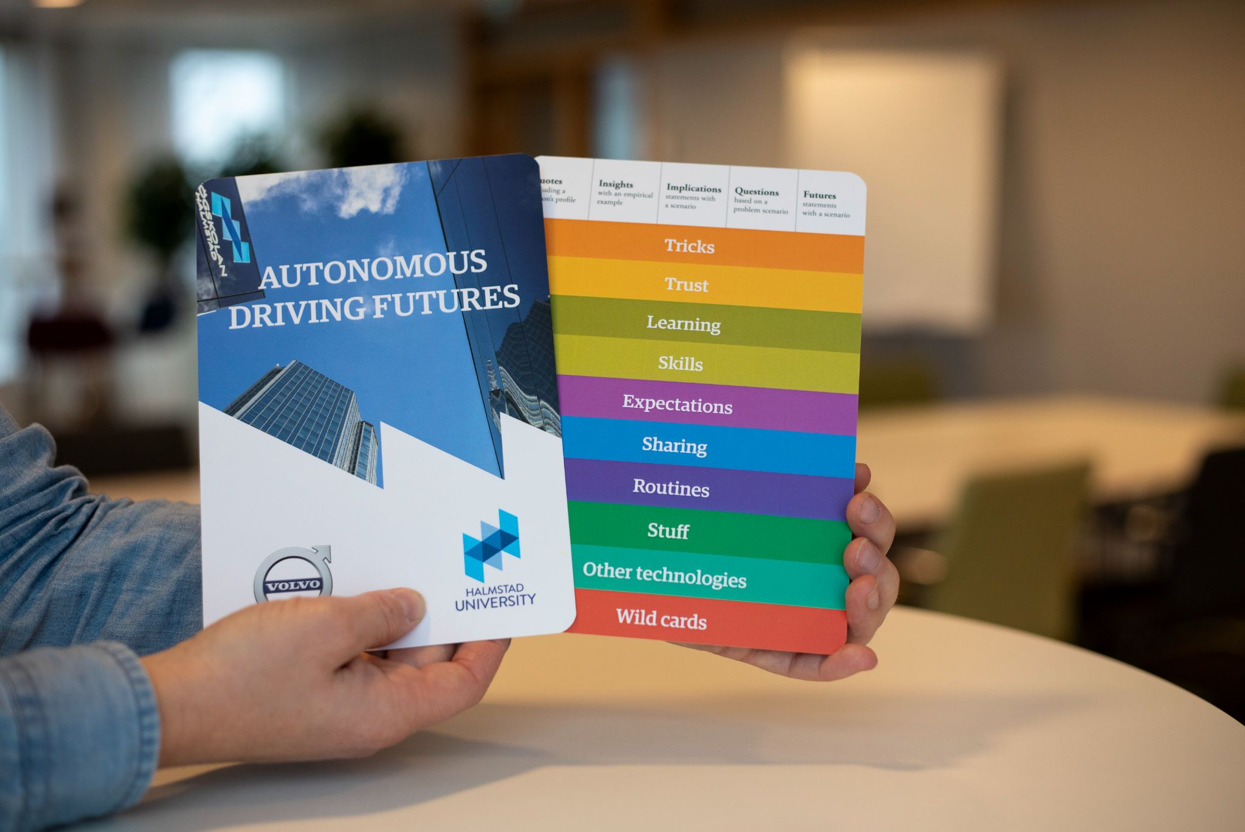
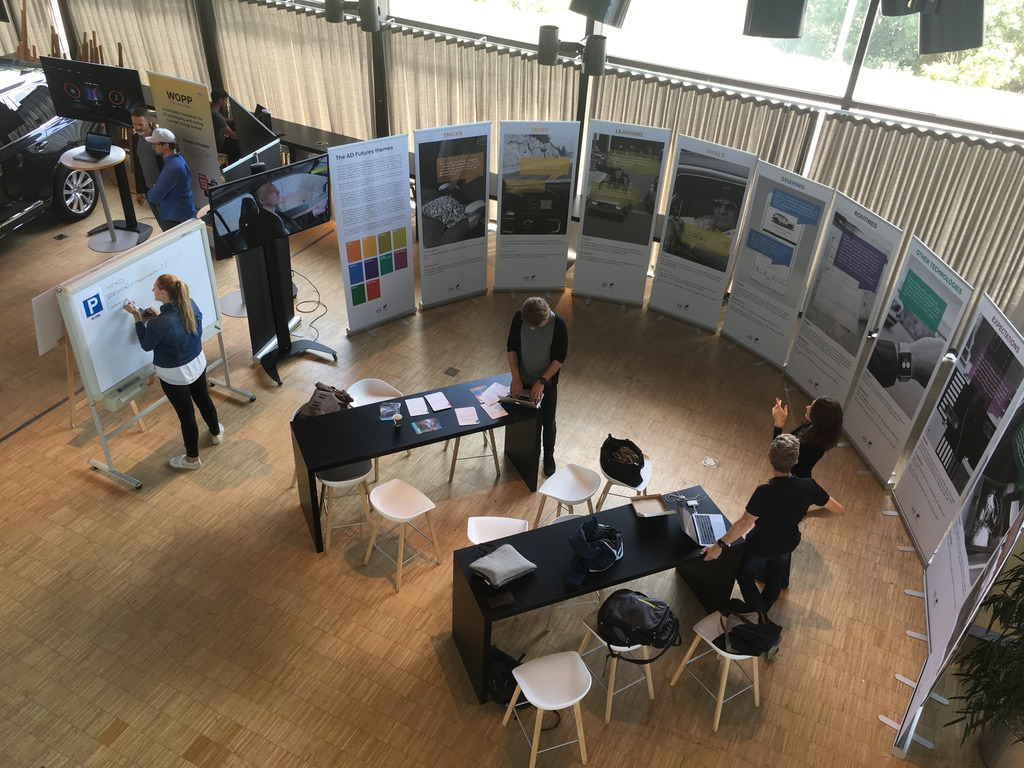
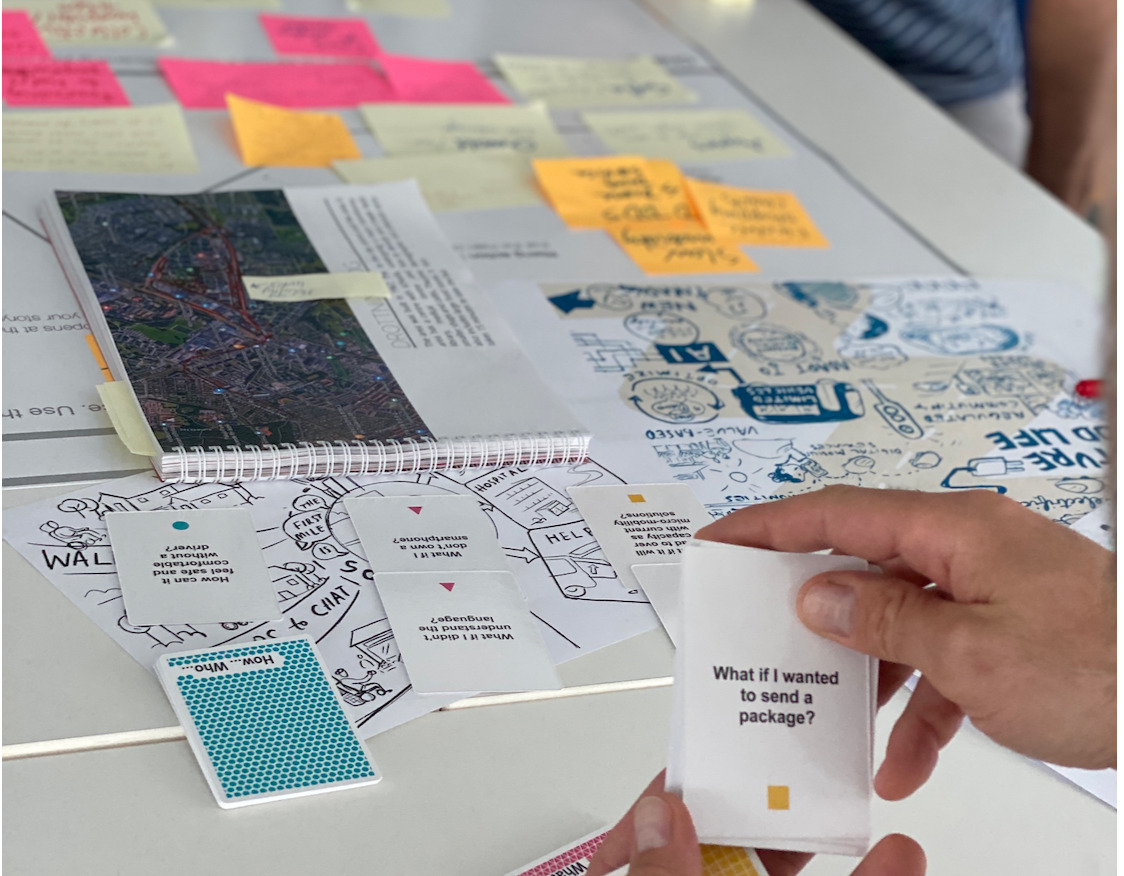
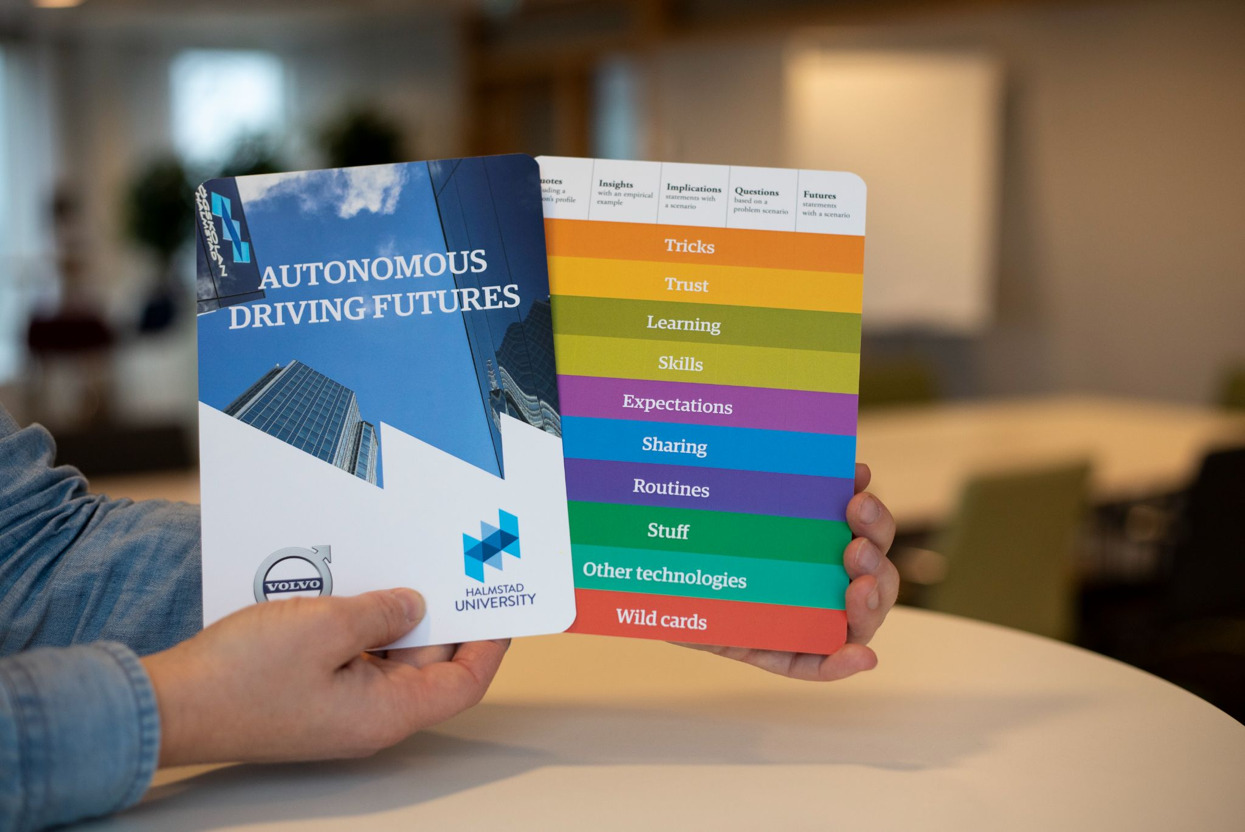
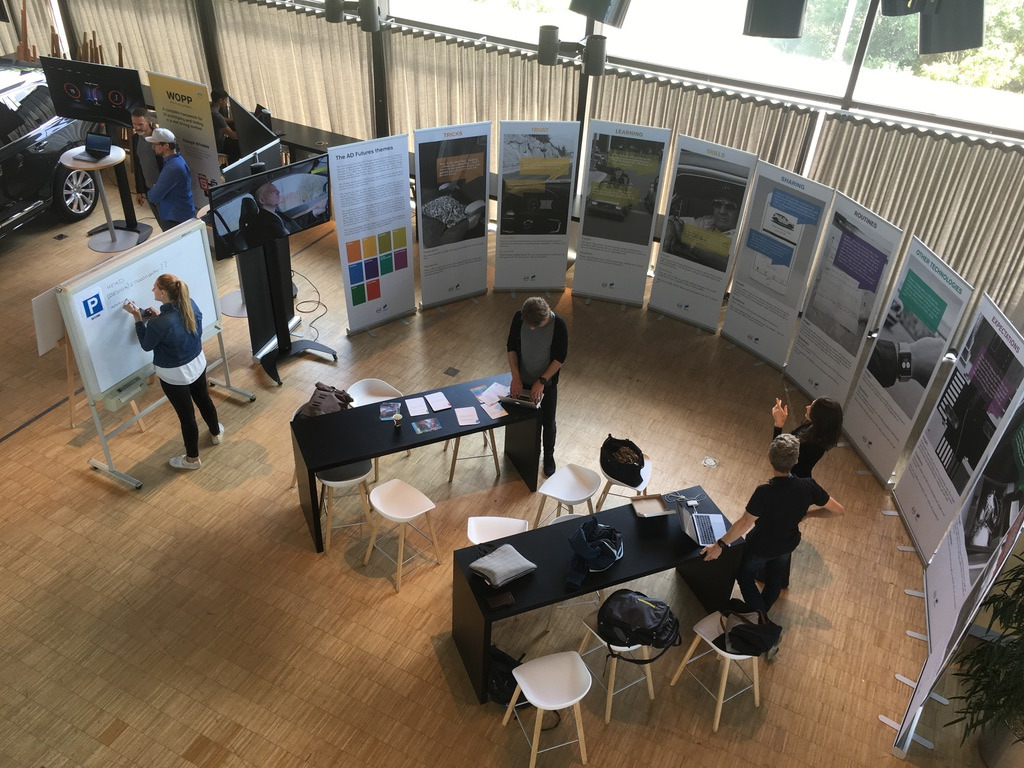
Over the following years, we engaged in a series of joint experiments, testing ways of working with ethnographic materials that could create more trusting, informal, and reciprocal spaces – zones where insights could be shaped together rather than transferred from one side to the other. We wanted to create things that could be picked up, moved around, played with, and talked through-objects that could travel more easily across the boundaries of research and industry. This took many shapes: for example card games designed to provoke discussion (Figure 1), interactive exhibitions staged at Volvo Cars’ in-house conferences (Figure 2), short ethnographic, art-based films (https://robertwillim.com/sparks/) and more. Each of these formats allowed us to stage tailored encounters where ethnography could be engaged with directly, not as abstract knowledge, but as something to be handled, negotiated, and reimagined together.
Building on these experiments, we began to sense that ethnography might be doing something more than simply generating understandings of people’ everyday car-related routines. What emerged was also the possibility of moving ethnography into a more active role-one that not only described but also engaged, provoked, and co-shaped futures. Acting on this insight, we applied for and received funding for two major projects, AHA I (Future Urban Mobility: A Human Approach, 2018-2019, https://aha.hh.se/) and AHA II (Design Ethnographic Living Labs for Future Urban Mobility, 2019-2022, https://aha2.hh.se/), supported by Drive Sweden. These projects allowed us to expand our collaborative network: alongside Volvo Cars, we invited urban planners and infrastructure experts from the Swedish cities of Helsingborg and Gothenburg, as well as Swedish south-western public transport strategists, to participate. Through a series of working meetings and stakeholder workshops organised through distributed responsibility, partners were engaged in establishing common ground and shared ownership, from which to address both long-term goals and immediate technological experiments, including engagement with local urban communities.
However, the lack of prior experience in cross-sectoral collaboration among our project partners soon became apparent. The municipalities were accustomed to long-term urban planning focused on reducing CO₂ emissions, limiting private car ownership, and developing shared mobility services. Volvo Cars, by contrast, had a century-long history of private car manufacturing and ambitions to lead in rapidly evolving markets of automated, connected, and personalised mobility solutions. These structural tensions-fluctuating policy agendas, rapid innovation pressures, and long-term urban planning – often threatened our ability as researchers to translate shared human visions into actionable goals. Municipal partners were particularly challenged by academic and co-design approaches, feeling marginalised both numerically and in voice,
This tension led us to rethink the AHA I project’s focus. The theoretical grounding and ambition of establishing a new collective, or community of practice, based on the loosely coupled networks of partners (Smith and Iversen 2018), needed revision. Thus, the one-year AHA I project became a phase of reflection and recalibration. Rather than bringing citizens directly into collaboration at this stage, we treated the diverse stakeholders themselves as the initial “users,” who needed to explore what a “human approach” to mobility would entail in a cross-sectoral setting. In one stakeholder workshop (co-organised by the cities and researchers), we co-developed principles and guidelines for future mobility based on human values from fieldwork with citizen narratives in local communities.
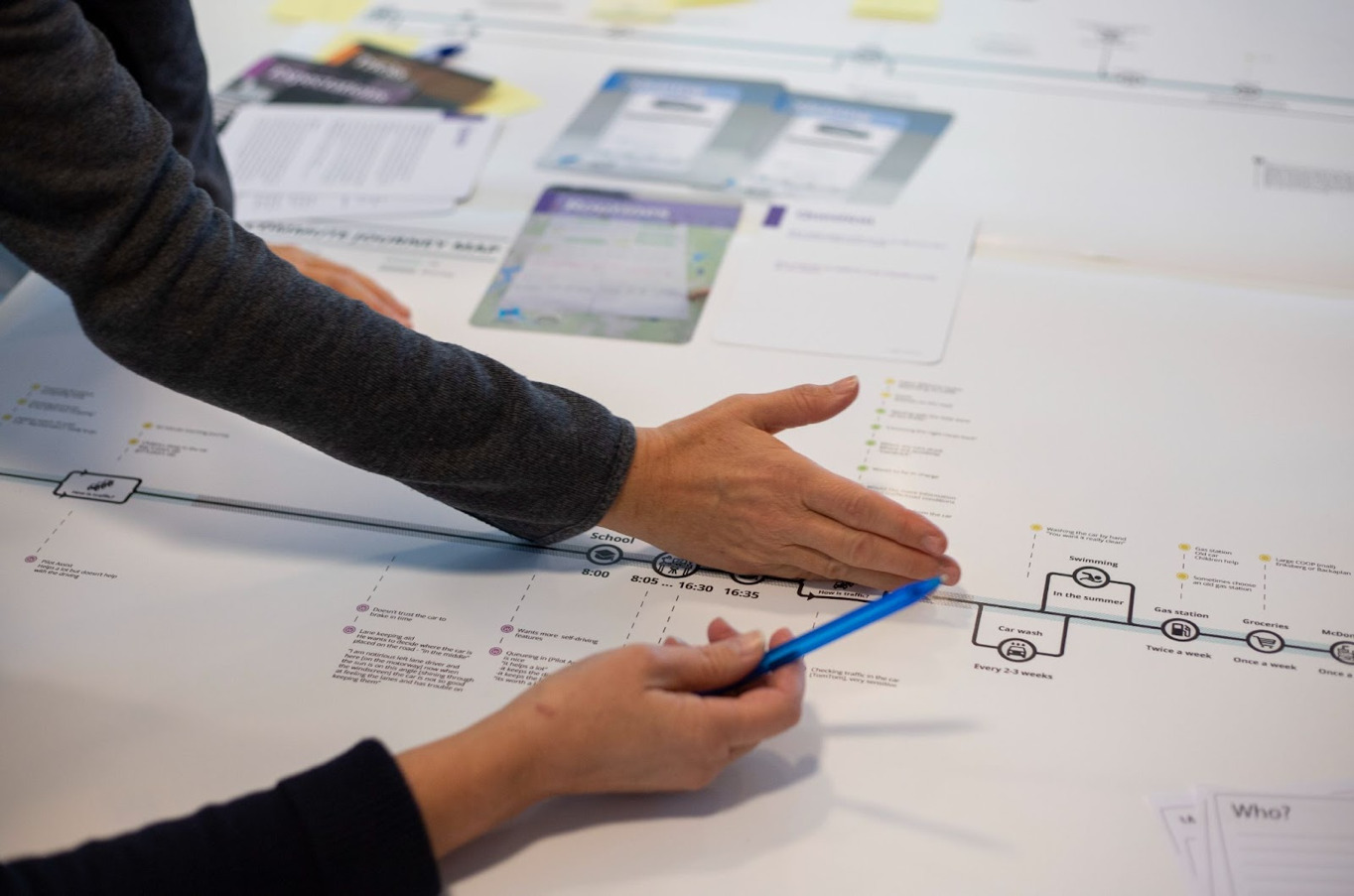
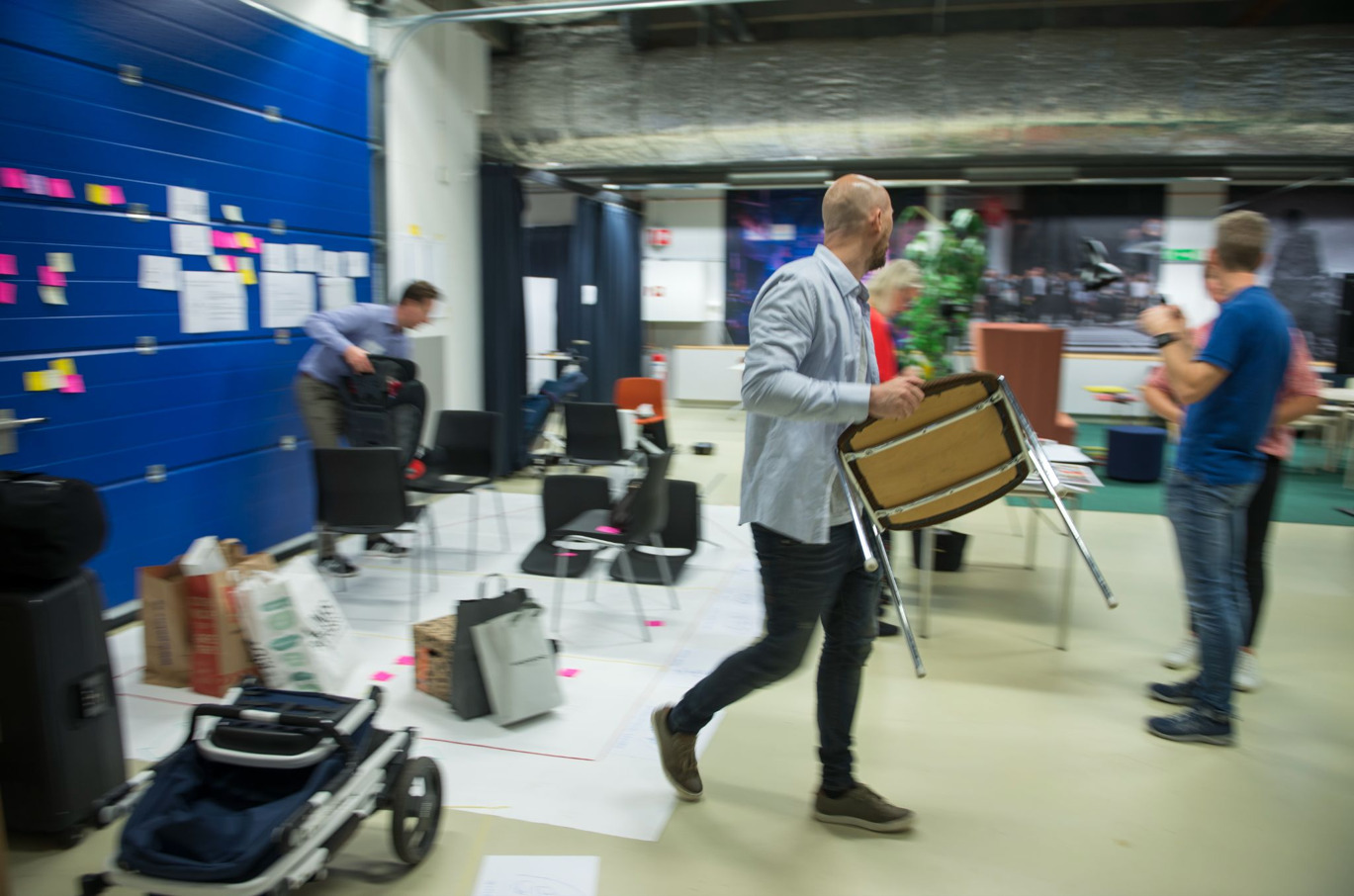
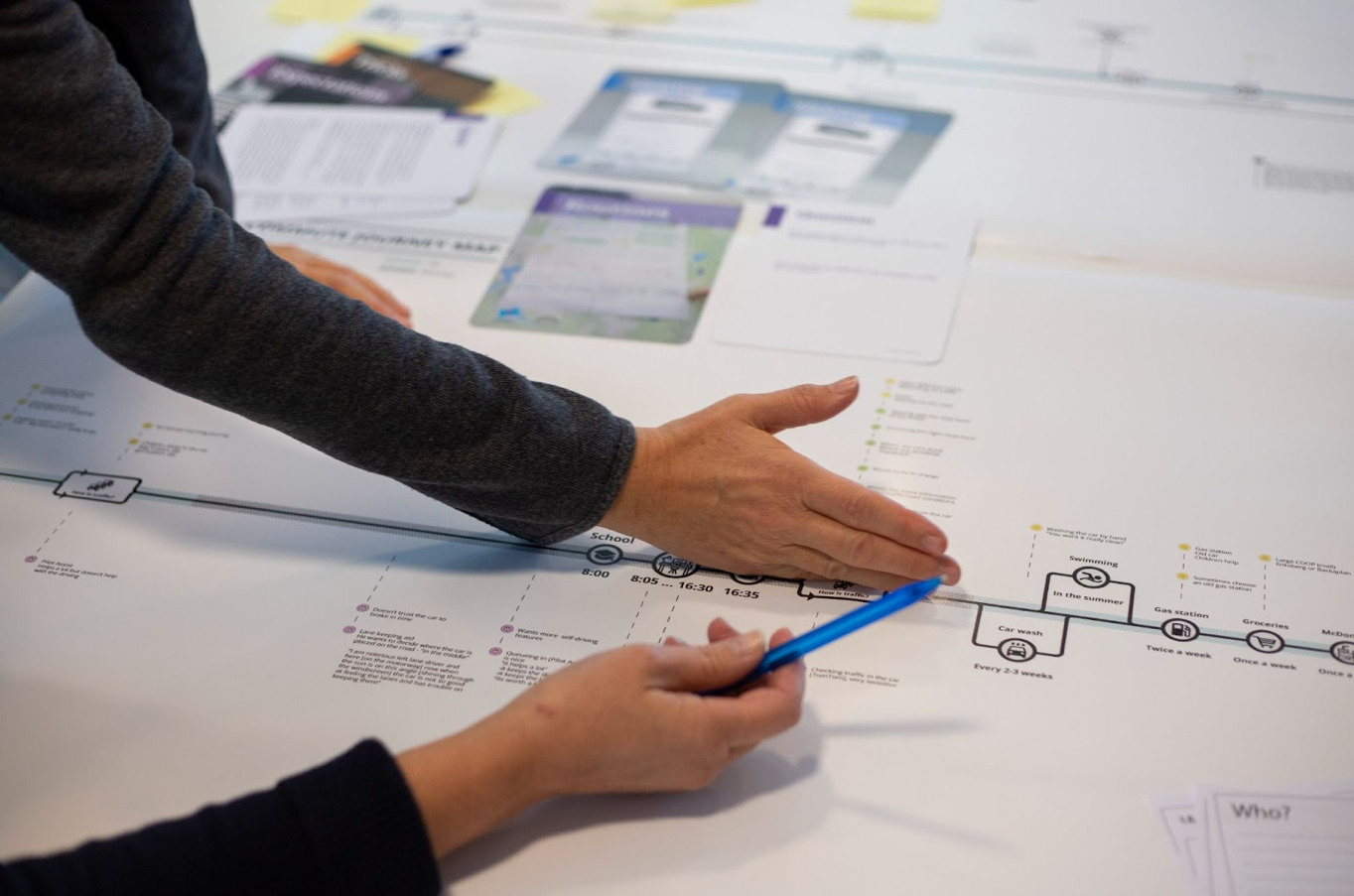
Other cross-sectorial workshops were structured around ethnographic materials, using previously made design ethnographic card games to challenge taken for granted assumptions (Figure 1), calibrating joint points of interests in tailored commuters routine maps based on a vast empirical and complex research material (Figure 3), or role-play exercises to translate everyday experiences and values into prototyping possible collaborative practices cross sectors while making tangible co-design (Figure 4). These sessions gradually built a shared vocabulary and understanding, centring human needs within the collaboration itself, while engaging the partners in establishing a common ground and shared ownership, from which to address both long-term goals and immediate interests of technological experiments including local urban communities.
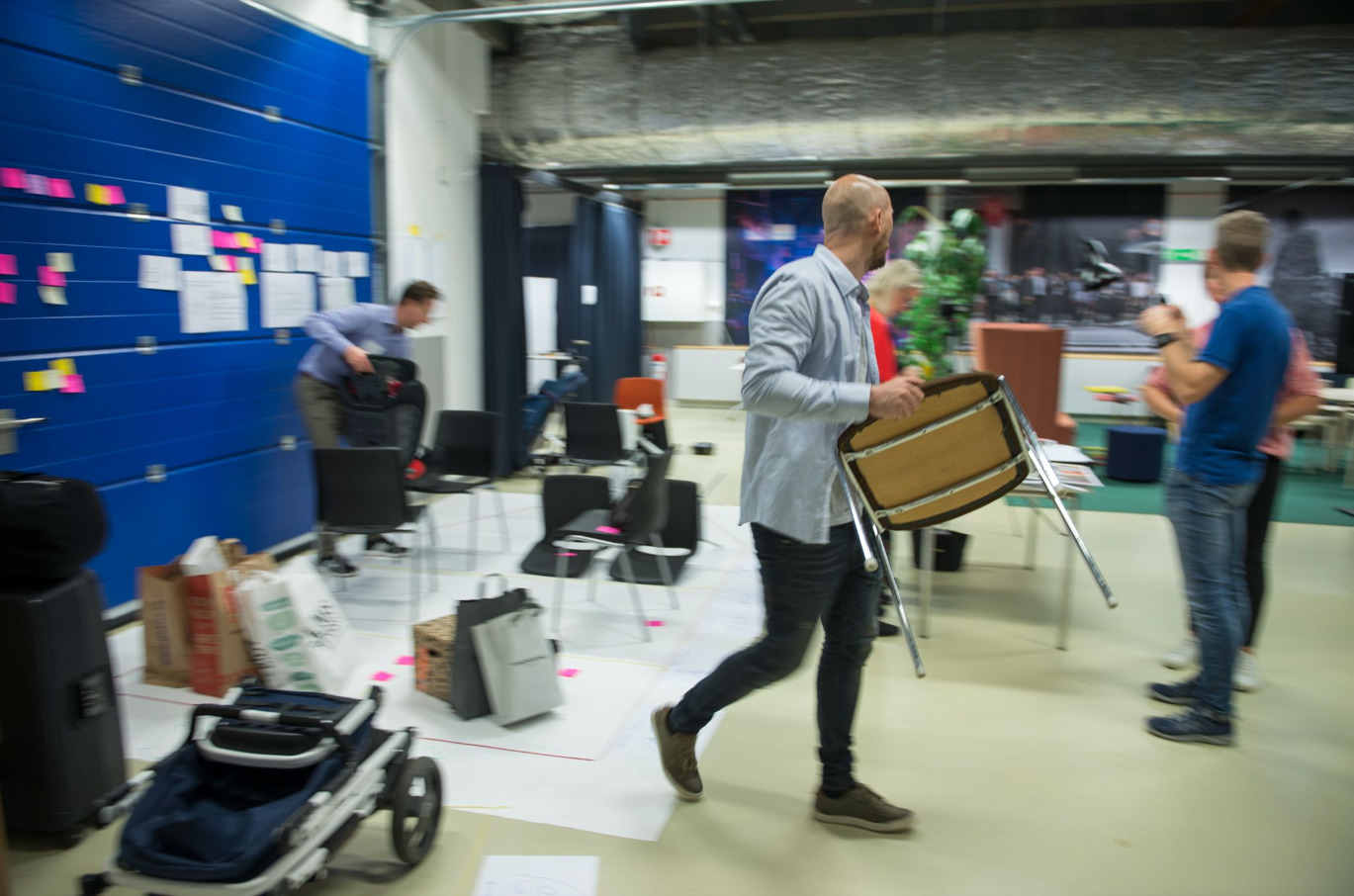
Over five years in the AHA I and AHA II projects, we continued to explore how to engage citizens, policymakers, and industry actors in dialogue about the human dimensions of future mobility through ethnographical materials and methods (Raats, Fors, and Ebbesson 2023; Ebbesson et al. 2024; Smith, Fors, et al. 2024). In addition to co-design of future mobility, our work came to focus on two core methodological questions: How can a design ethnographic approach help diverse stakeholders address complex social challenges? And how can these processes foster socially sustainable, co-created solutions? Framing activities around the concrete empirical narratives, imperatives, and co-designed materials, enabled the grounding of everyday values and decisions into co-developed directions for shaping future mobility. Iteratively, and slowly we scaffolded and consolidated the human approach. Through the AHA I project, we developed a methodology for “human approaches” to urban mobility, combining ethnographic sensibilities with participatory design practices. This allowed us to, in the AHA II project, explore new concepts together – first/last mile mobility, urban mobility hubs, and shared mobility services. We will come back to this later, but first we will present and explain how we have consolidated what we have learned about multi-stakeholder engagements through the lens of design ethnography.
Design Ethnography: A Disruptive Pedagogical Approach
In this context, we propose considering design ethnography (Pink et al. 2022) as more than a qualitative research methodology that applies ethnographic methods to the design process. It can, as we have explained above, also be utilised as a pedagogical approach to understand and enable engaged co-design that is deliberately disruptive – not in the sense popularised by innovation discourse, where disruption is equated with rapid market shifts, but as a way of creating friction that unsettles assumptions and opens new spaces for collaboration (Brodersen, Pink, and Fors 2023; Pink et al. 2023). Drawing on Anna Tsing’s notion of friction (2005) and more recent work in applied ethnography (Anderson and Cury 2023), we suggest that it is precisely through friction that design ethnography generates its most significant effects. Friction here refers to the productive tensions that arise when diverse forms of knowledge, values, and priorities collide. Rather than smoothing over such differences, design ethnography stages them as pedagogical encounters: moments that slow down fast-moving innovation cycles and provoke critical reflection on how social and technical intelligences might be more meaningfully aligned. Anderson and Cury (2023) show how ethnographic frictions – whether in research, analysis, or the path to action – can disrupt organisational routines and create traction for new ways of working. We build on their insight but shift the emphasis from corporate strategy to collaborative mobility futures. In our framing, ethnographic friction is not a hurdle to be overcome but a catalyst for deep engagement, enabling stakeholders to question taken-for-granted assumptions, recognise conflicting priorities, and the politics of design processes, and work through them in ways that generate more grounded and inclusive outcomes (Smith, Huybrechts, et al. 2025). We suggest that this design ethnographic pedagogy serves a dual function. First, it expands simplistic notions of ‘user’s’ or ‘citizens’, situating people within their specific communities, routines, and relationships to place. Second, it provides a generative context in which divergent perspectives – across academia, industry, and urban planning –con can be brought into productive conversation. In doing so, it supports the development of an interdisciplinary methodology that is as much about transformation as it is about translation.
In this way, design ethnography suggests not only a way of documenting lived realities but also a pedagogy of participation and engagement, that fosters co-learning and constructive disruption to tackle complex societal challenges in multi-stakeholder contexts. Through this approach, this paper position itself within the growing field of design culture of emergent design and design anthropology (Gunn et al. 2013, Smith et al. 2016), where the attention shifts away from the design of objects (products, services, and systems) towards ways of thinking and doing co-design (meaning, methods, tools, approaches) in design ethnography (Thomas Lindgren, Pink, and Fors 2021; Raats, 2023, 2024; Ebbesson, 2024a; Weberg, Fors, and Lund 2025) and contemporary participatory design (Smith, Loi, et al. 2025). However, regardless of this scholarly engagement in collaborative methods and tools, the actual co-learning that is assumed to take place in co-design practice is under-theorised in more practical method handbooks (Berg & Fors, 2019; Ebbeson & Fors, 2023, Smith, Winschiers-Theophilus, et al. 2024), leaving designers and developers to believe that as long as they follow design workshop protocols of how to carry out particular activities, ‘automagical synergies’ will arise between the participants (see Berg & Fors, 2019, pp. 53). This use of generic and culturally detached workshop methods has also been criticised to be producing a ‘design methodological hegemony’ (Avle, Lindtner, and Williams 2017, 472) with unintended and far-reaching effects on the designer’s life-worlds outside of Silicon Valley–oriented environments.
To contribute to a pedagogical approach to co-design, we will in the next section present a framework for design ethnographic multi-stakeholder co-design, developed through our collaborative projects, that can be used as a starting point instead of a generic template, to encourage the use of ethnography in a multiplicity of ways through long-term research, design and innovation process.
From Ethnography to Co-Design of Mobility Futures
The central framework we have developed as part of our methodology for design ethnographic future-making aims at causing deep scaling through unsettling assumptions, surfacing frictions, and reorienting collaboration by reframing how, here, mobility problems are understood. Rather than treating human-centredness as a static design principle, this framework stages it as a shared and contested terrain for collaborative inquiry.
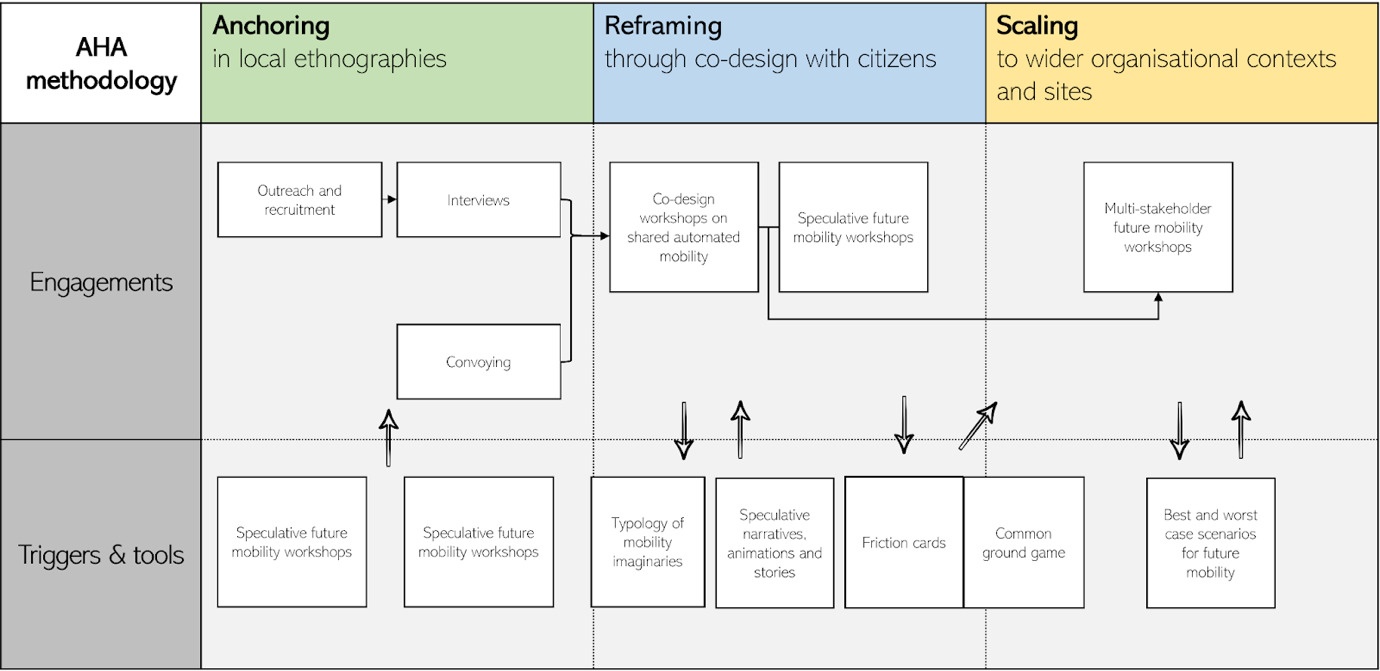
In the following, we present the framework through an overview of the work in the AHA II project, with examples of materials that were developed to enable what our collaborators wished for already in the slightly messy start of both the HEAD project and the AHA I project (as described above). That is, to move in and out of their organisational routines, detach from established scripts, and explore new values before reconnecting to their everyday realities. This means also that rather than delivering pre-determined solutions, the tools and workshops used in these projects were designed and tailored to translate ethnographically informed frictions into productive dialogue among diverse stakeholders. This tailoring practice became our first out of four “AHA Design Ethnographic Principles” that together established our pedagogical framework. It is pedagogical not in the sense that it teaches, but in that it suggests how we can stage processes of learning with different stakeholders in projects, and how this learning involves incremental modes of knowing that accumulate by engaging with both how our research participants and researchers and developers learn through collaboration. This approach requires a continuous tailoring of approaches for the collaboration to stay attentive to what is possible, needed, and aligned to the specifics of the involved communities and stakeholder consortiums.
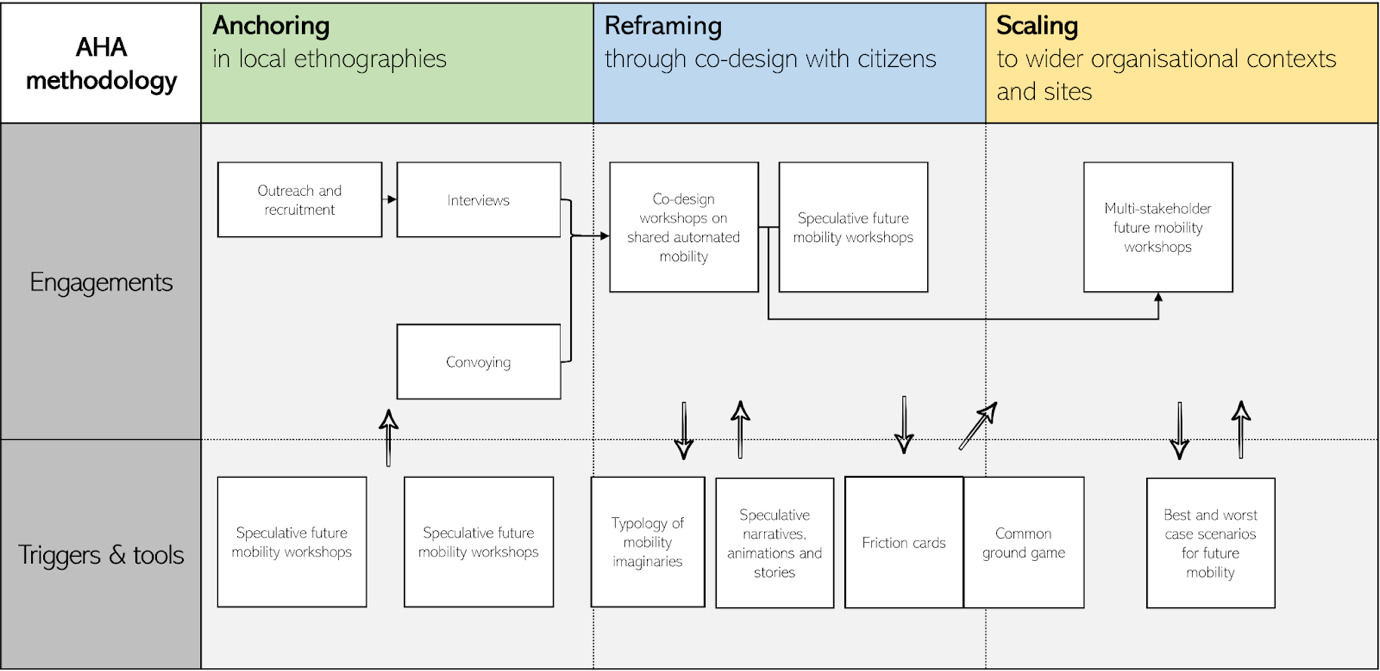
In Figure 5 the other three principles are represented in relation to the activities that emerged through the life of the project; a) Anchoring refers to grounding the project’s core issues in local ethnographies together with people and local stakeholders who are affected by the changes and ideas the project is set to develop, b) Re-framing suggests bringing taken-for-granted ideas and solutions into conversation with the understandings of the locally situated values, practices and relationships to re-evaluate and re-think what is not only possible but also plausible and socially relevant to develop, and finally c) Scaling connects the insights and solutions within the wider organisations, contexts and structures at both local, regional and global scales. In addition to creating frameworks (like this one) and more generic toolkits, scaling also implies enabling deeper changes of work culture and relationships within the participating organisations. However, Figure 5 is a simplified version of the overall framework with examples of what kind of activities the different principles included in the project.
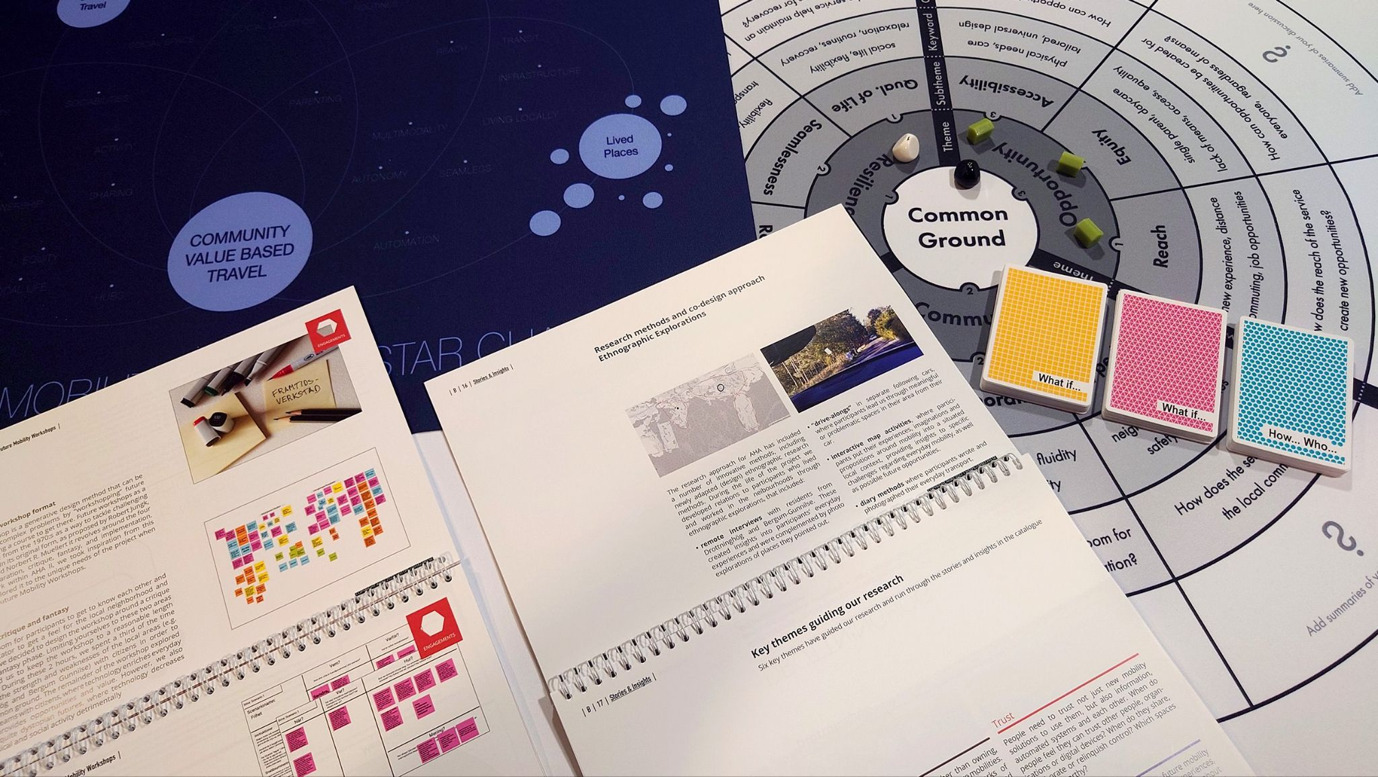
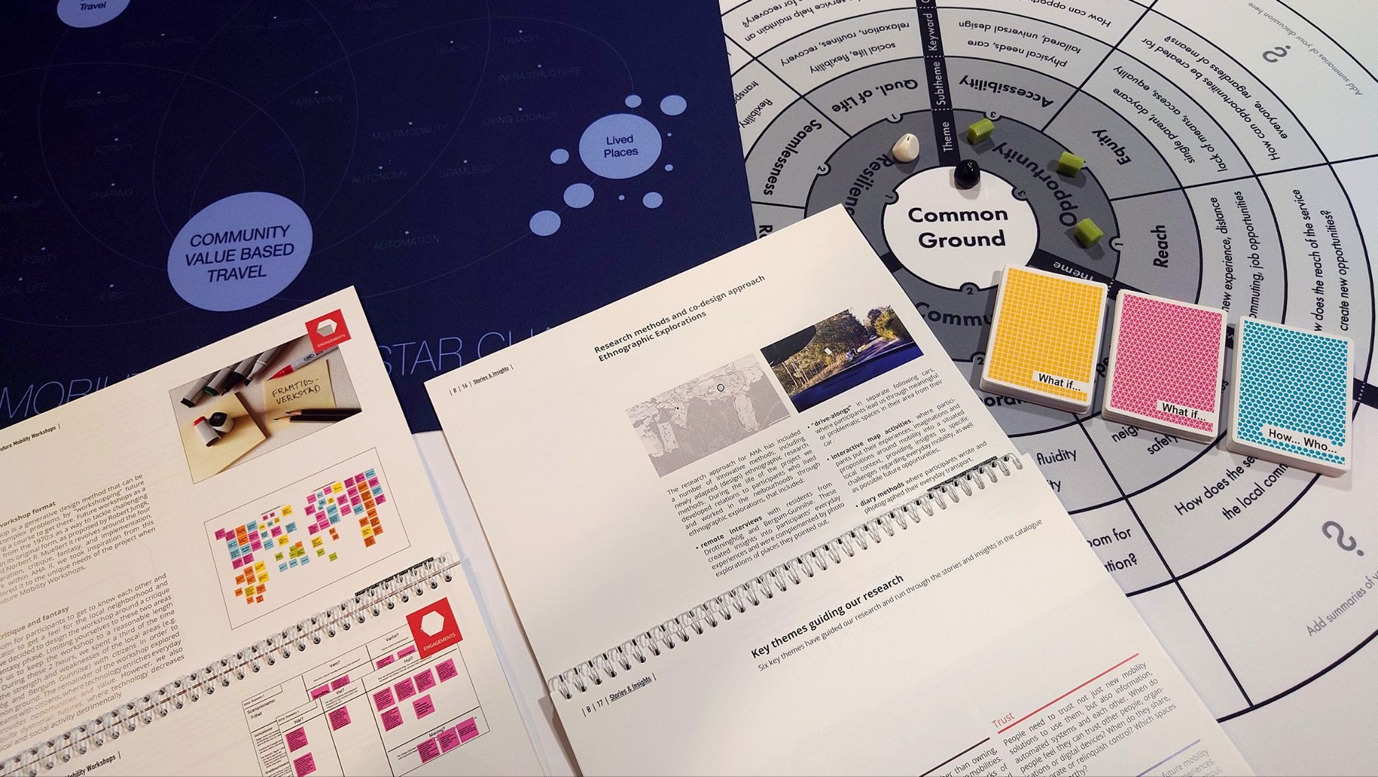
The AHA methodology catalogue (Fors et al. 2022), openly accessible today, embodied this framework in practice. On the surface, it stands as a neatly packaged collection of results, methods, and tools that emerged through the work of the Urban Living Lab. Yet its significance lies as much in the process of its making as in the final product. Each chapter was not simply written after the fact but first unfolded as workshop material – drafts and provocations that were tested, debated, and reworked collectively – before being shaped into the polished entries of the next chapter. In this sense, the catalogue was itself a ‘live’ collaborative space and roadmap, a medium through which partners and researchers learned, argued, and realigned their perspectives. Figure 6 shows the AHA catalogue together with the design ethnographic toolkit developed in the project.
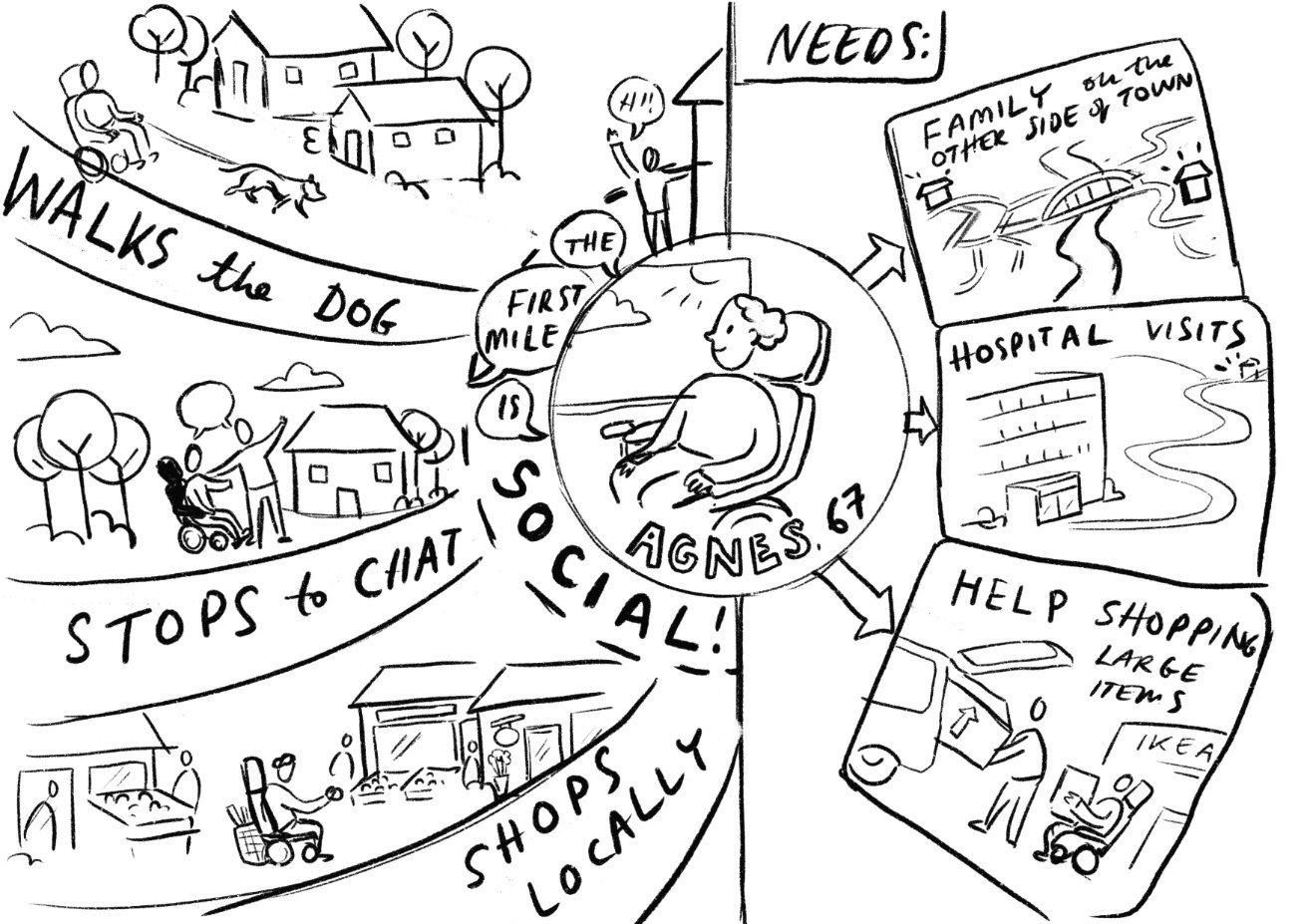
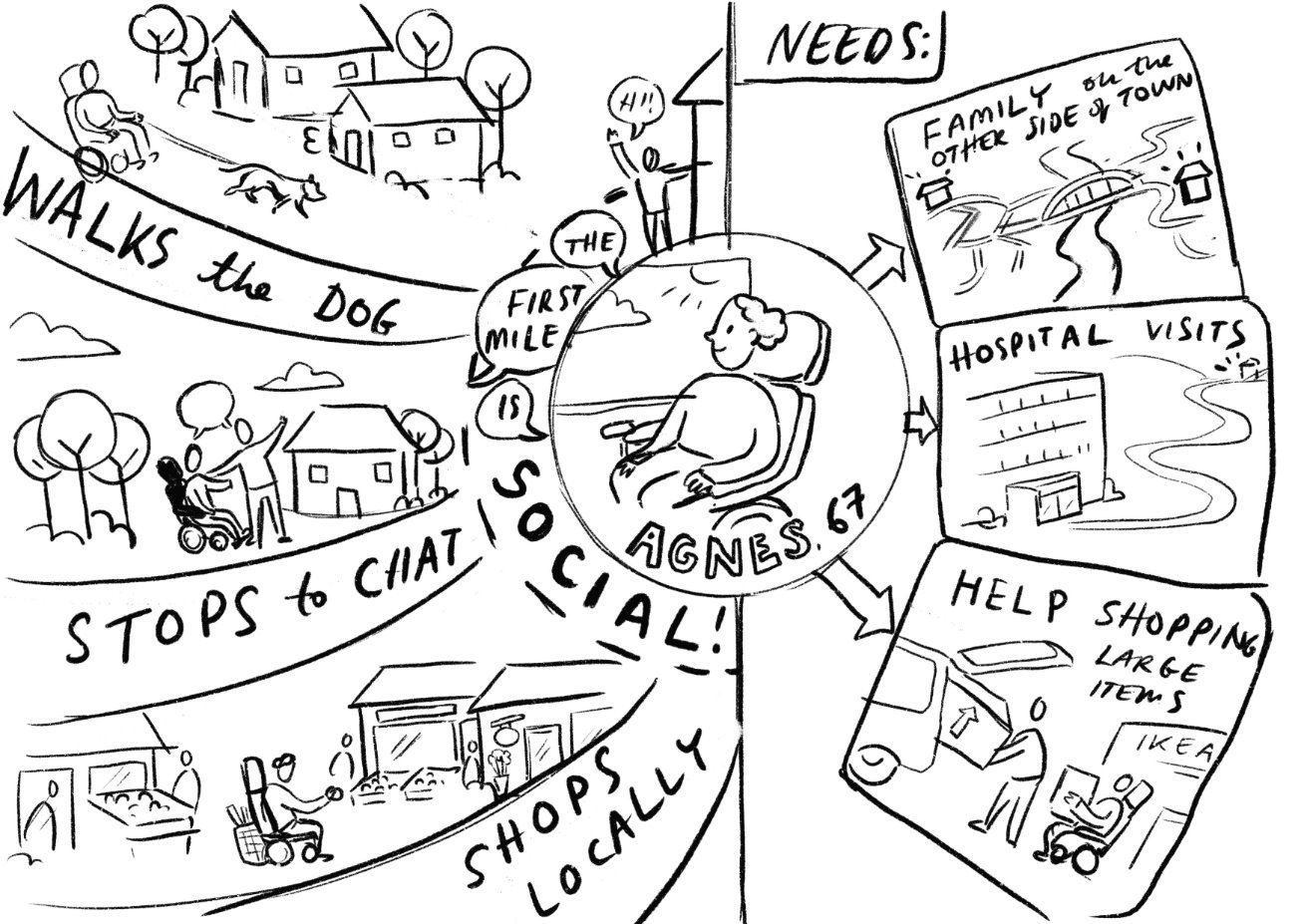
The catalogue brought together ethnographic fieldwork and novel methods derived from design ethnography. It also documented reframings: deliberate efforts to unsettle and challenge the dominant agendas shaping mobility debates. For example, while the industrial discourse often positioned people as users and municipalities as citizens, ethnographic accounts insisted on treating them as simply people trying to hold everyday life together. This small but fundamental shift of thinking of ‘people are more than numbers’, disrupted established traditions of both user studies and citizen dialogues. Another reframing emerged around the assumption that commuting success was defined by time efficiency. Ethnographic stories of the first mile of travel suggested instead that journeys were as much about social and relational aspects of city life. These insights were given form through visualisations produced by an illustrator, whose prompts helped stakeholders reflect on and contest taken-for-granted truths (Figure 7).
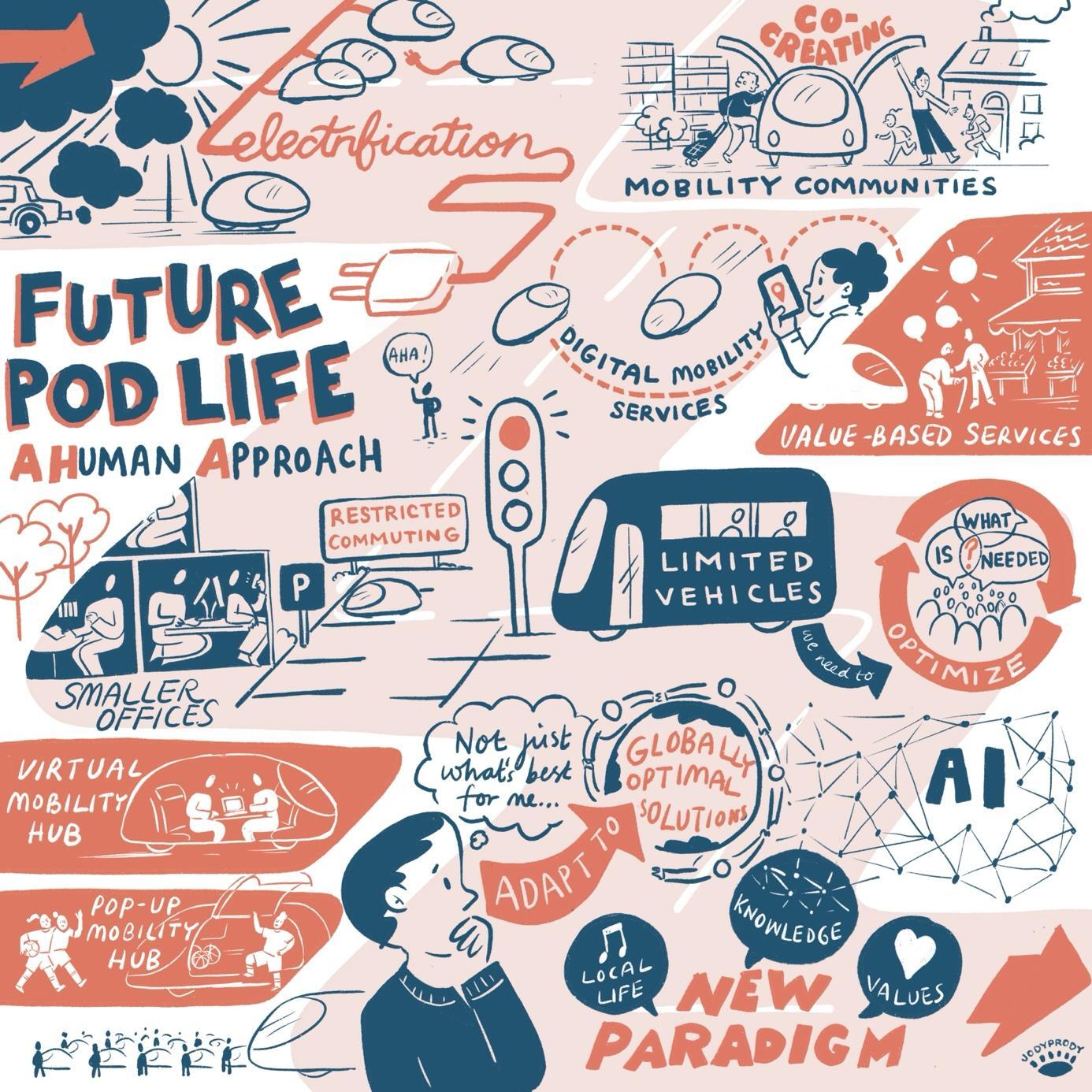
The result was interesting, what was previously looked upon by our project partners as a design vision in the future of mobility, with on-demand self-driving mobility services that took you wherever you wanted whenever you needed it, became re-framed into a worst case scenario of lonely and excluding pod life with services that target mainly high income families based on business travel needs. Instead, the workshop ended up with a co-created speculative future scenario with design concepts for mobility services that moved from being personalised toward being tailored to collective needs, and from efficiency to local-value based traveling; Community-value based travelling and the Pop-up/virtual mobility hub (Figure 8).
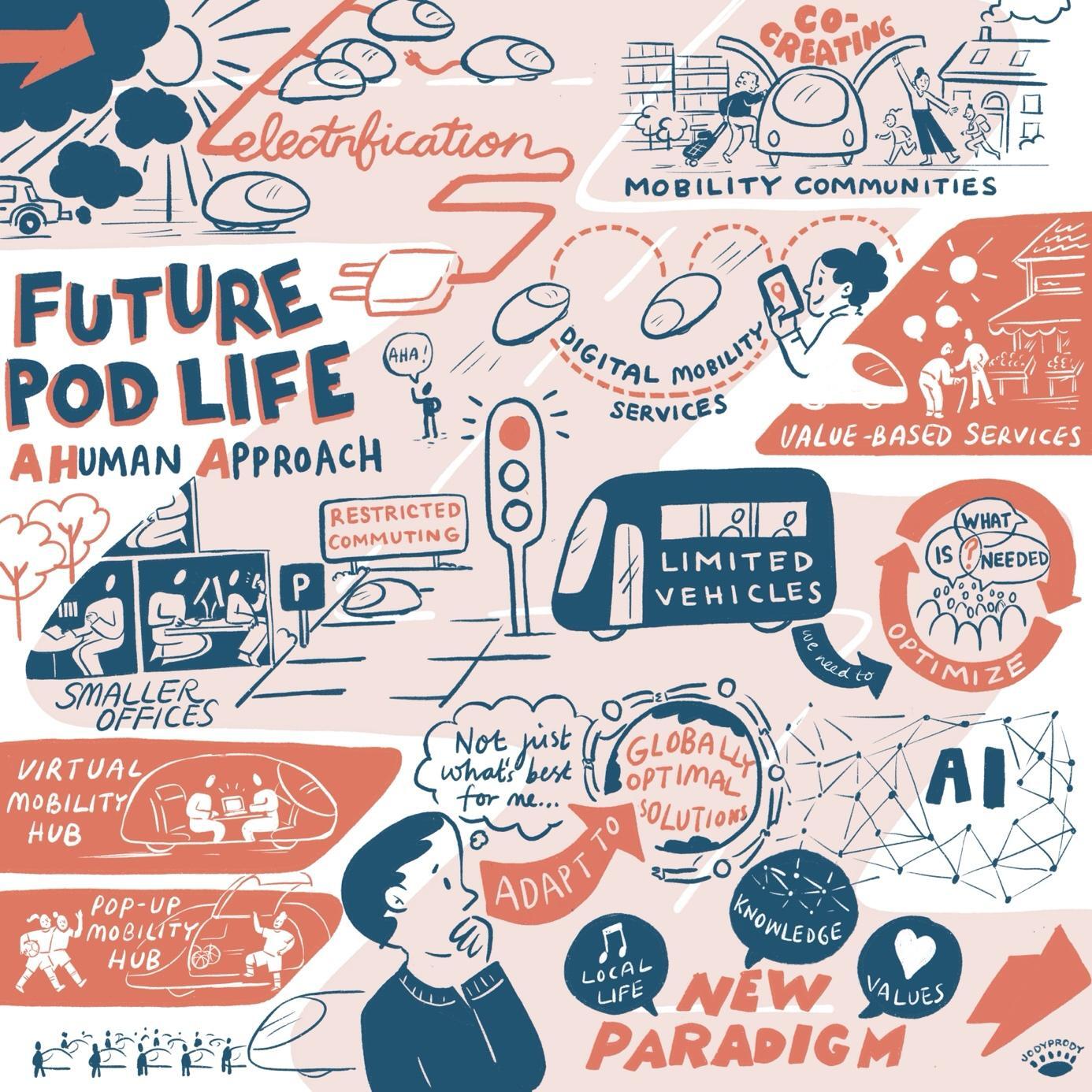
The community value-based traveling concept was described like this:
This shuttle pool provides access to places based on local needs and values, and when it is needed. Transport both within and between different areas that caters for accessibility for all (for example the growing senior population), and not only in terms of efficiency but also in terms of ‘getting around’ as a social endeavor. Flexible enough to cater for changing and diverse populations, supporting the agency of micro networks (for example existing communities of neighbours and family constellations, enhancing various kinds of public transport where it is needed (i. e soccer practices). This advanced public car/shuttle pool service can utilize data from different companies/sources to provide mobility services that mitigate congestion and carbon footprints. The service uses AI to predict when and where to meet, based on CO2 and energy required, as well as available transport
The pop-up/virtual mobility hub was described like this:
Pop up and mobile physical hubs designed to collaborate with infrastructure by adding other services, i. e a shuttle as waiting shelter or moving e-scooters around by attaching them to the back of a bus or a train. Hubs that emerge during soccer training, floor hockey practice or on a day of some other activity. The hub is not necessarily a physical building; it can be mobile like a fleet of cars or a shuttle that moves around as needed. e.g. school buses or walk in buses.
Workplaces can be shared mobile offices where the people make up the office, not the physical space. When there is a need, the team meets up based on the team’s mobility and life needs. The service collects data from people’s private and work calendars and positions and life/mobility patterns, and based on that, suggests places where to meet the team and work. To enable this, the “system” also provides a shared mobility service. The service can also make sure that everybody travels the same distance over a year by optimizing the meeting locations.
This scenario and its design concepts provided the framework for ideating mobility service ideas that could be implemented into the communities in the project, facilitated by the ethnographers and the AHA toolkit (Figure 9).
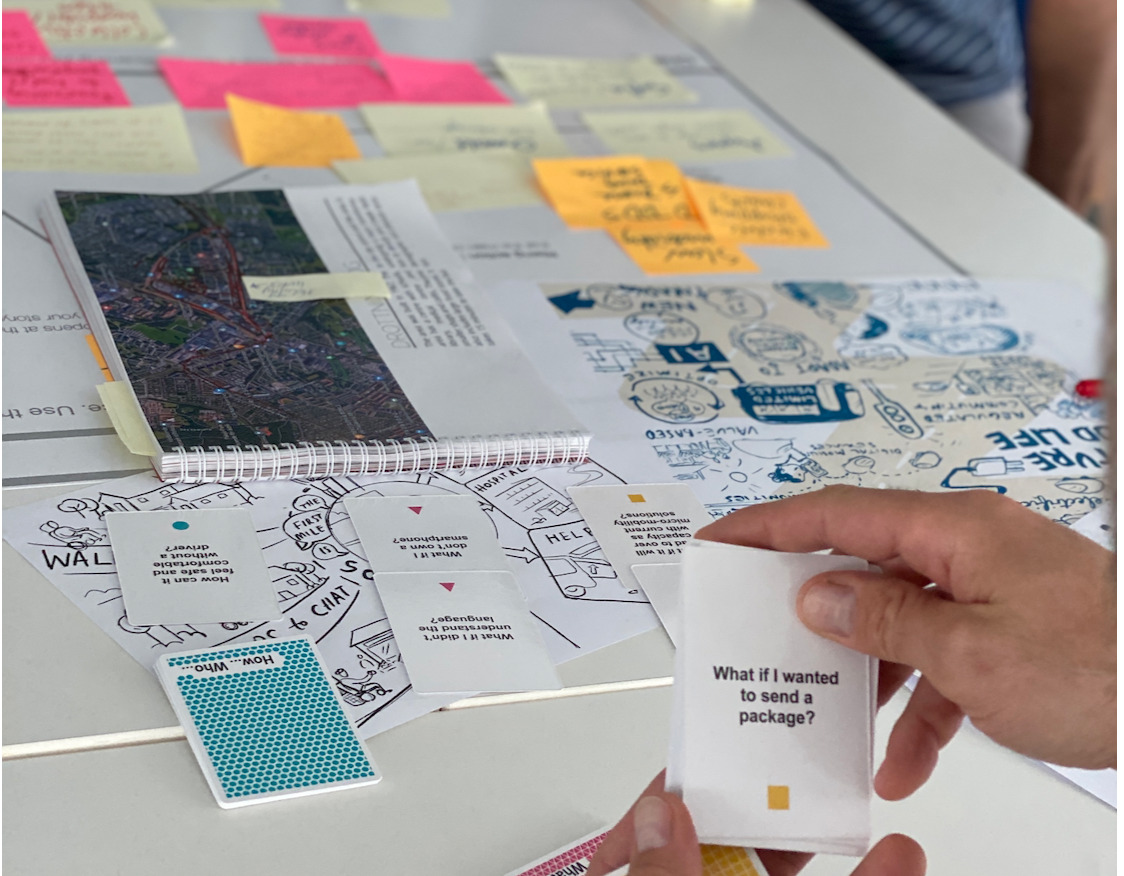
Collectively, these workshops and tools demonstrate how design ethnography translates friction into action. They operationalise the pedagogy’s dual purpose: first, expanding the notion of “user” into rich social, spatial, and relational contexts; second, creating a structured environment in which interdisciplinary, cross-sectoral conversations can flourish. In this way, ethnography does not simply inform design – it reshapes the terms of collaboration, enabling deep scaling and producing mobility solutions that are socially grounded, collaboratively authored, and resilient over time. These examples illustrate the operationalisation of design ethnographic pedagogy in ways that create actionable knowledge, foster interdisciplinary collaboration, and enable mobility futures that are inclusive, plausible, and sensitive to the rhythms of everyday life. We have also reaffirmed the role of ethnographers not just as observers or analysts but as strategic participants who surface frictions, enable inclusive dialogues, and mediate between long-term vision and grounded reality. With this foundation, we now turn to the voices of the stakeholders themselves, exploring how they experienced the project in practice – before moving on to describe the ethnographer’s role in this process, a role we later frame as a kind of patching.
Experiencing Design Ethnography in Practice
After finalising the AHA projects, we conducted group interviews with city and business representatives to discuss their experiences. Topics included expectations, roles, collaboration, co-design, and outcomes from the projects. Below are a few empirical examples (see Ebbesson, Lund, and Smith 2024, for more in-depth examples).
The interview study conducted with all project stakeholders after the project concluded revealed that participants experienced the project as a space for learning, negotiation, and reflection that challenged long-standing practices within their organisations. For many, it provided insights and methods unavailable internally, disrupting habitual ways of engaging with citizens and partners. One participant from Helsingborg reflected on the novel perspectives ethnography offered:
“It’s not only the knowledge about methods, but also about the analysis of the dialogue with individuals that we can’t do by ourselves. We don’t have any ethnographers employed. This approach provides us with totally different input compared to how we normally handle dialogue with our citizens.”
Another participant from Volvo Cars emphasised how the project prompted a rethink of established competencies: “We need to tweak our competencies and learn new methods to work with ‘the people’ to gain insights into real needs.” And reflecting on broader professional habits, a long-time mobility expert from Helsingborg noted:
“I have gotten some type of insight personally, that there are many values that don’t concern mobility specifically […] Our job is all about efficiency and accessibility, so it is an insight that there are other values. Furthermore, I have worked with these issues for 20 years, either as a consultant or within the municipality, and this is the first time I’ve shaken hands with an industry representative.”
Collectively, these reflections highlight how the project disrupted traditional routines and conventions, creating new opportunities for dialogue, experimentation, and collaborative learning.
Taken together, these experiences often felt like stitching together a patchwork quilt. Each organisation, stakeholder, and perspective was a distinct patch, differing in shape, color, and texture. Patching involved carefully connecting these pieces, mending gaps where understanding was thin, and smoothing the frayed edges of conflicting agendas. The process was iterative: some patches did not fit perfectly the first time, requiring adjustments, new methods, or fresh insights, much like sewing and resewing until the quilt holds together.
Through this work, temporary artefacts, workshops, and dialogues became more than momentary fixes – they created durable connections, threads that extended beyond the project into future ways of working. Patching, then, is more than problem-solving; it is a creative, relational practice that allows diverse parts to come together in functional and lasting ways. In this metaphorical quilt, the ethnographer acts as both weaver and translator, gathering insights from different stakeholders, interpreting cultural and organisational differences, and crafting artefacts and methods that connect the separate patches. By translating friction into shared understanding, ethnographers enable the collaborative fabric to hold together.
The Design Ethnographer as the ‘Patcher’
To sum up, building on our long-standing collaborative research, we conceptualise the pedagogy of design ethnography through the notion of patching: the practice of reconciling conflicting perspectives, agendas, and logics across stakeholder groups (Ebbesson 2023; Ebbesson, Lund, and Smith 2024). Patching names the work of reconciling conflicting perspectives, agendas, and logics across diverse actors – transforming friction from a barrier into a resource for co-creation. It is through patching that ethnographers carve out reflective spaces where stakeholders can detach from organisational routines, explore alternative values and imaginaries, and then reconnect to their everyday realities with renewed perspectives. Practically, patching operates in two registers: backstage, where research findings are translated into artefacts such as catalogues or transformation games, and frontstage, where those artefacts enable sensemaking and negotiation during workshops. Crucially, these artefacts circulate beyond the confines of projects, allowing stakeholders to bridge internal divides within their own organisations and to engage new partners. By conceptualising patching in this way, we show how design ethnography extends beyond observation or facilitation: it actively sustains the delicate process of creating an open and shared space where collaboration can take root. This is the pedagogical work of the design ethnographer – to enable patching as the mechanism through which friction becomes generative and deep transformation becomes possible.
Building on this metaphor, the ethnographer’s role in backstage work involves collecting, translating, and shaping insights before they enter collaborative spaces. Ethnographers observe organisational routines, stakeholder interactions, and citizen experiences, creating artefacts, analytical tools, and methods that can bridge differences. These backstage activities serve as the threads and patches that will later be woven together, enabling participants to engage with perspectives they would otherwise not encounter. As one representative from Volvo Cars explained: "This project is interesting as it continues to build relationships with partners we normally don’t work closely with, especially regarding development […] It’s important and interesting and provides means of learning when we are presented with opportunities to collaborate and learn how to understand each other. Through this preparatory work, ethnographers also anticipate potential points of friction, design strategies to surface these tensions safely, and provide participants with ways to navigate complexity.
Frontstage work unfolds in workshops, meetings, and collaborative sessions, where ethnographers facilitate interaction, negotiation, and reflection. Using the artefacts, methods, and insights developed backstage, they help stakeholders translate differences into shared understanding. In these spaces, participants explore conflicting agendas, reflect on new values, and align their actions toward common goals. Frontstage practices are iterative and responsive, much like sewing patches together in real time. Ethnographers guide the process, supporting participants as they experiment, adjust, and learn from each interaction, ensuring the collaborative fabric remains functional and coherent. One participant from Helsingborg captured the value of these encounters: “Having this dialogue and identifying common ground for our drivers is very rewarding. Today we lack the means to understand each other’s perspectives.”
The Future of Future Mobility
So now, ten years after the hype about self-driving cars peaked, where are we in the development? The story is less triumphant than once imagined. As experts now admit, autonomous driving is simple to state but hard to solve: the road is chaotic. Computer technologies struggle with the unpredictable behaviour of and data from cyclists, pedestrians, weather, and the subtle judgements human drivers make every day. And the grand narrative of self-driving cars, as Tennant et al. (2025) note, was not as radically disruptive as it looked from a first sight, but “oddly conservative” since it assumed that machines could replace drivers without addressing the wider systems of transport. This narrow vision has left public scepticism untouched. To many, the promise of being “freed” from driving feels less liberating than dehumanising, a denial of control and agency.
In the wake of the hype, Ford and Volkswagen quietly closed their autonomous venture Argo AI in 2022, and Apple abandoned its ten year long self-driving car project Titan in 2024. General Motors shut down their robotaxi project Cruise in 2024 after a serious accident in San Francisco. Aurora, having briefly launched a driverless trucking service in Texas, returned human drivers to the wheel in 2025. In fact, according to S&P Global, a true Level 5 vehicle – the moment when passengers might safely nap in the backseat – is unlikely before 2035, if at all. In our case, Volvo Cars ended up reorganising and decreasing human-centred design initiatives for future mobility services that included autonomous vehicles, instead turning focus to in-car interaction design and the technical development of fully electrified vehicles.
This has led to a growing recognition – among funders, policymakers, industry, and public authorities – of the need to embed social, ethical, and cultural dimensions in the design of future mobility systems (Cohen et al. 2020; Stilgoe and McDermid 2025). Yet the cooling-off around self-driving cars illustrates how difficult this remains in practice. Technical advances collide with unresolved legal and ethical uncertainties, while surveys suggest that public trust continues to be fragile (Pink 2023). Local communities are still too often excluded from decision-making, generating resistance (Nordhoff 2024), and the intelligence embedded in autonomous systems – data, algorithms, infrastructures – rarely aligns with how people imagine and relate to mobility in everyday life (Tennant et al. 2025). This emerging body of work shows that technical progress alone is insufficient to deliver trusted futures (Pink and Quilty 2025). Instead, innovating automated futures that are socially sustainable requires approaches that embed social and cultural knowledge at its heart (Fors, Berg, and Brodersen 2024). Our design ethnographic approach developed over a decade demonstrates how such collaborations can disrupt established norms within stakeholder cultures and open space for a more integrated, grounded, and equitable innovation agenda that supports designing future mobility systems with – rather than merely for – communities, stakeholders, and future publics. In our case, this has led to our city partners in Gothenburg and Helsingborg shifting their way of working more distant 'citizen dialogues, toward public engagement and co-creation, increasingly developing test beds and urban living labs to explore the possibilities of enabling mobility innovation together with the citizens.
Building such approaches through collaboration, however, is rarely straightforward. Institutional, temporal, and financial constraints mean that academics, policymakers, and industry actors alike are accountable to systems of metrification, monitoring, and efficiency. These frictions and logics can limit what “partnership” is allowed to mean, and they make it harder to sustain forms of companionship across sectors that are not easily reduced to contractual or transactional terms. For academics, this calls for finding alternative ways of relating to collaborators – as companions in shared spaces of concern rather than as partners locked into narrow deliverables. For industry, design ethnography resists the pressure for quick lists of user requirements and instead offers something slower and harder to commodify: the ability to realign innovation with lived realities, social inequalities, and diverse perspectives. For future mobility strategists across sectors, such as car developers and urban planners, this means developing organizational cultures that support and direct common goals of more humane and sustainable futures.
Furthermore, the urgent need for research to address societal challenges and polycrisis, within accelerated digital systems and hyperconnected intelligences, demands active engagement and responsibility in complex processes of real-world transformation at diverse scales (Smith et al., 2025). In this sense, the concept of patching marks carefully stitching together the loose, uneven, and sometimes fragile pieces of collaboration into a fabric capable of holding, adapting, and sustaining shared, socially grounded futures that are collaboratively authored, contextually sensitive, and resilient over time. In this shifting terrain, a design ethnographic pedagogy can help to bridge divides and nurture relationships across these different modes of companionship. By operationalising friction as a resource, expanding framings of citizens and collectives into broader social and cultural contexts, and creating structured spaces for co-learning. As such, design ethnography can create the conditions for relationships that are more resilient, inclusive, and responsive to the rhythms of both innovation and everyday life.
About the Authors
Vaike Fors is Professor of Design Ethnography at Halmstad University. Vaike is the director of the REBEL Research Program (Re-Imagining Future Smart Living – Beyond the Living Lab). Her recent work includes the co-authored book Design Ethnography. Research, Responsibilities and Futures (2022) and the co-edited De Gruyter Handbook of Automated Futures (2024)
Rachel Charlotte Smith is Associate Professor of Human-Centred Design at Aarhus University. Her research focuses on everyday digital transformations and sustainable technology futures through participatory design and design anthropology. Publications include Routledge International Handbook of Contemporary Participatory Design (2025), Design Anthropology Special Issue (2022), and Design Anthropological Futures (2016).
Sarah Pink (PhD, PhD Hcx2, FASSA) is a futures anthropologist and documentary filmmaker. Sarah is Laureate Professor and Director of the Emerging Technologies Lab and FUTURES Hub at Monash University. Her recent works include the book Emerging Technologies / Life at the Edge of the Future (2023) and Can We Trust Technology? (2025) and the documentaries Digital Energy Futures (2022) and Air Futures (2024).
Jesper Lund is Associate Professor of Informatics at Halmstad University. His research focuses on co-design in living labs with a specific interest related to the field of future mobility. Publications include Transportation Research Interdisciplinary Perspectives (2025), Journal of Responsible Innovation (2024), and CoDesign (2024).
Esbjörn Ebbesson was a design researcher and PhD candidate at Halmstad University. His expertise was in both theorising the pedagogy of co-design, as well as practically develop co-design tools. He earned his Licentiate degree 2023 with his thesis Engaging in Urban Living Lab Co-design.
Research Ethics
This article is based on research projects conducted between 2016 and 2023 and adhered to recognized ethical standards and Halmstad University’s data management plans. Potential risks to participants were carefully assessed and mitigated, and informed consent was obtained from all participants, who were fully informed of the study’s objectives, procedures, and their right to withdraw. Data were securely stored with restricted access. Participant dignity, autonomy, and social rights were upheld, for example by allowing participants to review and approve the use of their contributions, ensuring voluntary participation, and accommodating cultural norms and local practices throughout the research process.
Notes
We draw on accumulated findings from over a decade of academic–industry collaborative research in the domain of future mobility and self-driving cars. We focus in particular on a series of linked projects; Project HEAD (ref nr: 2016-02515), Project TIC (ref nr 2017-03058), Project AHA (ref nr 2018-02088) and AHA II (ref nr 2019-04786), and Project MeMo (ref nr 2023-04183), developed as part of Sweden’s national strategic innovation programme for future mobility in VINNOVA and Drive Sweden, and the Future Automated Mobilities project developed with the Australian Research Council Centre of Excellence for Automated Decision-Making and Society (ID: CE200100005).