
Introduction
The European insurance industry is undergoing a profound transformation, driven by two disruptive forces: the introduction of new data-sharing regulations, most notably the forthcoming Financial Data Access (FiDA) regulation (Council of the European Union 2024; European Insurance and Occupational Pensions Authority (EIOPA) 2021), and the rapid proliferation of generative AI (GenAI) (Balasubramanian, Libarikian, and McElhaney 2021; Bhattacharya et al. 2025). While these developments offer the potential for innovation, automation, and enhanced customer services, they also pose complex strategic and organizational challenges. For insurers, the shift is not just technical or legal, it is deeply systemic.
This paper shows how If Insurance, a leading non-life insurance company in the Nordic and Baltic markets, responded to this challenge. In early 2024, anticipating the impact of FiDA, the company launched a cross-functional project with multiple workstreams aimed at shaping a future-facing regulatory strategy. Each workstream focused on a specific perspective: legal compliance, technical capabilities, data governance, business implications, market outlook, and consumer behavior. Together, these streams embodied a range of specialized expertise and ways of framing the problem. Rather than converging on a shared strategic direction, their efforts revealed deep structural tensions: narrow legal literalism and technical specificity on one side, broad market foresight and behavioral analysis on the other. Not only were these different ways of seeing the problem difficult to reconcile, they often seemed to work at cross-purposes.
Here we focus on the consumer behavior stream which explored, through a socio-cultural lens, how consumers might experience and respond to the changing data landscape. This consumer research revealed a fundamental public demand for transparency and personal agency, concerns largely overlooked in the techno-centric discourse around GenAI and the risk-focused legal framing of FiDA. Initially, these insights were treated as peripheral to the project’s main objective: minimizing regulatory impact. But over time, they began to reframe how the company understood both the risks and possibilities embedded in the regulation.
The turning point came when the consumer behavior insights were integrated into the work of the market outlook stream. This enriched perspective allowed the organization to imagine how new forms of data sharing could be leveraged to build trust, empower customers, and differentiate the business. What began as a fragmented, compliance-driven initiative evolved into a more integrated and forward-looking strategy, one that treated FiDA not as a constraint, but as an opportunity for strategic renewal.
This paper traces that shift. It unpacks the epistemological silos that defined the early stages of the project, illustrates how socio-culturally grounded consumer insights helped surface and bridge those divides when moved upstream into the company’s strategy process, and shows how a more adaptive and interdisciplinary strategy emerged. These insights did not merely add a new voice to the conversation; they acted as a catalyst for rethinking the strategic landscape, enabling connections across divergent perspectives and opening up new possibilities for organizational learning. By documenting this case, we aim to offer a transferable framework, consisting of four key principles, for how organizations can bring together fragmented intelligences in the face of regulatory and technological complexity. In doing so, we argue that consumer insight grounded in ethnographic and socio-cultural understanding is not merely a supporting tool for communication or design, as it is often used by companies. It is a strategic resource for integration, innovation, and long-term value creation.
Consumer Research as a Catalyst for Opening Up Siloed Intelligences
Our approach to the consumer research was grounded in ethnographic, socio-cultural, and futures-oriented methods aimed at uncovering lived experiences, shifting norms, and emerging behaviors that are not always visible through market-based or quantitative data alone.
To understand the role this research played in If’s strategy project, it’s important to consider the challenge of integrating multiple forms of organizational intelligence into a cohesive strategy. In complex, highly regulated environments like insurance, strategic decision-making draws on diverse domains of expertise: legal, technical, governance, business, and consumer insight. While each domain is essential, they are often siloed, not just organizationally, but epistemologically. Each operates with distinct priorities, assumptions, and interpretations of what counts as relevant knowledge.
Ethnographic and socio-cultural approaches offer unique value in such settings. Rather than merely contributing another stream of insight, they help surface the underlying tensions between different perspectives and reframe how organizations think about value, trust, and change (De Paula, Thomas, and Lang 2009). This kind of research is particularly well-suited to navigating ambiguity (Deneer 2017) as it reveals the implicit epistemic orientations shaping different organizational perspectives and exposes how external forces, such as, cultural norms, public expectations, and institutional trust, intersect with strategic priorities.
By focusing on lived experience and contextual meaning, these approaches help connect seemingly disconnected perspectives to broader shifts in consumer behavior and cultural dynamics. This capacity to work across and between different ways of knowing and reasoning becomes especially important when internal workstreams, like those in If’s FiDA project, struggle to align. In such moments, culturally attuned inquiry doesn’t eliminate complexity; it helps organizations engage with it more clearly. As the following case illustrates, this kind of bridging role can be essential when seemingly disconnected perspectives must converge to form a resilient and opportunity-oriented strategy.
Conceptual Framing
Throughout this paper, we refer to different areas of expertise within the organization – legal, technical, governance, business, and consumer – as domains or perspectives. Each of these domains represents not just a functional area, but a distinct way of understanding problems, generating insight, and defining strategic value. To describe these differences, we use the term organizational intelligences.
We define organizational intelligences as distinct epistemic orientations: that is, different ways of knowing, reasoning, and acting that are embedded within organizational domains (e.g., Dahlmann and Grosvold 2017; Farid and Waldorff 2022). Each intelligence tends to operate with its own assumptions about what counts as relevant knowledge, how that knowledge should be produced, and what outcomes are most important.
By focusing on these epistemic and value-based differences, we move beyond a surface-level account of cross-functional misalignment. The challenges we describe are not simply matters of coordination or communication; they are the result of deeper tensions between competing intelligences. This framing helps explain why socio-culturally grounded consumer insights played such a catalytic role: not by introducing “more data,” but by enabling a reframing of the strategic landscape that could resonate across divergent intelligences.
Case Study: If Insurance’s Strategic Renewal Process
In June 2023, the European Commission proposed the Financial Data Access (FiDA) regulation. This initiative aims to create a framework for sharing financial data beyond payment accounts, including non-life insurance products, with the intent of supporting Open Finance in the EU (EIOPA, 2021). The FiDA regulation is expected to be adopted in late 2025, with a phased implementation starting in 2027.
In response to the introduction of the FiDA regulations in 2023, If Insurance, a leading non-life insurance company in the Nordic and Baltic markets, set up a corporate strategy project in the beginning of 2024 to better understand the implications of FiDA for If.
The FiDA Strategy Project
The objective of this initiative was to develop a comprehensive Open Insurance strategy for all countries and relevant business areas. This overarching strategy was crafted through a thorough analysis of each implication area conducted across multiple workstreams. The strategy aimed to define If’s future position within the context of FIDA, outline plans for needed future capabilities, and provide a high-level roadmap for implementation.
It was understood that If would need to:
-
Join a data scheme (a group of organizations with a shared data scope to define the practicalities for data sharing) and be ready to participate in the governance of it.
-
Be prepared to share and use data (data availability, format, transfer etc).
-
Offer functionality to request data sharing and a permission dashboard.
-
Understand how this might change the dynamics of the industry.
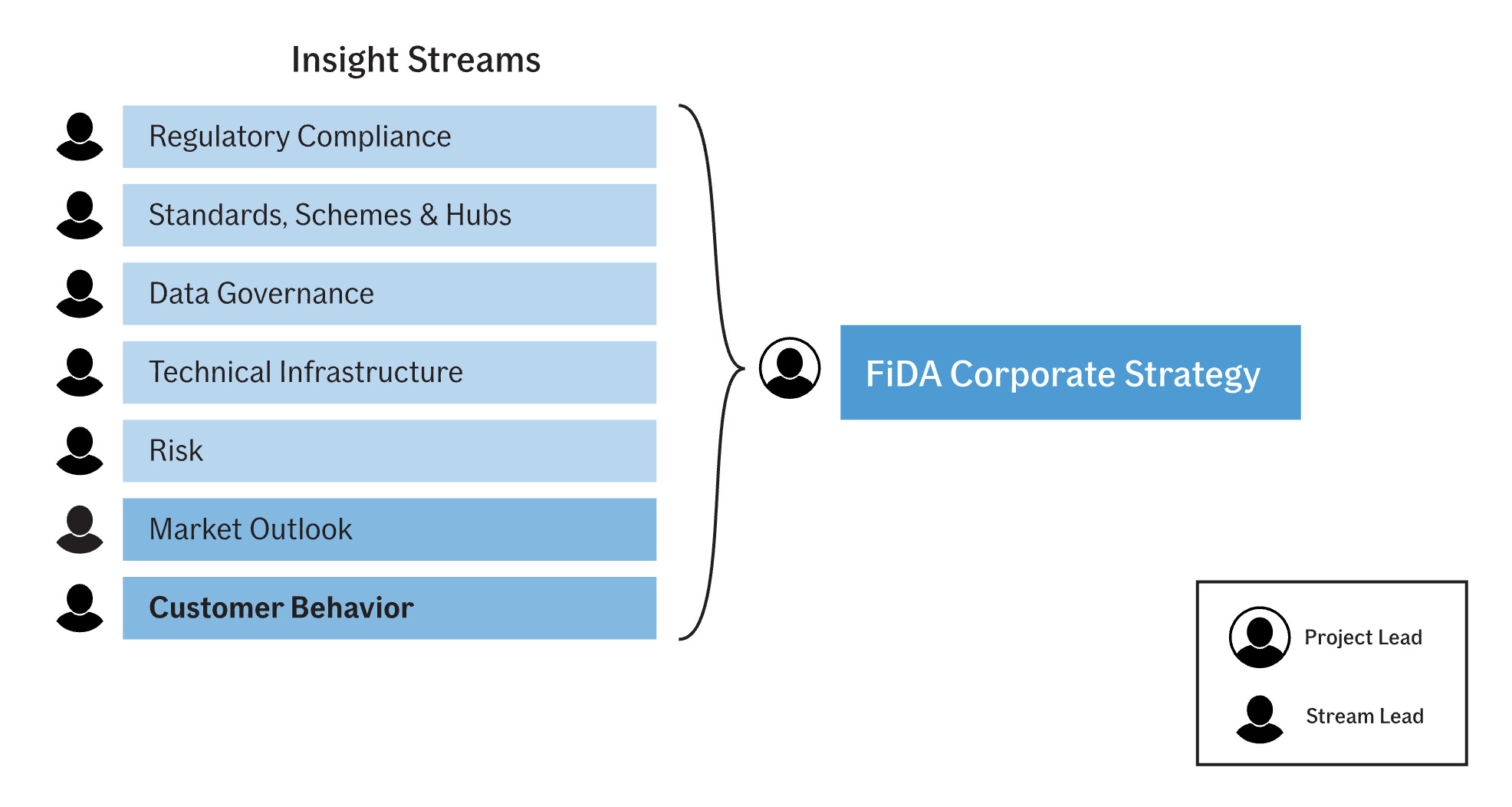
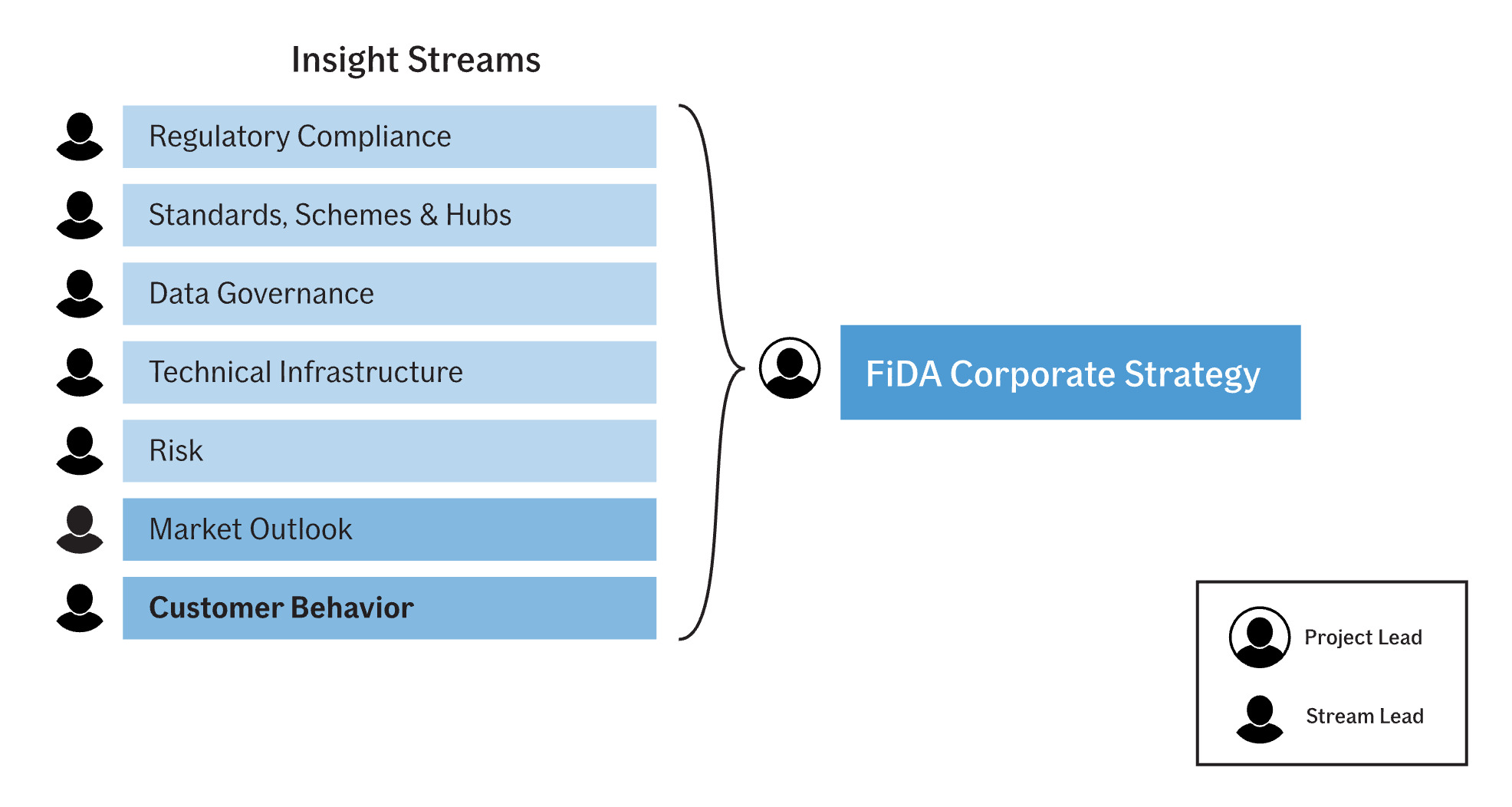
To meet these needs, the strategy project was set up with multiple workstreams gathering insight about FiDA from multiple different perspectives.
-
The Regulatory Compliance and Environment stream was focused on understanding the legal requirements for FiDA and engaging in advocacy activities to shape the legislation as it is being developed.
-
The Standards, Schemes and Technical Hubs stream was focused on understanding and defining a strategy for If on how to relate and work with schemes and hubs (centralized platforms connecting various stakeholders, including data holders and data users).
-
The Data Governance and Management stream focused on establishing how FiDA related data assets will be managed within the organization and governed.
-
The Technical Infrastructure and Capabilities stream was focused on understanding the technical implications of FiDA requirements for If.
-
The Market Outlook stream was focused on predicting how Open Insurance will reshape the market, competition and partnerships.
-
The Customer Behaviour stream was focused on analysing how Open Insurance will affect customer behavior and preferences.
-
The Risk stream was focused on understanding the scope of impact of FIDA on If’s business model and operations and where the biggest risks to the organization lie.
The project was set up so that each workstream was initiated in Q2 2024 and delivered in Q3 to the project lead who then worked with the stream leads to craft the overarching strategy for how If would respond to FiDA. Throughout the project the stream leads met regularly to discuss their progress within their stream and collaboratively share their perspectives with the other stream leads (see figure 1).
This case study focuses on the Customer Behavior workstream and the stream lead’s experience of integrating the customer perspective into the corporate strategy, which highlighted the differences in focal points in which each stream worked as well as tensions between the different perspectives.
Conducting the Research
The overall objective of the Customer Behavior workstream was to identify emerging consumer behaviours and expectations in the context of the evolving landscape driven by new open finance regulations (FiDA) and advancements in generative AI. It was deemed critical to the FiDA strategy that If develops a solid understanding of how consumers’ behaviours will likely change in the mid-term (3+ years) in order to identify opportunities for growth and differentiation as well as potential challenges it faces.
The research in this stream focused on answering the following questions:
-
What major changes in consumer behaviours and expectations can we anticipate in light of the new open finance regulations in the EU (FiDA)?
-
In which finance- and non-finance-related environments or contexts can we already see new forms of consumer expectations emerging? How do these changes manifest, and why are they potentially important for If?
-
How can If be at the forefront of catering for its customers’ emerging needs?
Who
Tara Mullaney, the Nordic UX Research Lead, was tasked with leading the Customer Behavior workstream. However, due to If not having any resources within the organization skilled with futures research, she engaged Alice Labs, a Finnish consultancy with years of experience working with identifying future customer behaviors to conduct the research. As Stream Lead, Tara worked closely with both Alice Labs as well as the other Stream Leads and the Project Lead to ensure the success of the Stream’s delivery and the integration of customer insights into the overarching Strategy being developed.
Alice Labs were tasked with conducting the research over a two-month period. The intent was not simply to understand current consumer needs, but to explore how broader patterns of change might alter what people value, how they make decisions, and what they come to expect from institutions like insurers.
The Process
The research process began with a review of existing consumer insight work within the organization, identifying both established knowledge and significant gaps. This was followed by a macro-level analysis of the broader context of change, including technological shifts such as AI, evolving regulatory frameworks like open finance, and cultural reorientations around trust, control, and institutional accountability. This framing helped anchor the project in a forward-looking understanding of where new consumer expectations were likely to emerge.
Alice Lab’s proprietary Leading Edge method was then used to explore how individuals are beginning to navigate this changing environment, how they relate to digital systems, what they expect from data-driven services, and how they define meaningful concepts like control and transparency. This methodology identifies individuals who tend to sit at the cusp of cultural and behavioural change, driven by curiosity and a desire to shape progress, making them a valuable proxy for what’s emerging on the horizon. Through this qualitative exploration, recurring themes surfaced, most notably a growing demand for transparency and personal agency. Consumers increasingly expect to act within the remits of systems, rather than simply be subject to data-based systems, seeking visibility, choice, and fairness in their interactions with institutions (Cesafsky, Stayton, and Cefkin 2019; Savolainen and Ruckenstein 2024).
These expectations stood in contrast to the outputs being delivered in the other workstreams, which focused primarily on legal compliance and operational efficiency, a conservative mindset focused on protecting the business. The research revealed an alternative value axis rooted in lived experience and shifting cultural norms, and it surfaced a critical tension: while much of the internal strategic focus was on minimizing the impact of the new regulation, consumers were signaling a desire for greater empowerment, reframing data sharing not as a threat, but as an opportunity to engage on new terms.
Conflicting Intelligences
As the learnings from each workstream began to develop, it became clear in the regular stream lead meetings that the scopes and frames of each stream varied significantly from each other, i.e., that there was an innate conflict between the perspectives of some of the Streams. The microscopic focus on legislative wording within the Compliance stream or data sharing structures within the Governance stream contrasted greatly with the systemic perspective taken by the Market outlook and Customer behavior streams when observing market trends and the impact the macro landscape was having on consumer behaviors.
Additionally, where the Risk, Compliance, Data and Tech streams were primarily concerned with minimizing the impact of the new regulation on the organization, the Customer Behavior and Market Streams were tasked with imagining a future when the regulations are in place and how the organization could start working today to meet the new opportunities and challenges that this future landscape brings.
One example of this tension was brought to light in a conversation that the Customer Behavior Stream Lead had with the Compliance Stream Lead about the opportunities that could arise from access to the full scope of data the FiDA will enable (insurance and financial). The Compliance Stream Lead shared that his stream’s scope was focused solely on our insurance data and minimizing what will have to be shared with others (a protective framing), contrasting greatly with the Customer Behavior stream which looked more positively at the possibilities that could open up for the organization through FiDA, where access to more data from new sources could be used to improve our offerings and services (an expansive framing), and turn the inevitable shifts in the market landscape into competitive advantage.
From the Periphery to Strategic Integration
When the consumer behaviour insights were delivered to the Project Lead and other key project stakeholders in a series of workshops, one of the challenges that arose was that the research findings were seen as interesting but somewhat peripheral to the project’s main objective of minimizing the impact of FiDA on If’s business. It was challenging for the business stakeholders to understand the implications of the learnings and how they should be integrated into the overarching strategy. Like in many ethnographic engagements (Flynn and Lovejoy 2008), the Customer Behavior stream’s early contributions risked becoming invisible, not because they lacked insight, but because they did not align neatly with the established metrics or objectives of the other workstreams.
Furthermore, the Project Lead shared that she struggled to understand how to act on the learnings, not because they lacked relevance, but because their framing challenged existing strategic categories and required a different kind of engagement than other streams. Based on this conversation, the Stream Lead identified that if the customer behavior learnings were to actually be integrated into the overall strategy in a meaningful way, they needed to connect to the other workstreams’ deliveries in tangible and concrete ways. In identifying this gap between the research delivery and the other streams’ work, the Stream Lead decided to continue the work within the stream, understanding that the impact of the customer insights would only occur if the learnings were tangibly integrated into the strategy.
The breakthrough came when the Stream Lead decided to connect the consumer insights with the five future market scenarios that were developed in the Market Stream. Both the Market and Consumer Behavior streams had enough similarities in their mindset that this became the easiest site of connection.
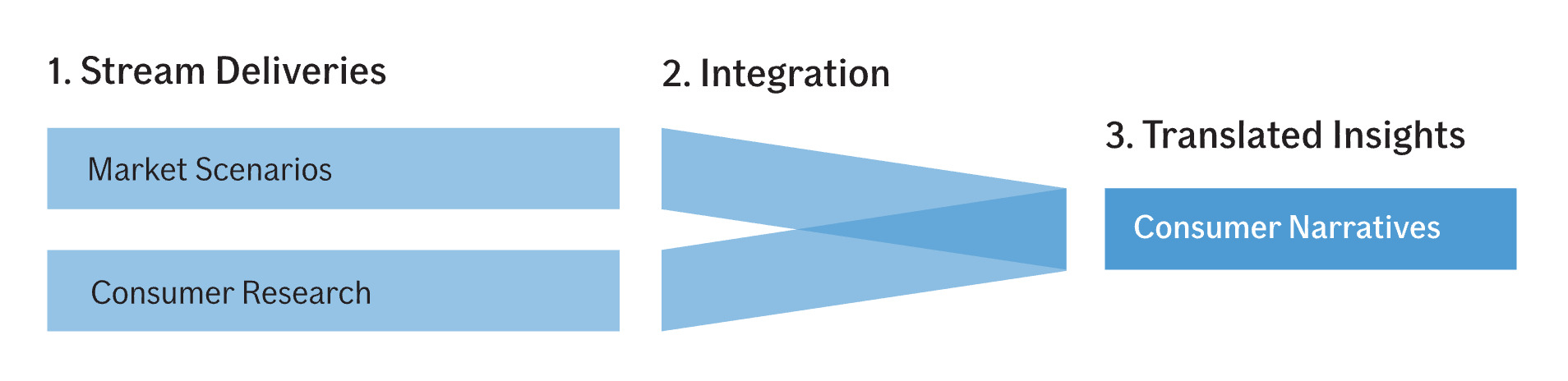
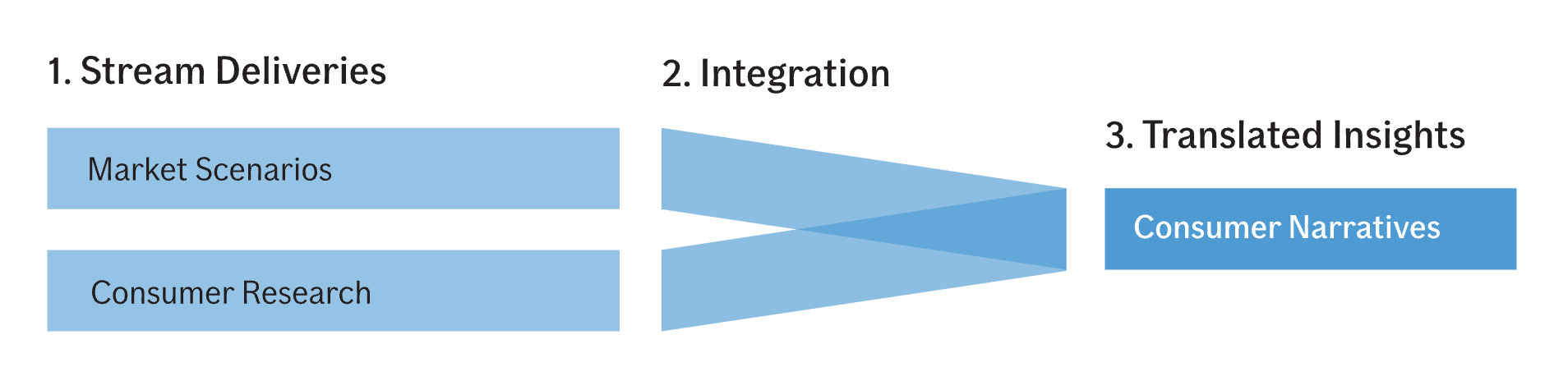
In its work, the Market stream developed a set of 5 possible scenarios for how the insurance market might shift with the introduction of the FiDA regulations. Working closely with the Market Stream Lead, the Customer Behaviour Stream Lead saw the possibility to map the customer behavior insights onto the market scenarios and to provide concrete examples of what future customer experiences might look like in these scenarios. In collaboration with two UX Designers, the Stream Lead integrated the learnings from the consumer research and market scenarios, and created narratives for how consumers will behave and what their expectations will be for each of the five market scenarios (see figure 2). These narratives included tangible descriptions of consumer expectations for each market scenario, opportunities for how If could act in this situation (new features / services / offers for its customers) and visualizations of what these offerings could look like.
These consumer narratives helped the project team envision how FiDA could enable new forms of value creation, and they also became a tangible reference point for the many stakeholders within the organization who engaged with the strategy work. The concreteness of these narratives helped them understand how to apply concepts and think differently about service delivery.
While the project brought together multiple organizational domains, its trajectory moved beyond a purely multidisciplinary mode where different disciplines operate in parallel toward an interdisciplinary approach characterized by negotiation, reframing, and integration across domains (Huutoniemi et al. 2010; Majchrzak, Brinbaum-More, and Faraj 2012). This integration reframed the strategy: FiDA was no longer just a compliance issue, but a strategic opportunity for transparency, innovation, and customer empowerment.
Outcomes and Strategic Impact: From Compliance to Opportunity
The combined results from the market and customer behavior streams provided a lens for the different stakeholders across If to look into the future and begin to imagine the impact that FiDA might have on the insurance business within the EU. These two streams, as opposed to the conservative and protectionist stances of the other streams, focused on looking at possible futures, both good and bad. And it was these streams that created a strategic mindset shift within the project and its key stakeholders: FiDA became a platform for innovation rather than a constraint.
At face value, it is difficult to fully grasp the impact and possibilities that the FiDA regulations may bring, and this proved to be true when the strategy project leader began sharing the project learnings with management teams and key stakeholders in a series of workshops. It was the future consumer behavior stories and visualizations delivered from the Customer behavior stream that became the tangible touchpoint within these workshops, grounding the high-level conversation on data sharing with real scenarios, and helping the participants to understand what a future with FiDA might look like.
For the Customer Behavior Stream, strategy was developed in real-time, through ongoing “back-and-forth” iteration and being embedded within the context of the other workstreams deliveries. The consumer insights delivered by Alice Labs, while rich and knowledge laden, were developed externally and run in parallel to the other work streams. The meaningful value of these insights was fully realized when they were translated into If’s organisational context by the CB Stream Lead and integrated with other Streams’ deliveries for better resonance and impact within the overarching FiDA strategy.
How the Strategy Has Landed
To date, the precise wording of the FiDA regulation is still being developed and the actual implementation of the regulation is still several years away. As such, not much immediate action is expected to take place on the FiDA strategy within If. The expectation of the project lead is that the strategy will remain dormant for about a year. More movement is anticipated when there is a final legal text and clearer timeline for implementation. At that point, the existing strategy will serve as a knowledge foundation for the organization to build upon rather than starting from scratch.
While the FiDA strategy is essentially paused, the same can not be said for the future customer behavior insights generated from the socio-cultural research that was conducted. These learnings have been identified as being highly relevant for many business units across the organization and are actively being integrated into other strategy work, from product development to AI. The very challenge that we faced with the customer behavior insights delivery not being linked closely enough to FiDA and the other stream deliveries has actually allowed the learnings to find a home and have impact more broadly in the organization. An understanding of possible future customer behaviors is widely applicable to many areas of strategic development within If, and the learnings delivered are eagerly being asked to be shared.
Four Principles for Strategic Alignment through Consumer Insight
The FiDA strategy project at If Insurance revealed how organizations can begin to break down epistemological silos and move toward more integrated strategic thinking, even in environments shaped by regulation and technical constraint. The lessons from the case point to a broader set of principles for working across divergent intelligences and navigating the frictions that arise in interdisciplinary contexts. These four principles are not linear steps, but generative conditions that can enable more adaptive, future-oriented, and inclusive strategy work.
Adaptive Integration
Embrace friction and respond dynamically; when different intelligences operate with fundamentally different ways of reasoning and prioritizing, integration cannot be designed in advance but must emerge through iteration and relational work.
In the FiDA project, each workstream worked from a different understanding of what the strategy should achieve. Compliance focused on minimizing legal exposure, technology on operational readiness, and consumer behavior on cultural values and lived experience. Rather than forcing a top-down alignment, integration emerged through the willingness of individuals to stay engaged across these differences, even when no clear pathway forward was visible. The integration of consumer insights into the market scenarios was not planned at the outset; it evolved through persistent negotiation, sensemaking, and adaptation.
This adaptive approach stands in contrast to more prescriptive Human-Centered Design (HCD) methods, which often presume a stable problem space and predefined user journey (Boy 2017). Where HCD tends to emphasize structured co-creation processes, the approach in this project was necessarily more fluid, capable of responding to emergent friction and reframing the strategic challenge as it unfolded.
Translational Insight
Strategic insight becomes impactful when it can be translated across domains. Create opportunities and practices for cross-pollination that can reframe findings to resonate with diverse intelligences (legal, technical, behavioral) without reducing their complexity.
When the research findings were first shared with the broader strategy team, they were seen as “interesting but peripheral.” The turning point came when the Customer Behavior Stream worked with the Market Outlook team to embed those insights into five future market scenarios. These scenarios, accompanied by consumer narratives and visualized use cases, allowed stakeholders from other domains to engage with the insights in familiar strategic terms. This act of translation, not simplification, enabled the research to connect with broader organizational concerns and unlocked its strategic relevance.
Importantly, what made this integration effective was not only the content of the insights but their concreteness. The consumer narratives offered something that stakeholders across functions could personally connect with, moving the conversation from generalized trends and regulatory obligations to specific human expectations and experiences. While the market scenarios projected possible futures, they remained abstract until these socio-cultural insights grounded them in lived realities. This anchoring effect helped the strategy team internalize the implications of FiDA in ways that were not only analytical but affective, creating a shared sense of urgency and possibility.
Constructive Tension
Epistemological conflict between disciplines can generate new possibilities if the organization is willing to stay with the discomfort long enough. Rather than resolving tensions too quickly, treat them as spaces for strategic reframing.
Throughout the project, clashes between workstreams reflected deep differences in orientation and worldview. One example emerged in a discussion between the Customer Behavior and Compliance streams: while the former explored how FiDA might enable new forms of customer value through expanded data access, the latter was narrowly focused on minimizing data exposure. Rather than resolving this disagreement, the project benefited from holding these positions in productive tension. It was through this unresolved friction that the team began to ask deeper questions, not just about what should be protected, but about what kind of value could be created.
Upstream Consumer Insight
Move consumer insight upstream into the strategy process to challenge assumptions, reveal cultural dynamics, and reframe what the organization sees as possible or valuable.
The research conducted by Alice Labs did not aim to validate existing strategy, but to explore how shifting cultural expectations around trust, agency, and data might redefine the playing field. By moving this inquiry upstream, before product development, before roadmap planning, it disrupted the framing of the challenge itself. The demand for transparency and personal agency revealed by consumers stood in direct contrast to the efficiency-focused and compliance-driven objectives guiding other streams. This dissonance reframed FiDA from a compliance burden into a potential site of strategic differentiation, as the organization was willing to rethink what value means to its future customers.
Conclusion
The case of If Insurance’s FiDA strategy project demonstrates how socio-culturally grounded consumer insight can serve as a powerful catalyst for strategic transformation, particularly in settings marked by regulatory disruption, technical complexity, and the presence of diverse, domain-specific forms of expertise. What began as a compartmentalized, compliance-focused initiative gradually evolved into an opportunity for reframing the meaning of value, risk, and innovation. This evolution was not the result of linear planning or predefined methods, but of adaptive collaboration across divergent intelligences.
By moving consumer perspectives grounded in lived experience and broader cultural dynamics upstream into the company’s strategy process, the Customer Behavior Stream challenged the assumptions embedded in the more established streams of legal, technical, and governance expertise. This upstream intervention revealed not just emerging customer expectations, but also the blind spots that were shaping the organization’s understanding of FiDA. The research surfaced a desire for transparency, participation, and agency, that is, values that contrasted sharply with the efficiency- and protection-driven objectives dominant in other parts of the organization.
Crucially, the integration of these insights did not happen by default. It required translation, negotiation, and a sustained willingness to hold tension between conflicting perspectives. The turning point came not when consensus was achieved, but when different workstreams, especially the Market Outlook and Customer Behavior streams, began to collaborate across their silos, generating richer, more systemic scenarios for what the future could hold.
The four principles outlined in this paper, adaptive integration, translational insight, constructive tension, and upstream consumer insight, were inferred from this process. They offer a transferable framework for organizations seeking to navigate similar complexities. These principles do not prescribe a method, but rather articulate the conditions under which diverse intelligences can begin to work together meaningfully.
In the context of generative AI and evolving data regulations, the ability to think systemically, respond adaptively, and act with cultural acuity will increasingly define strategic success. Ethnographic and socio-cultural research is not simply a support function for innovation or design. Rather, it is a strategic resource for rethinking what is possible, valuable, and worth pursuing. As the If case shows, when organizations engage seriously with this kind of intelligence, they can reframe seemingly static challenges in ways that open space for strategic renewal.
About the Authors
Tara Mullaney serves as the Nordic UX Research Lead at If Insurance, where she is responsible for advancing the organization’s UX research practice and ensuring that user insights inform business and product strategy. She holds a PhD in Industrial Design from Umeå Institute of Design and has 11+ years’ experience in strategic research across academia and industry.
Oskar Korkman is co-founder of Alice Labs, where he helps organizations apply sociocultural insight to strategic decision-making. He has over 20 years’ experience in industry and consulting, including senior roles at Nokia and Microsoft.
Sharon Greene is co-founder and Senior Strategist at Alice Labs. With 20+ years’ experience, she advises global clients on behavioral shifts and their business implications. She holds a degree in Design and an MBA.
Sebastian Schauman is a strategist at Alice Labs with over a decade of experience examining consumer culture and behavior through a cross-disciplinary lens. He holds a PhD in Marketing from Hanken School of Economics and is based in Helsinki, Finland.
Research Ethics
Participants for the research were recruited with informed consent and made aware of the purpose, scope, and use of the research. No personal data was retained or shared. All insights were anonymized and securely stored. The work complied with GDPR and internal organizational policies.
Notes
We thank the anonymous reviewers for their insightful feedback, and ToTran Nguyen for her thoughtful guidance and support as editor.