
1. Introduction
Recent ecological, biological, medical, and journalistic literature has encouraged to see humans as holobionts: assemblies of their bodies, niches, and many other species around them (for example, Gilbert, Sapp, and Tauber 2012; Yong 2016). As in the cases of bacterial, viral, and fungal infections as well as parasites, holobiontic interactions are often perceived as threatening and harmful. Yet, the functioning of our persistent, more-than-human ecosystem has been shown to have a significant impact on human and social wellbeing and remains often underexplored or undocumented. Concepts like the biome have emerged to capture holobiontics (Skillings 2018; Carthey et al. 2019; Robinson and Cameron 2020; Mak and Evans 2024; Hayles 2025, 26–29).
This paper describes holobiontic interactions in two studies that combined design methods with ethnography. It explores the notion of ‘holobiontic intelligences’ that makes it possible to collaborate with microbial and biological life more deliberately. From a holobiont perspective, all living beings are symbiotic consortia comprising an organism and its persistent, attendant communities of microorganisms, which coregulate one another. Acknowledging that people exist as holobionts means there is a need to cultivate novel forms of intelligences that are conducive to the interdependence between human and biophysical worlds. Our purpose is to open discussion about our biological boundaries as a topic for design ethnography.
This paper contributes to reframing design ethnography to study beyond humanity in three main ways. Firstly, interdependencies between microbial and human lives have a massive cultural, societal, and economic relevance, but there are few empirical examples of them. Secondly, this paper combines the creation of a community with the ethnographic research to capture the actions of the community. Thirdly, assisted by social media, researchers remained connected with participants long after the active phase of research has finished – the long tail of research, which extends perspectives, involves sidelined data, and holds unexpected, emergent discoveries.
2. Holobiontic Intelligences
Acknowledging humans as holobionts prompts a reevaluation of knowledge systems, technological imaginaries, and interpretive frameworks. Drawing on a design ethnography that studies the collectivized fermentation of organic wastes, this paper explores the notion of ‘holobiontic intelligences’ that make it possible to collaborate with microbial and macrobial life. In fermentation, humans set the stage, but microbes do the work. It asserts the human fermenter as a co-creator rather than sole master and foregrounds the importance of invisible allies working quietly yet diligently. This paper explores the notion of “holobiontic intelligences” that make it possible to collaborate with microbial and macrobial life. In the holobiont perspective, all living beings are symbiotic travel companions throughout life that thrive in a coregulating balance, which shows how collaboration fosters robustness. The invigorating relationality, multispecies entanglements, and the co-constitution of cultural and ecological lifeworlds exemplify how humans flourish in community, not isolation. We suggest that there is a need to open discussion about the permeability of our biological boundaries and to initiate research on disciplinary and methodological issues for design ethnographers.
Design research has explored eco-social intelligence to understand the development of ecological awareness by examining how communities interact with their environments, often in the service of human society (Fry 2005; Vezzoli and Manzini 2008; Hasdell, Ku, and Kuo 2019). A more recent body of research has explored indigenous and traditional intelligences to question Western belief systems that put a premium on efficiency, control, and prediction over nature (Akama, Hagen, and Whaanga-Schollum 2019; Watson 2019; St Pierre 2020). Even more recently, a marginal but growing body of research has started to explore how holobiont ‘subject’ and ‘object’ are materially co-constituted in eating, sensing, metabolizing, and excreting food (Mol 2021; Kelley 2023; Wilde and Lenskjold 2023; Mak and Evans 2024; Wernli and Koskinen 2025). Rather than being self-contained, humans are constantly exchanging matter with the world – ingesting food, transforming it, and releasing waste. This interpenetrating metabolic flow co-constitutes humans with other life forms and ecosystems. Metabolic processes, including fermentation, always entail agitations like burping, bubbling, smelling, and rotting – seemingly chaotic signals. Engaging with such adversity is therefore at the heart of life-giving transformation, renewal, and growth.
This paper builds on the last-mentioned research category to study how humans can work with nonhumans and contribute to a deeper understanding of calls for nonessentialism in the social sciences (Escobar 1999; Kasper 2009). Specifically, this paper studies how humans working with fermentation to nurture microbes and regenerate food become aware of the permeability of their bodies and their environment. Design ethnographers who engage in microbial interactions of collectivized fermentation become inherently part of larger-than-self systems of sensing and meaning-making distributed across human, nonhuman, and mediated actors. This research adopts a decentered, holobiontic perspective on cognition and intelligences emphasizes human relationships from which ethnographers can find encouragement, grounding, inspiration, and vision.
3. Ethnography of Fermentation: Methods
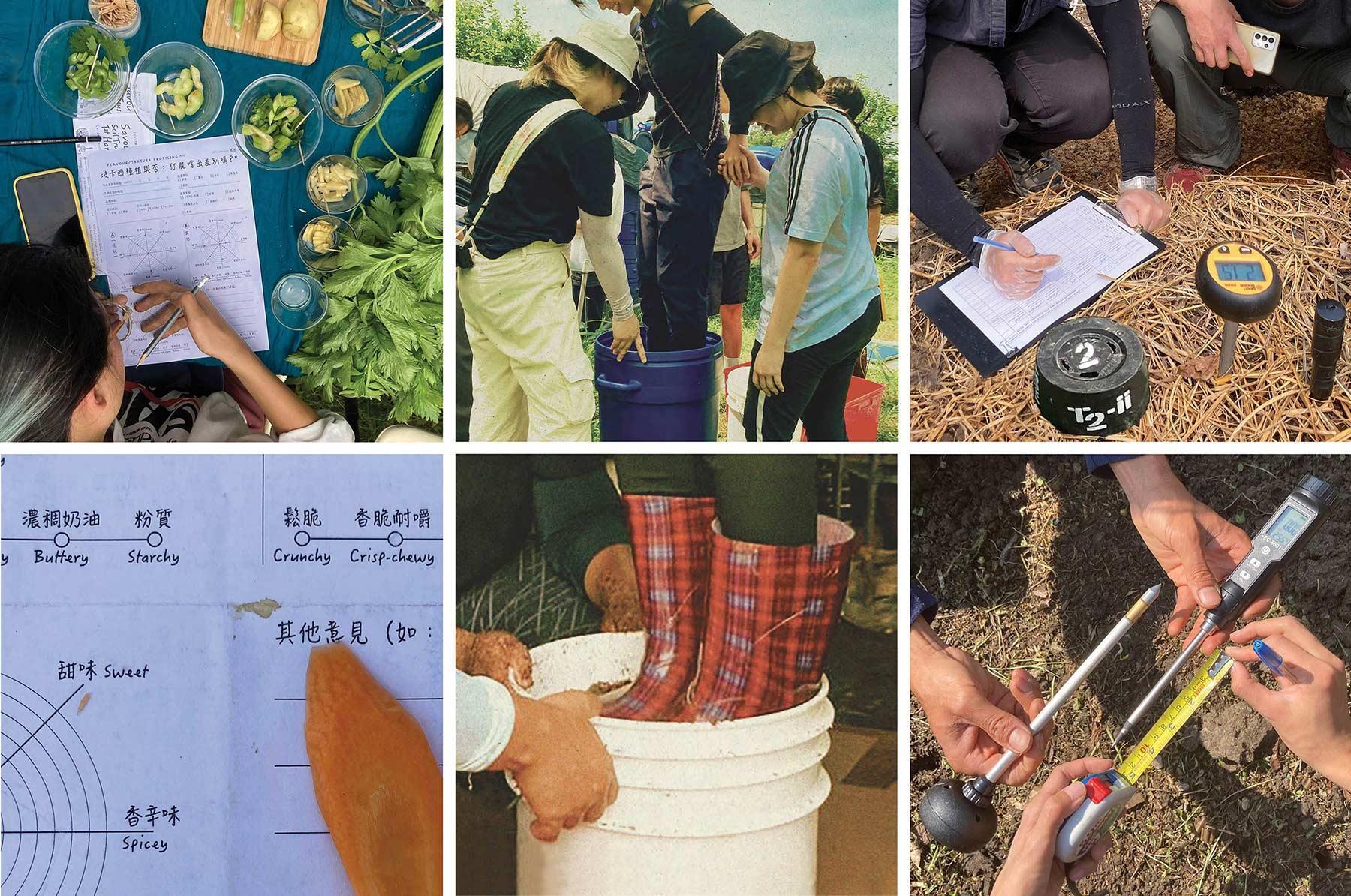
This paper describes two cases of design ethnography – defined as a combination of a design process that creates a community to be followed simultaneously and ethnographic research that captures the actions of this community – that have explored microbial, respiratory and metabolic exchanges with nature from within everyday life (Wernli and Chan 2023). The first, ANTHROPONIX, developed a community that upcycled urine at home to recover nutrients for growing vegetables. The observation that inspired the study was that people release most of their nutrient intake through their urine. The second, Nai Waan (Cantonese, roughly “play with soil!” in English), developed a community to turn organic waste from a local hotel into soil at a small farm in Hong Kong’s New Territories. The observation that inspired the study was that Hong Kong discards one million tons of food waste annually, which could be used to replenish local soils. In terms of research design, both studies employed a bottom-up approach, fostering a symbiotic relationship between people and microbes. Both cases place a collaborative design case into an ethnographic context in Hong Kong.
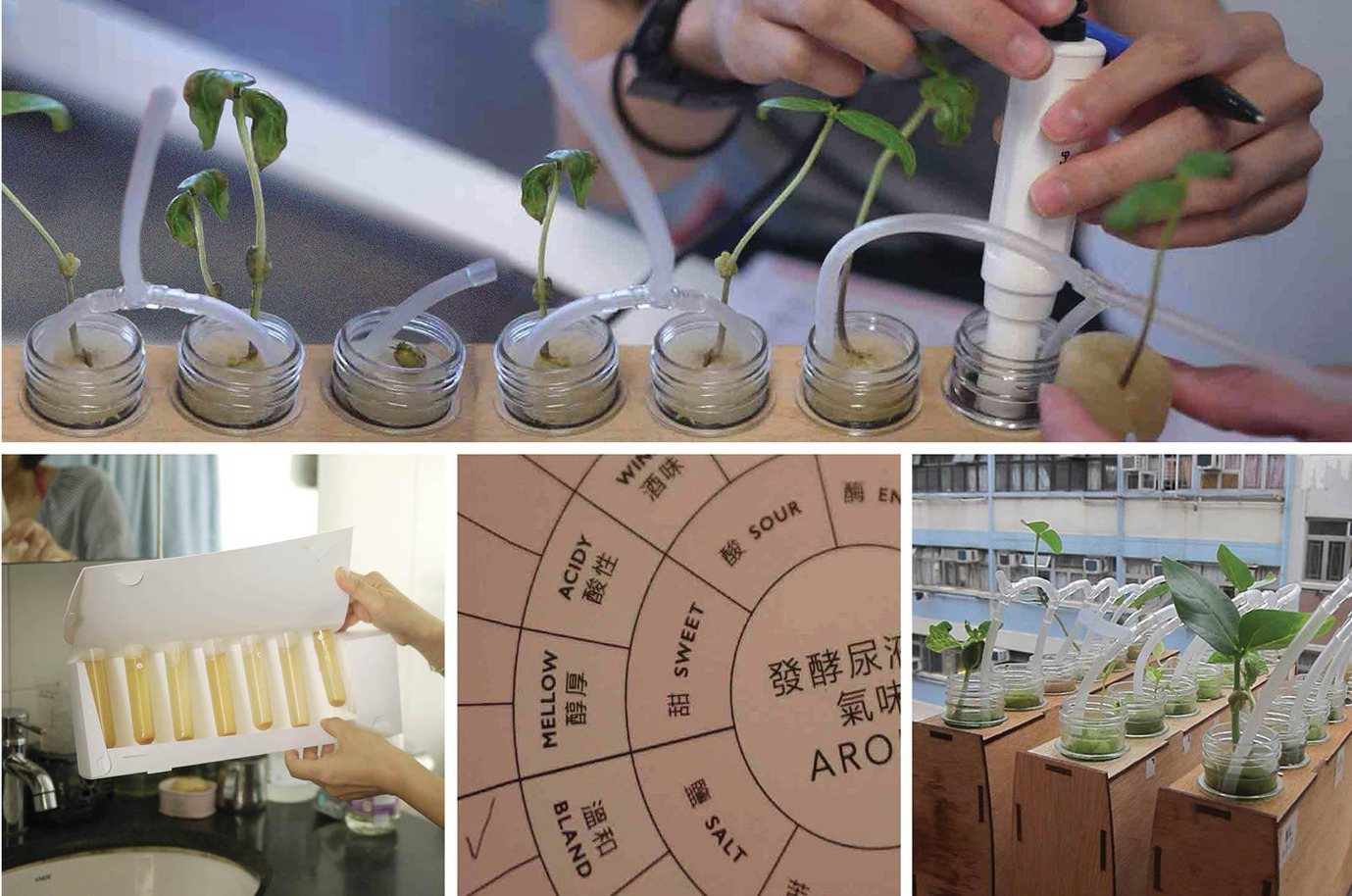
ANTHROPONIX. This three-month-long study in spring 2017 was an attempt to design an experience that contemporized old folk knowledge of fermentation with a fuller appreciation of the regenerative capacity inherent in every expression of organismic existence. Aspiring volunteers learned how to make small quantities of their urine hygienic for use in plant cultivation without odor and trouble through fermentation. Fermentation could be used to convert and stabilize urine as an endlessly renewable and human-derived nutrient source (Andreev et al. 2017) for then growing plants in water with the (seeming) magic of water-based horticulture (hydroponics), as the following photographs illustrate (Figure 1).
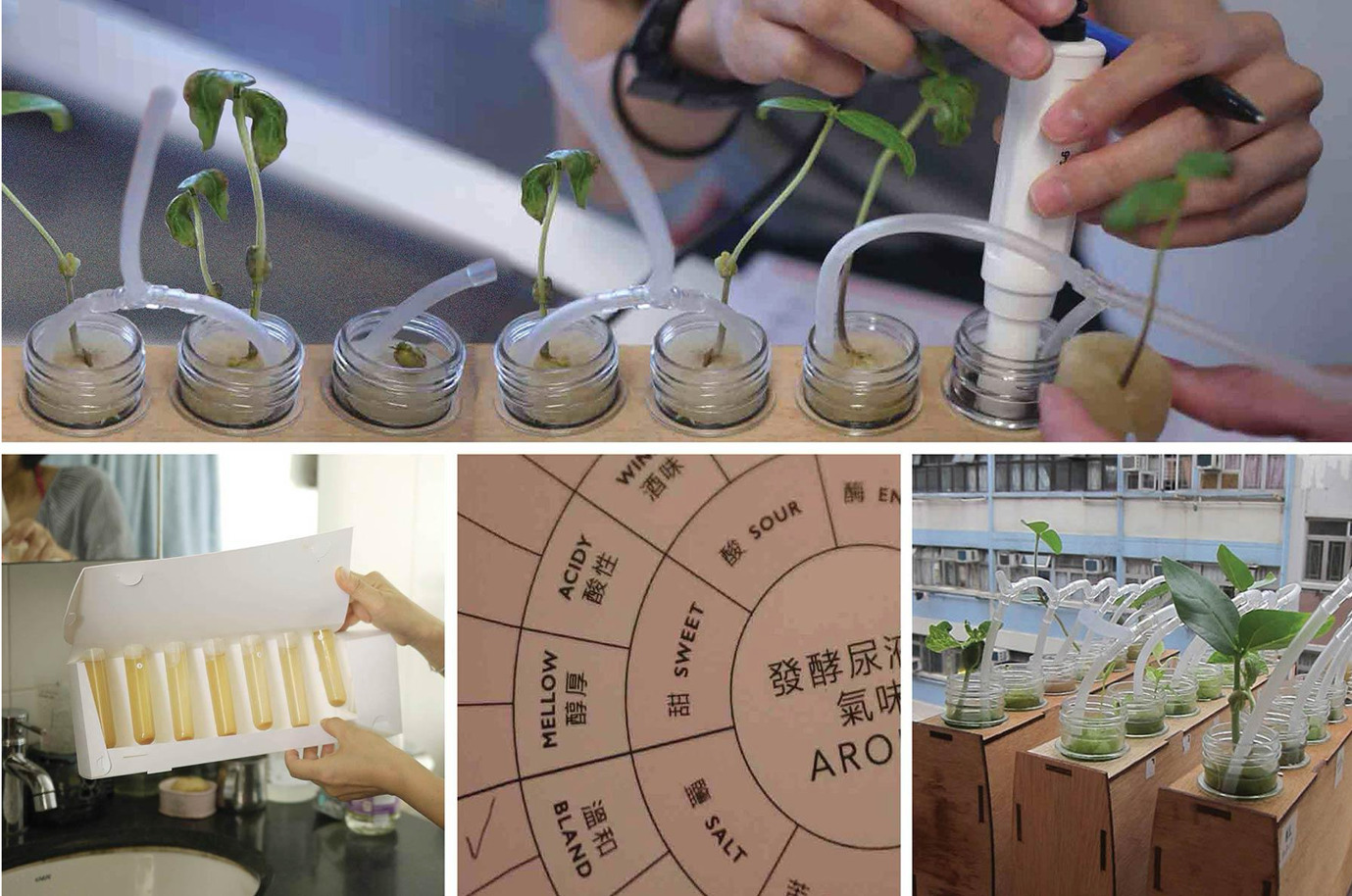
The research team consisted of Author 1, two research assistants, and a mixed-gender cohort of 22 volunteers, half females and males aged between 20 and 58 years. Most of the ANTHROPONIX activity took place at the volunteers’ homes, where it was followed through a combination of measurements, a text message group, an end-of-project photo exhibition, and ethnographic interviews. Volunteers agreed to join a text messaging group that ensured connectivity when urgent information was required. They also administered an at-home urine test by dipping a dye-indicator strip into a cup with their first morning urine for approximating eleven dietary and medical markers (glucose, bilirubin, nitrite, protein, leukocytes, pH, specific gravity, and blood traces).
The invitation to participate was written in the form of a ‘citizen science open call.’ It was shared on social media and through text messaging among friends, gardeners, and horticulture teachers. The invitation also declared the study to be a ‘special skill-up occasion’ and an ‘urban ecology adventure.’ This proposition could engender the sense of a common task worthy of one’s dedication. The invitation featured a workshop curriculum that was structured around five weekly sessions (Table 1).
The researchers conducted a minimum of two in-person interviews with all volunteers at the beginning and at the end of the six-week-long experimental trial to discuss their eating habits, bathroom routines, and interactions with plants, microbes, and peers for understanding their domestic world and evaluating experiences from the shared project journey. The volunteers were asked to record dietary intake, sleep patterns, urine testing, and plant growth markers in an elaborate ‘Journal of Mutual Flourishing.’ The entries were discussed at the beginning of each of the five group workshop sessions, and the journalling was complemented with exchanges on the WhatsApp group, audio-visual workshop documentation, observations, and field notes. Data are described in detail in Table 2.
Nai Waan. The nine-month-long service-learning program of Nai Waan in 2022–23 aimed to change the way in which volunteers engaged with soil. It was a collaboration between a farm, a design school, and a hotel that joined the project to engage with local agriculture and to inspire other businesses and authorities in coordinated waste recovery. The task was to develop methods for reintegrating food waste into nourishing soil through composting (Wernli and Chan 2023). Farms in Hong Kong, one of the most densely populated area in the world, are typically small, remote, and family-owned. Farmers are aging, and there are chronic shortages of staff. Urbanization focused on housing and business districts has left the rural hinterlands of the territory with limited road access. Consequently, farms depend on small footpaths that are only passable by narrow-gauge hand trolleys.
Nai Waan experimented with various eco-social farming formats to learn how younger and diverse populations could be engaged. The research contract required the production of 50 liters of microbial catalyst every month for food waste upcycling at the hotel kitchens. The farm was in Hong Kong’s New Territories, about a 30-minute walk from the nearest train station. The hotel was located on Hong Kong Island, about 40 km from the farm. The research team consisted of Author 1, three research assistants, and a mixed-gender cohort of an ethnically diverse team comprising 26 volunteers, with 20 females and 11 males aged between 18 and 55 years. In exchange for working on the farm, volunteers got farmland access, free harvest, new skills, and companionship.
Volunteers consisted of immigrant mothers from a welfare center near the farm, subscribers of a local food retailer, design students in a Work-Integrated Learning program, and social media followers of Nai Waan’s Instagram posts. About half of the volunteers lived within 15 kilometers of the farm. They were asked to join the farm at least one morning per week for three-hour sessions. Researchers introduced the volunteers to the villagers, the host farm, and its irrigation system, as well as regenerative farm principles, tool maintenance, and biodiversity markers. Volunteers had to fill out an informed consent form, have access to a mobile phone, and join the project’s WhatsApp group. Data are described in Table 2.
Two-case ethnography. In both studies, researchers developed a community that built local capabilities to reinterpret and reintegrate waste as a resource to respond to climate change (and other uncertainties) without the need for complex technologies through processes such as enzyme brewing, food waste pickling, urine fermentation, and small-batch composting.
Both studies drew on folk knowledge about fermentation and Asian Traditional Farming. Researchers adopted locally prevalent techniques for turning cabbage into sauerkraut and brewing fruit peels into enzyme-rich concoctions to generate the microbial starter cultures that fermented and thus upcycled urine or food waste. Both studies also integrated action research with community-led citizen science and social piloting to encourage reflection on human-biome interactions in the farm, human body, kitchen, and toilet.
Analysis. The goal of this paper is to follow the development of holobiontic intelligences to understand how the volunteers construed novel and respectful relationships with microbes, plants, and animals (including mammals, reptiles, birds, insects, and worms). To analyze these intelligences, this paper went through the cases through analytical induction that started with ANTHROPONIX (Koskinen 2003). The first stage of analysis consisted of an unmotivated search for ways in which attendant biological life, including urine ferments, soils, plants, or critters, became topics of attention among the volunteers. The second stage conducted a similar analysis of Nai Waan and compared the results. In ANTHROPONIX, the results were mainly internal to the body; Nai Waan shifted holobiontics to a broader ecology of plants, animals, and microbes. The third stage decomposed the topics into finer categories. Eventually, a picture emerged that described volunteers’ understanding of how fermenting urine and soil changed the participants’ minds.
Ethics. These studies were conducted in compliance with the host university’s research ethics guidelines. Researchers informed the volunteers about possible risks, how researchers minimize these risks, and how volunteers could mitigate these risks. This paper uses pseudonyms and deletes details that could identify volunteers, and it is expected that readers will respect the privacy of these individuals.
4. Results
This section will analyze how, through the social practices of fermentation and embodied sense-making, volunteers came to view healthy urine or soil on systemic terms as a vital life matrix to be valued and stay engaged with. Taken together, the expansion of their discernment laid the basis for volunteers to experience themselves not only as an intricate part of the living world but also increasingly consider the suitability of their actions for inhabiting a livable, beyond-human world together with its nonhuman inhabitants.
4.1. Learning from Encounters
The first observation from both ethnographies suggested the importance of direct involvement with our nonhuman living environment. The initial encounters were critical. Both ANTHROPONIX and Nai Waan were physically and mentally engaging because the cases brought the cohort together to develop health-conscious behaviors toward peers, facilitators, and nonhuman ecologies.
As for ANTHROPONIX, direct involvement began on day one of the uncontrolled trial in the form of a package needed for fermenting urine. The package was equipped with DIY instructions for urine fermentation and water-based horticulture as well as tester strips and reference charts for evaluating the constitution of urine samples, nutrient solutions, and vegetable seedlings. In the absence of professional lab testing, these analog, non-digital self-tracking measures were intended to lend daily procedures a sense of direction.
However, the package was a prototype and therefore unstable. When returning home in the evening on that first day, volunteers and researchers alike found Urine Specimen Number 1 splattered throughout their bathrooms. The reason was the overreaction of lactic acid bacteria that blew off the lids of the test tubes filled with urine. Everyone faced the same problem, and only by working together could the problem be overcome. Khai (57), a plant-loving social worker who came into the study because he was already growing hydroponically on his balcony, recalls his workaround for the urine explosions:
All group members encountered this problem. I had no idea why it blew off. I followed your protocol and thought it should work. When the popping occurred, I felt that some kind of chemical reaction must have taken place. Then I tried out many methods. Eventually, a peer recommended simply shaking it, releasing the bubbles from the tubes (bzzz-bzzz-bzzz), and then putting them aside. I tried that, and it was okay.
During the process of cleaning up and reassuring other household members, volunteers realized that this study was not a controlled experiment. Cella (28), a biologist, gardener, and avid fermenter who had signed up enthusiastically, explained how she had to adjust her expectations from the very start.
Initially, I was thinking this was a Beta test, but early on, I realized it was, what I call, an Alpha test. I think at this stage, it is better to keep it flexible and open. Because actually, it’s not like a fully tested system. You are not establishing how it is supposed to work. You want people to try different things and then share what has worked best […] What I liked most was to witness how the others were excited and to see that there are actually people in Hong Kong who are interested in fermenting their urine. That kind of blew my mind, because I thought that was impossible.
The project was difficult to conceal because the equipment was visible, and the lactic acid bacteria brought unfamiliar, olfactory sensations to the volunteers’ bathrooms. As Mike (41) noted in the exit interview, his family was able to notice the tangy smell, but they eventually grew accustomed to it. Volunteers and their families could not help but notice the project and discuss it, which was part of the explorative and emergent research design.
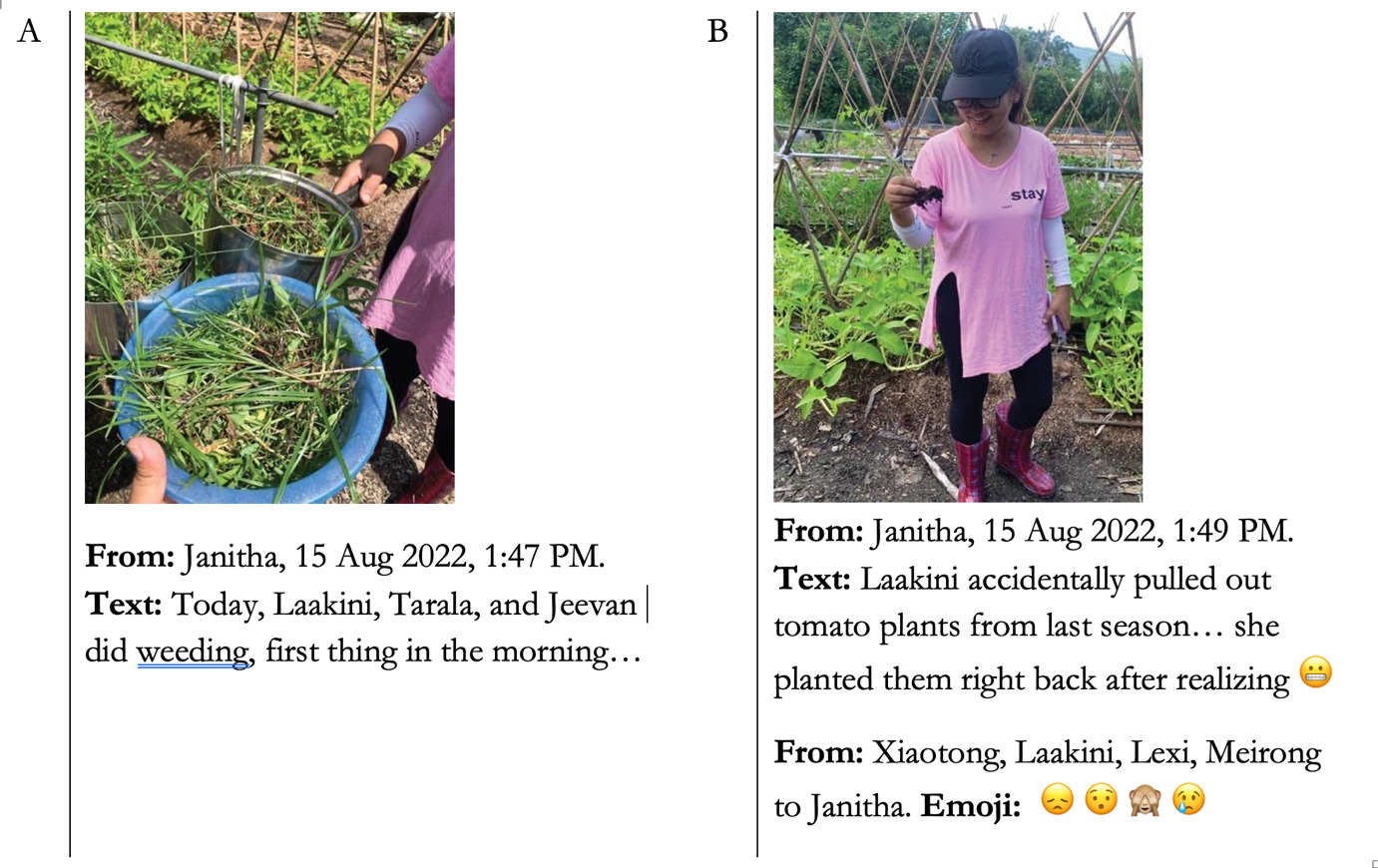
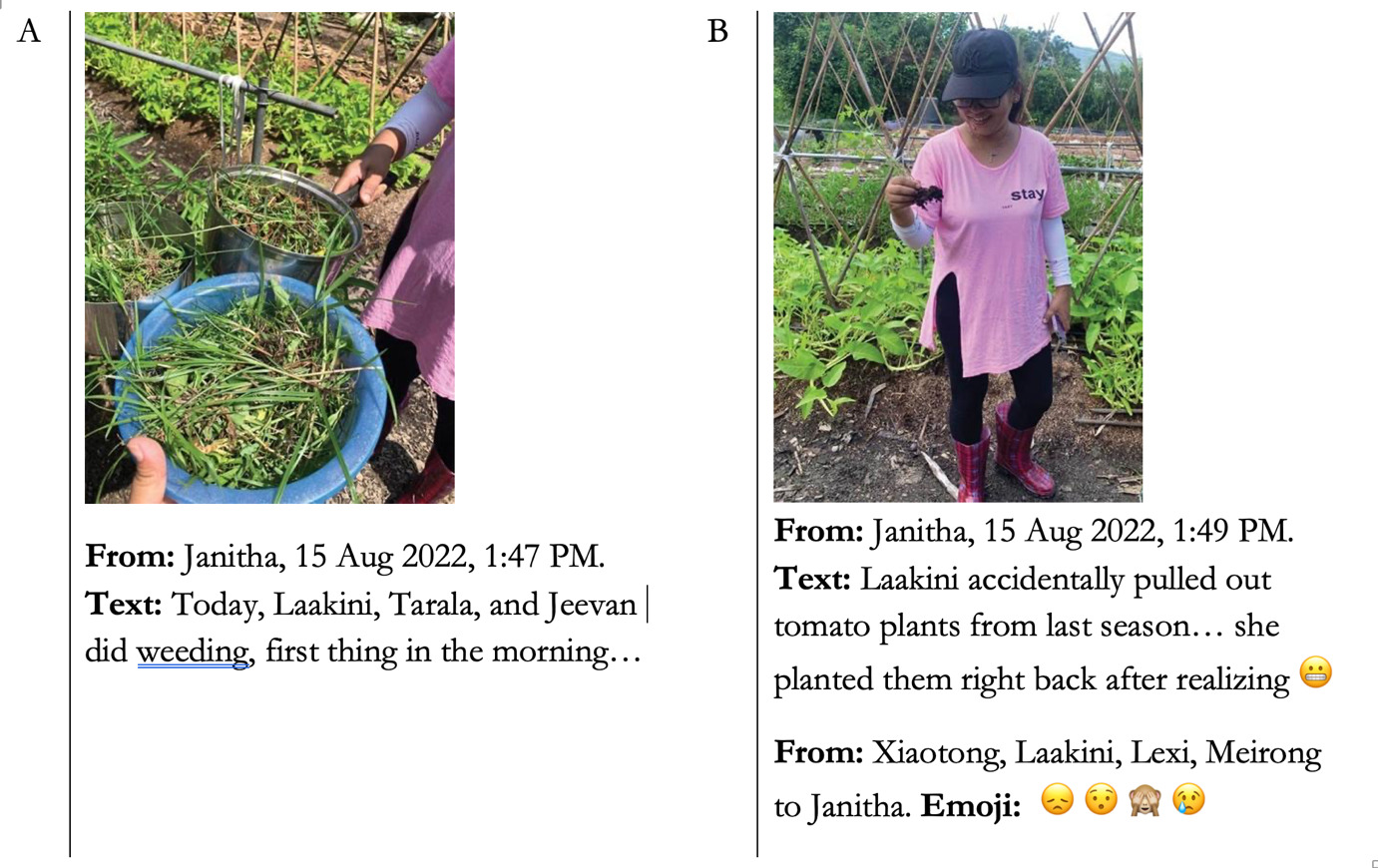
Nai Waan brought the volunteers into direct involvement with nature and agricultural operations inside Kam Tin, the heartland of Hong Kong’s ‘vegetable belt.’ At the farm, they were introduced to plants, soil, and the composting process. When they started working, their encounters with nature extended. Volunteers began to learn about plants and their relationships with one another. For example, they learned how to weed, which was necessary because the farm was not using any herbicides. Weeding, however, required botanical knowledge that city dwellers often did not have. During her first weeding session, volunteer Laakini mistook a fledgling tomato seedling for a Gripeweed (Phyllanthus urinaria L.) and pulled it out. After discovering the mishap, her peer Janitha was hopeful that the uprooted crop could be replanted and saved (Figure 2).
Episodes like these brought home the fact that interactions with nature can lead to unintended consequences beyond human control since uprooted tomatoes do not grow back. In another episode, the farm manager Yeung invited volunteers to harvest turmeric that had been planted years earlier. In a WhatsApp message (12 Nov 2022, 6:05 PM), he pinpointed the bed of turmeric that was ready to be harvested. Soon, however, a volunteer commented on the erratic shape of the root. Over the next four days, Yeung became aware of look-alikes, close relatives of turmeric that have medicinal and, by implication, potentially toxic side effects. He encouraged volunteers to send him images of the blooming plant for research purposes. Within 34 minutes, three volunteers had submitted previously unshared images of turmeric in blossom. These images were inconclusive for plant identification, but two days later, Yeung had tracked the previous farmer. He had also cooked the plant by himself. He was able to confirm that the plants were, in fact, turmeric and safe for human consumption, and encouraged volunteers to use them in the kitchen.
In exit interviews, we learned about how working at the farm changed the volunteers’ relationship with nonhumans. For most volunteers, soil had been but a lay concept that meant barely more than dirt in which plants grow. A volunteer from Nepal contrasted her previous experience of soil with what she learned during the project by telling the interviewer how “in my country, my parents and other villagers do not care much about soil, but at Nai Waan, I saw everyone loving the soil creatures, taking photos of toads, lizards, and earthworms – I find this amazing and want to learn all about soil.”
4.2. Becoming Aware of Holobiontic Connections
Out of these revelatory chance encounters described in the previous subsection, a more complex relationship with nonhuman life emerges. Some volunteers paid attention to how their contributions to the project benefited others and developed a reflective understanding of this. Accountability is the expectation of liability and answerability, derived from the intrinsic value and self-worth that result from the process. This self-in-other account-giving is especially relevant in situations of caring and may be directed through a sense of attachment. Feeling liable and responsible for the needs of a relatable person, being, or ecology can influence relational integration, knowledge making, and behavior.
In Nai Waan, these holobiontic connections were mediated by the complex ecology of the soil and the farm, and, by implication, were harder to identify. Yet, the volunteers developed new ways to understand the porous boundary between themselves and processes in nature, and some aspects of this relationship were easy enough to notice. They saw plants and how their growth is connected to soil health. They saw animals like water buffaloes and, as the project progressed, insects, worms, beetles, pollinators, and caterpillars, and learned to see them as indications of soil and its health. They learned to taste and appreciate plants, herbs, and spices straight from the land, and crops like turmeric, which had previously been relegated to coloring powder in the supermarket, were placed in an ecological context of growth.
In rebuilding soil, the volunteers also encountered many life forms they had barely been aware of before. It was most evident in fermentation, which aimed to return organic matter at the point of food loss back into the land. The project followed East Asian natural farming traditions, and volunteers learned to see soil in symbiotic and collaborative terms. Nutrients and minerals withdrawn from harvested crops, they saw, could be naturally replenished by infusing the soil with microbial activity that nourished plant roots and critters, making the ecosystem resilient to pests, plant diseases, and weather extremes.
In the project, the volunteers interlaid kitchen scraps with microbial bedding (Bokashi) to stimulate bacterial activity. The activity required frequent aerating, feeding, and moistening to prevent overheating, dehydration, or suffocation. The volunteers came to see composting as life-transforming mattering that has its own biology, chemistry, and physics. In the process, they overcame many pre-existing notions, such as disgust through demonstrations like cooking an egg in the heat of the compost stack (as farm manager Yeung once did), and in illustrations of how they can detect the stage of the composting process by smell and heat. The compost also became a base for unexpected transformations. Amida, one of the volunteers, documented the stunning fruiting bodies of the Goldenhaired Inkcap mushroom (Parasola auricoma) that only sprouts in compost at night after rain and decomposes within hours after the spores are dispersed.
Another aspect of the new awareness was seeing the importance of oxygen and carbon dioxide in the air. For soil to thrive, it must be able to breathe. Similarly, the process of ANTHROPONIX required ventilating the urine-based growing solution to keep essential bacteria of the plant roots alive, the volunteers learned. Two ANTHROPONIX volunteers, Helga (49) and her son Ralph (18), live on the 36th floor of a tower block, and every available space in the three-bedroom flat is populated with plants. Ralph explained how normally he is not involved in his mom’s plant-growing activities, but the study has changed that.
Every time I see my mom is blowing some bubbles in there, I am like: Oh, mom, what is that? And she is like, it is my urine. And I am like, okay, it’s just urine.
I asked my mom, how the experiment is going, and then she said: ‘Oh my god, some of the plants are dying!’ And I am like: ‘Ah, really?’ I saw that some of the plants look really healthy and are growing up. But some of them just lie down and cannot grow. I can see she was like really sad because she really loves plants.
In Nai Waan, air was important in a different way. The air in the Bokashi containers needed to be suppressed so that anaerobic fermentation bacteria could flourish and convert waste into nutrients. Air in the compost stack and topsoil had to be infused with ventilation pipes, gentle raking, and ample mulching so that aerobic rhizobacteria could do their nutrient-transforming work. These measures also served to protect the soil from exposure to weeds, subtropical sun (UV), and torrential rain during the monsoon season and typhoons.
As these snippets suggest, the project changed the volunteers’ approach to microbial life and led them to see themselves as holobionts. For example, in ANTHROPONIX, it was the microbial agitation that fascinated some volunteers like the musician Vincent (35), who said in the exit interview that he had followed closely the variations of pressure levels in the lactobacilli urine culture and how he had started to wonder why they kept fluctuating with his diet, resulting from experience-based realization.
4.3. Towards Holobiontic Intelligence
The volunteers in both projects became gradually aware of their holobiontic connections. These connections were particularly relevant in ANTHROPONIX, where volunteers learned to follow how their diet changed the bacterial culture in urine and the smell of their excretions, but also how it changed their sleep, mood, and eating patterns.
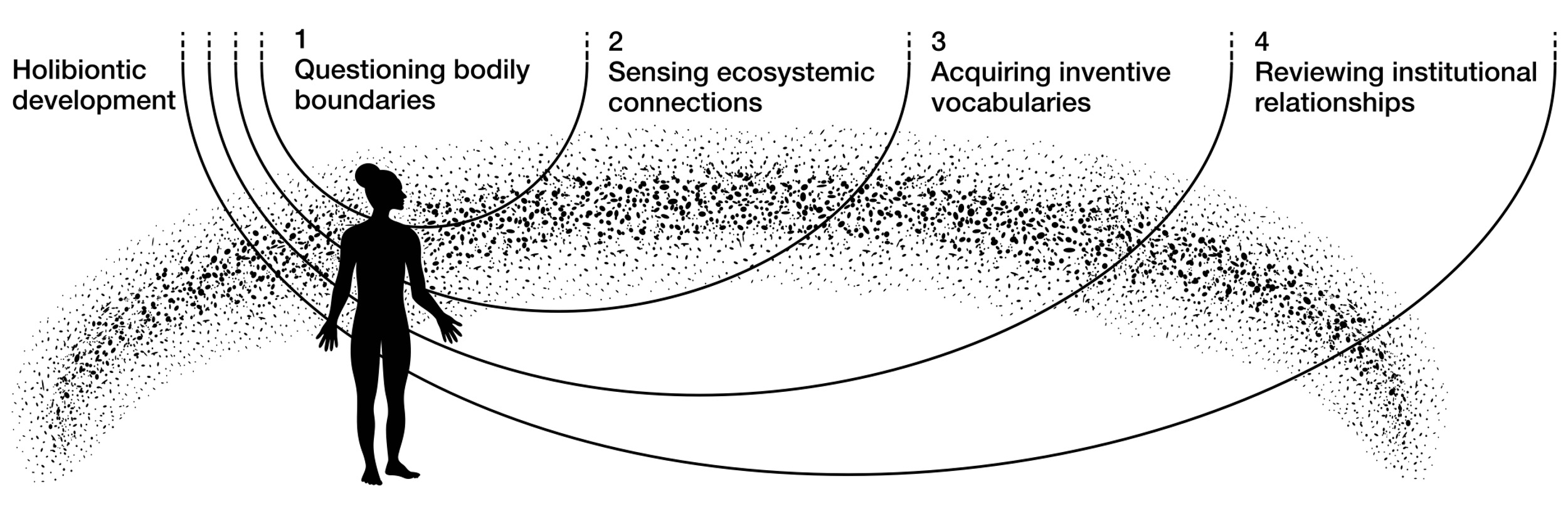
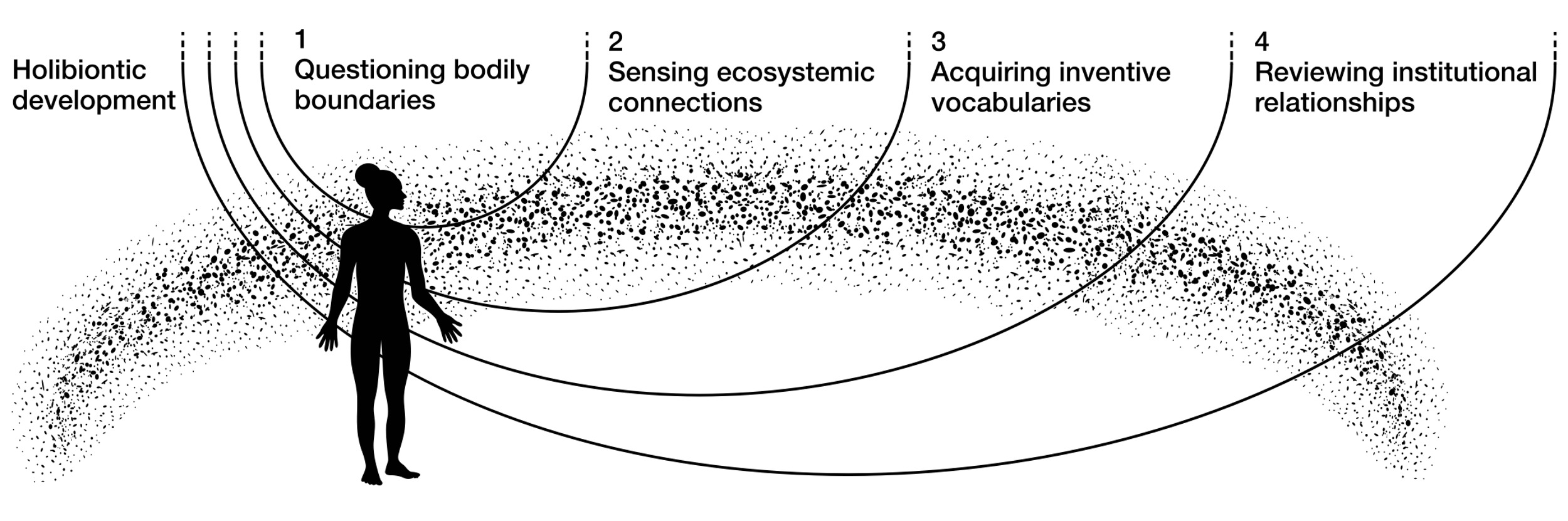
Despite differing starting points, ANTHROPONIX and Nai Waan connected volunteers with biological processes by fostering a deeper integration with the living, biostimulating cycles. Their relationship with these cycles acquired several new aspects. In ANTHROPONIX, they learned to question their own bodily boundaries (Figure 3, aspect 1), while in Nai Waan, the focus was on their connection to other living beings (aspect 2). In both projects, they developed new vocabularies for describing their connections (aspect 3) before contemplating the prevailing institutional relationships (aspect 4).
1. Questioning bodily boundaries. The best source for understanding these new patterns came from The Journal of Mutual Flourishing, which contained 21 sheets for documenting dietary intake with physical condition, and for relating the urine output with health indicators of the urine-generated plants. The journal combined project reporting, food log, and personal growth planner. This biopedagogic package engaged the entire volunteer group, including ecologist Cella (28) and nursing student Eliza (21):
Cella: It is very personal. It connects them with their bodies. They were very carefully observing their urine testing results and thinking: Oh, is my body healthy or not? Everybody wants to be healthy, and that is like a big motivation to test themselves: am I healthy or not?
Eliza: I think, oh, I am eating this junk food, which is not healthy for myself, then I really feel uncomfortable, so I want to change. I also want to look into whether any changes or negligence have any influence on the plants.
Some researchers argue that smells are notoriously difficult to put into words (Miller 2014), and neurological research suggests a profound communication disconnect between the olfactory and language systems in the brain (Olofsson and Wilson 2018). Being able to detect biochemical reactions from smell is a matter of learning, though. In ANTHROPONIX, some volunteers developed fluency in analyzing how fermentation functioned in their urine.
Eliza: Ah, I love this aroma chart! First, I thought that all the urine had the same acidic scent related to fermentation. But actually, it was very fruitful to go deeper and identify different kinds of nuances. This way, I find the linkage to the food I ate. There are significant differences in sweetness and sourness. Some is a little bit more bitter, or a little bit more salty. After I consumed fatty food, I think the smell is related to a more nutty kind of smell. Before the project, I never thought I could detect such nuances in the scent of my urine.
Vincent: The cool thing with this journal is that it starts your imagination, like a lot of the content of this project for me. And then it really helps for me to kind of very lightly reflect on what I did yesterday.
At least for one volunteer, the journal inspired reflection on what the larger implications could be when we are actively re-membering the human role in these circulations of life energy. Fermentation and acidity provided the volunteers with the means to follow how microbial processes in their bodies connected them to physical activity, sanitation systems, food, and water supply [Bjorn, exit interview].
Some connections were far more ambiguous. The journal’s ‘Body Care’ section asked to create an inventory of sleeping patterns, application of body care products, physical exercise, and trace daily emotional fluctuations on a mood chart. For Eliza, surveying human-environment health interactions was a welcome impetus. She noted how she was “very interested in the direct linkage of emotion and diet,” but also learned how her “sleeping pattern, the stress levels, as well as the diet are very important to the quality of my urine.” By following patterns of her urine, she also discovered connections to the plants she was growing in it: she “found that pH level or the characterization of urine resulting from such negative factors may actually harm the plants: they died quickly after I ate unhealthy foods” [Eliza, exit interview]. The connection between eating and plant health was a revelation for her.
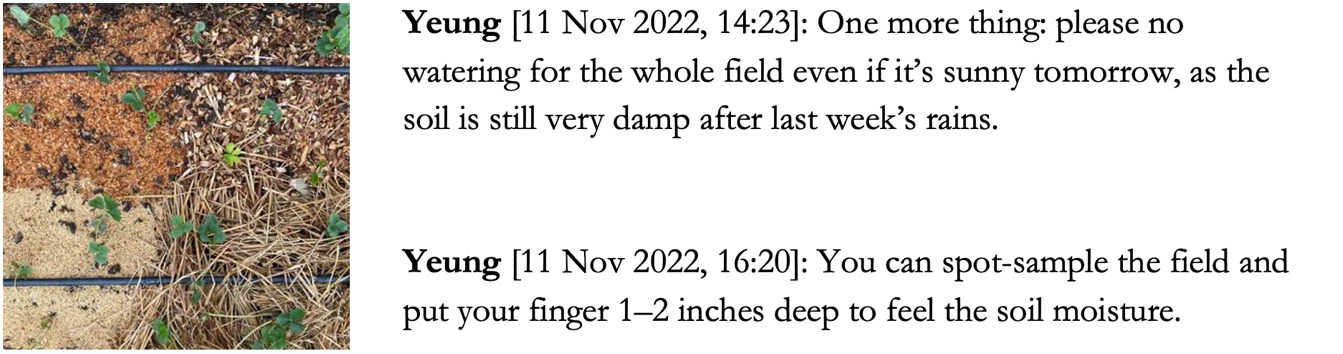
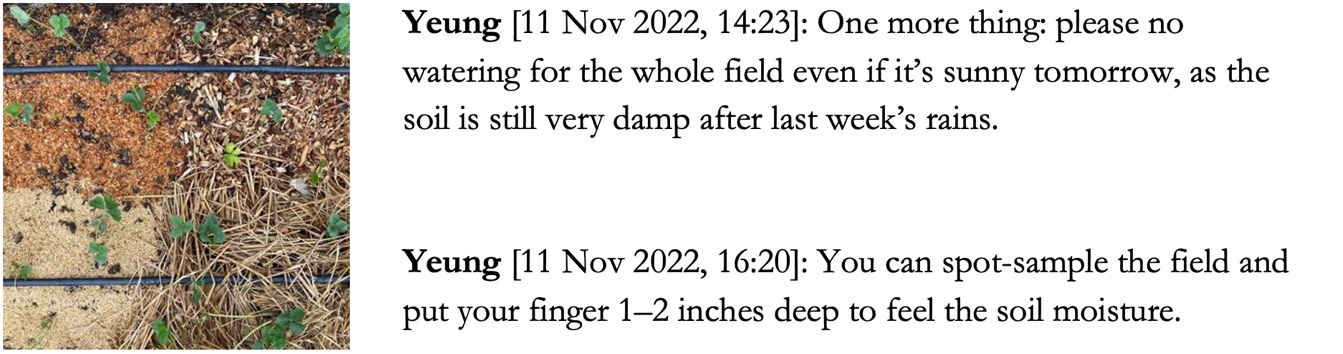
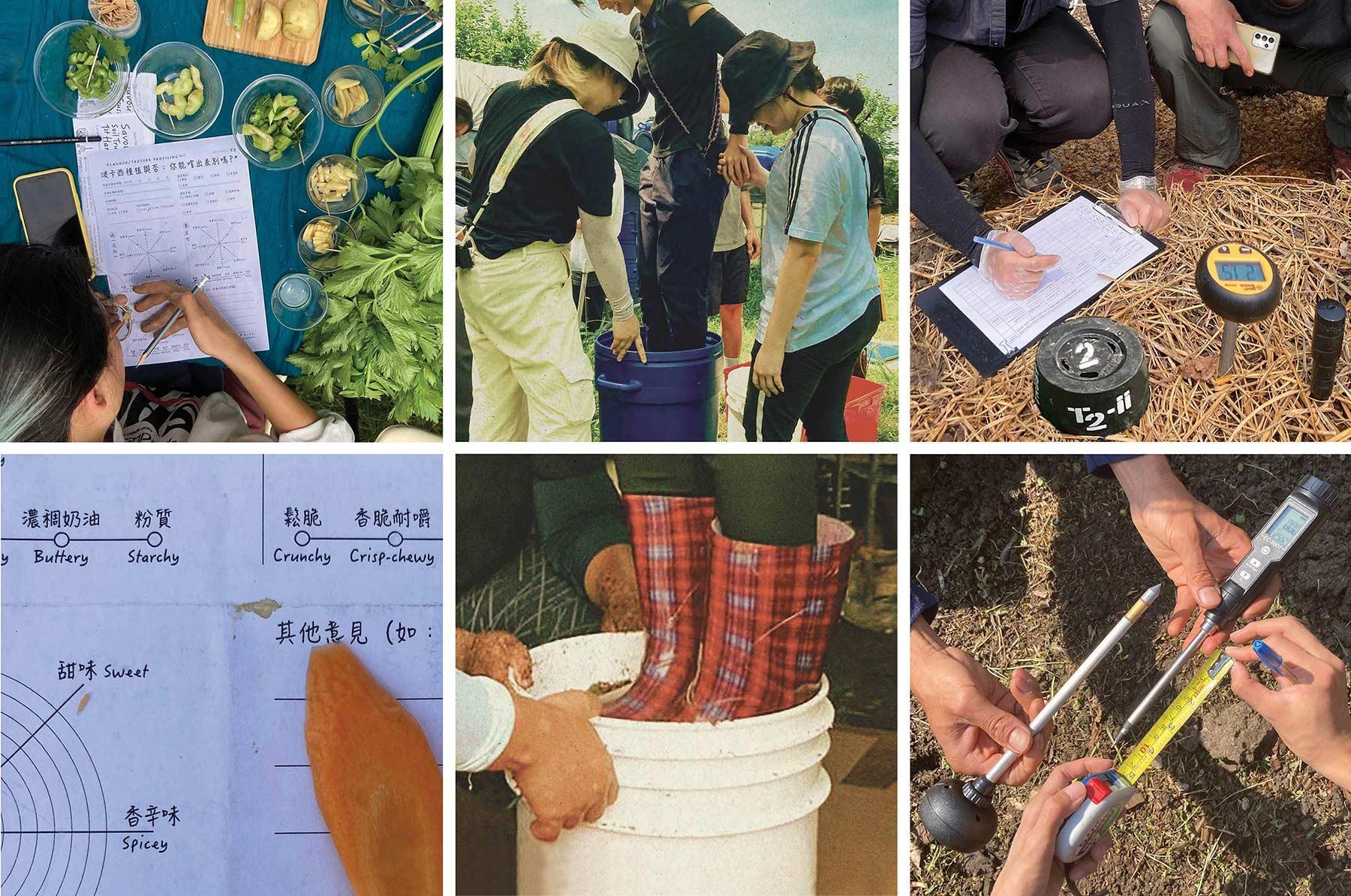
2. Sensing ecosystemic connections. In Nai Waan, the volunteers learned the value of several (lesser explored) senses. They acquired skills to analyze the soil using sight, touch, smell, and taste, but also proprioception and thermoception. For example, they learned to touch and taste the soil substrates to find cues to microbial processes. By pressing the material into a ball, they learned to understand whether the Bokashi bedding had enough enzyme saturation, and they learned to detect microbial processes by touching the soil with their fingers. In the following example, farm manager Yeung instructed volunteers not to water the plants after heavy rains, even if the following days were sunny. In response to a query about how to know when the soil is too wet, he gave instructions for how to evaluate wetness in soil by touching it. (Figure 4).
The volunteers also learned to detect fermentation processes from the smell, texture, and taste of food. For example, fermentation bedding was generated from rice bran – a milling residue from polishing brown rice into white rice – and fruit peel enzyme. Bran is rich in linoleic oils and minerals. In contact with the fermenting enzymes, the bran acquired a distinctly soothing touch and balsamic smell. Also, when kitchen scraps were interlaid with the enzymic bedding to accelerate their decomposition, they generated a pleasant pickle scent that became an indication of microbial and chemical processes in fermentation. The volunteers furthermore learned to track the presence of calcium – a crucial component in soil clay, walls of plant cells, and exoskeletons – by tasting a wide range of sweet, sour, or bitter components in vegetables. These traces of micronutrients are often lacking in crops grown conventionally on petrochemical fertilizers (Figure 5).
3. Acquiring inventive vocabularies. As these snippets suggest, volunteers in both studies learned to see their interdependence with the environment and develop new vocabularies for making sense of these interdependencies, many of which are invisible to the eye, and – in terms of causal language – consist of partial correlations rather than causal links. Working closely together with microbes, worms, soils, and plants often made them relatable to volunteers as fellow nonhuman laborers. It led them to redefine a new vocabulary to describe their relationship with these nonhumans using terms like compensation, restitution, and care. New vocabularies were called for when ANTHROPONIX urine fermenters found themselves explaining their nutrient cycling routine (involving exploding urine tubes) to their housemates or when Nai Waan farm volunteers reported their encounters with praying mantises or lizards with an infusion of relatable personhood or witty admiration in the WhatsApp group. These vocabularies formed a vital part of the projects. Holobiontic relationships affect us in many ways, but they are not usually something we pay much attention to because we lack the language needed to talk about them. The consequential mattering and noticing together achieved by recirculating waste synergistically to work alongside terrestrial ecosystems prompted some volunteers to relate to soil as a fellow laborer. It raised questions about who counts as a worker and about appropriate social relations, care, and restitution toward nonhuman life forms, which opened ecological perspectives. This is especially relevant in extremely densely populated cities like Hong Kong, in which many of these relationships are hidden and engineered away or only learnt at the abstract level through conceptual frameworks taught in high schools and in universities. It is important to note, however, that this paper has dealt with what can best be called lay holobiontics. Lay holobiontics was partly individual but mostly shared among the volunteers. The shared experience of recirculating nutrients locally and synergistically from what is released by one’s body, kitchen, or field, while collaborating alongside the growth medium, was formative for all volunteers.
One aspect of the interdependencies is holobiontic: the way in which human beings inhabit their environment and interact with it, realizing that the boundary of their bodies is porous and permeable. Becoming intelligent in terms of these holobiontic relationships, we believe, is indexical in the sense that although, say, ecologists know a lot about them, they do not intuitively know these linkages in any particular case without studying them in detail. Yet, holobiontic connections affect us in many ways, from food intake to acidity in our urine, feces, or perspiration. These connections lead to the welfare of microbes and plants, which, in turn, provide food for insects and higher forms of the food web, including humans. Becoming aware of these connections developed in both projects, though in a different way and with different focuses.
4. Reviewing institutional relationships. Finally, some volunteers also came to doubt conventional economic relationships that prioritize extraction for short-term gain over the replenishment of life-supporting soil and health ecologies. For example, one volunteer was raised in a village in Ukraine and had former friends and family members who were farmers. In an exit interview, she shared that through Nai Waan, her experience of farming had transformed from industrial (which made microbial life invisible) to fermentation-based (which embraces soil microbes). Also, an environmental engineering student summarized her change of perspective by pointing her finger at the city that gives priority to high-value residential development over soil health: “No matter how much waste we recover, how much research on soil ecology we do, there’s no use if the government isn’t doing its part.” Sadly, at the end of the study, the plot was sold to a residential development that intentionally contaminated the land to make it unsuitable for farming. It was another bit that led volunteers to see the dependence of natural processes on institutional power relationships.
5. Discussion
This paper studies holobiontic intelligence in the context of two projects. Holobiontics is a relatively new research area in the medical, environmental, and biological sciences, and a good deal of the best research can still be characterized as conceptual and even philosophical (Haraway 2017: M26, Carthey et al. 2019; Robinson and Cameron 2020; Kelley 2023, 140). These studies have challenged the idea that intelligences are concentrated in any single person, species, or system: instead, they are seen as something that emerged from interactions between humans and nonhumans, gradually expanding the levels of responsiveness from the living to what is livable, toward mutually permeated inhabitants (Figure 3).
This paper has purported to better understand how humans working with boundary-transcending microbes and fermentation keep responding in situated ways to the impacts of past, current, and future practices with deeper consideration for what is at stake and the impact of narratives. Our attempt has been to study holobiontics in two design projects that explored fermentation as a means of retaining nutrients and attendant knowledge in circulation for improving urine and soil. This paper has talked about intelligences in plural because in ANTHROPONIX, volunteers learned about holobiontics in the context of their organism, while in Nai Waan, the context was the ecology of the farm.
Beyond this difference, in both studies, fermentation and (re)making with microbes compelled volunteers to assess health beyond the singularized organ and body, viewing them as nested ecosystems. Assessing the welfare of complex systems like urine-drenched water solution or compost-enriched soil provoked questions about whose functional integration matters and whose can be ignored, as seen above in prioritizing crop above weed, or tangy above smelly ferment. As the medical ethnographer Daniel Münster argues in a reflective piece of studies in Finland, Iceland, and Italy, the concept of holobiontic health leads people to probe questions about balance, diversity, and connectivity – values that lead us away from seeing nature in terms of efficiency and control (Münster 2024).
With concepts like holobiontic intelligence, we believe, we can start to understand how profoundly composite, interdependent, and co-evolved we are biologically, ecologically, and socially. Studies like those reported in this paper may help situate human-centric intelligence within a broader conceptual framework that assigns a greater role to nonhuman entities in research. Studies like ours may even help to de-bias assumptions that treat humans as a superior lifeform and that justify an extractive relationship with nonhumans. Such de-biasing is against human-centered hubris, not against humans. For us as ethnographers, this paper has taught a way to pose questions about urine and soil, but also about how communities interact with them and experience them, how communities support learning processes and ensure physical and emotional safety, and how they pose problems and set boundaries for themselves (Proudman 1992).
In these projects, we may have seen small steps towards the vision of the epidemiologist David Waltner-Toews. He has encouraged reorganizing our lives to re-relate to our essential biological selves – including the wondrous chemistry of people’s animality – to formulate a new constitution of Earthlings, as he calls them. Building on his concept, we can perhaps even revisit our evolutionary origins of our eco-social belonging. Perhaps we can, with serenity and fulfillment, confront all the destructive impulses that surround and restrict us today (Waltner-Toews 2013, 14).
6. Conclusion
This paper has explored forms of holobiontic intelligences: what it is, and how to study them through design and design ethnography. It has been a quest for learning about a new kind of relationship with forms of nonhuman life that surround and co-constitute us, that we interact with all the time, that we depend on, but that we usually either pay no attention to, or even try to wipe off from our lives. In the case of ANTHROPONIX, volunteers fermented urine as a life-giving substance; in the case of Nai Waan, they fermented food waste to improve soil and crop quality.
We deliberately say this paper has been a “quest:” it set out to discover the development of holobiontic intelligences from community interactions in two design projects. Of course, these studies provide but a small window into how to respect holobiontic relationships in contexts where they have usually been engineered away. Yet, this small window has provided us with essential insights into how the volunteers became aware of the fact that they are holobionts who can live as cohabitants with nature rather than mere occupants who shield themselves from it.
About the Authors
Markus Wernli studies design for eco-social regeneration through the applied research of fermentation, locality, intersectoral collaboration, multifunctional consumption, community capability, collaborative responsibility, and aesthetics. He is a Research Assistant Professor at the School of Design and a member of the Research Institute for Future Food, The Hong Kong Polytechnic University. Email: mswernli@gmail.com
Ilpo Koskinen specializes in design research, where his main interests have been in mobile multimedia, social interaction, and methodology. Usually interested in emerging ideas, his work concentrates on the avant-garde end of technology and methodology. He is a professor, but he also functions as an editor. Most recently, he has been creating very large design courses. Email: ilpo.koskinen@gmail.com
Heidi Paavilainen studies the meanings that designed materials, products, or services acquire through the practicalities, mundanities, and happenstance in the act of everyday using and living with products. As a consequence, the meanings of design are based on how well the product fits into and how the household comes to live, and what objects are doing in the home. Email: heidi.paavilainen@aalto.fi
Notes
We thank the Research Institute for Sustainable Urban Development (RISUD) for supporting ANTHROPONIX and Zero Foodprint Asia (ZFPA) for funding the Nai Waan farm pilot with grant no. P0043094: “Soil-Care Hospitality, Intersectoral Research Partnership for Regenerative Strategies.” Our sincere gratitude goes to Katherine Metzo for her invaluable thematic advice and editorial feedback. The authors report no competing interests to declare.