
Framing the Challenge
AI systems result from layered human choices: deciding which problems matter, selecting data, labeling it, training models, and setting deployment contexts. Cultural assumptions enter at every stage. The salon began by situating this production chain in real terms: where most training data originates, whose languages and values dominate, and what that means for interpretation once systems scale globally. Participants reflected on how dominant data geographies and WEIRD (Western, Educated, Industrialized, Rich, Democratic) psychology inform both model behavior and the mental models of those who design and evaluate them.
The group revisited a claim from The Economist: “Machine translation is almost a solved problem,” followed by the caution that “interpreting meanings, rather than just words and sentences, will be a daunting task” (December 2024). That juxtaposition became an anchor for discussion. It put a spotlight on the fact that technical progress and cultural understanding are not interchangeable, and that misalignment between them often produces friction, exclusion, or unintended harm.
The Framework
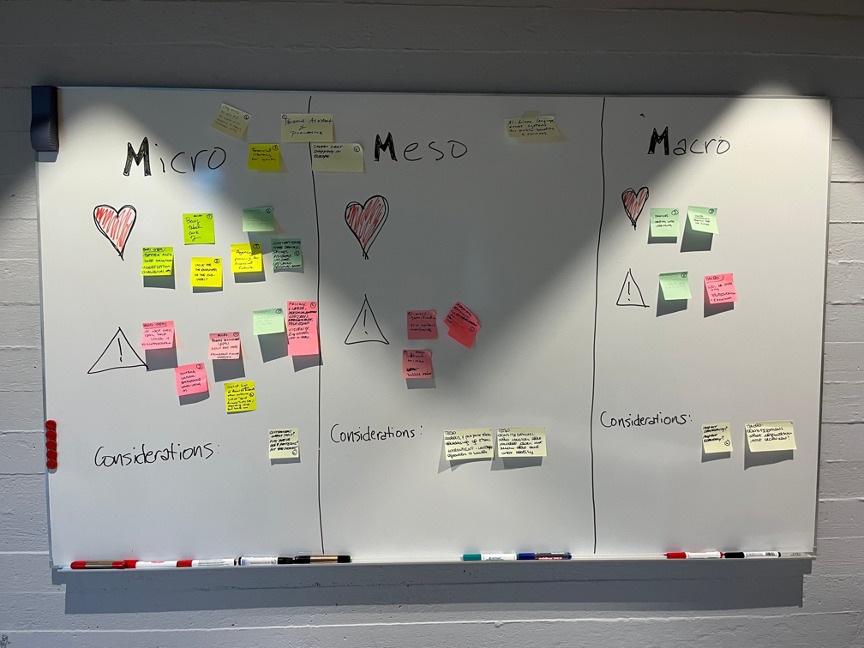
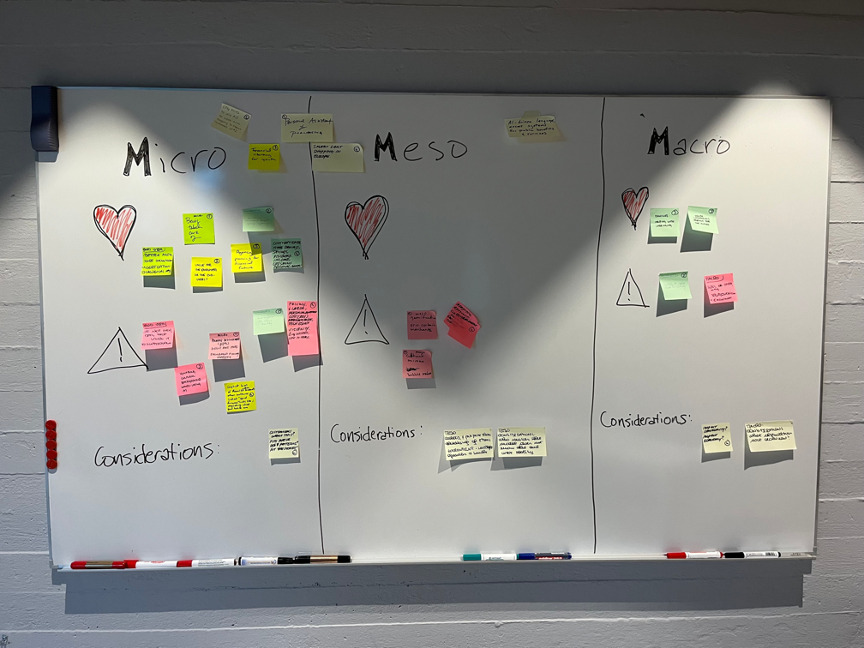
The Layers of Impact framework structured the inquiry through three analytical lenses:
-
Micro (end user and context): Who uses a system and how they adapt it to their lives.
-
Meso (organizations and secondary actors): How institutional goals, incentives, and accountability shape outcomes.
-
Macro (society, economy, environment): How systems reflect or reshape broader norms, markets, and power relations.
Participants used the framework as a diagnostic tool to identify where small design choices compound across scales.
Collaborative Exploration
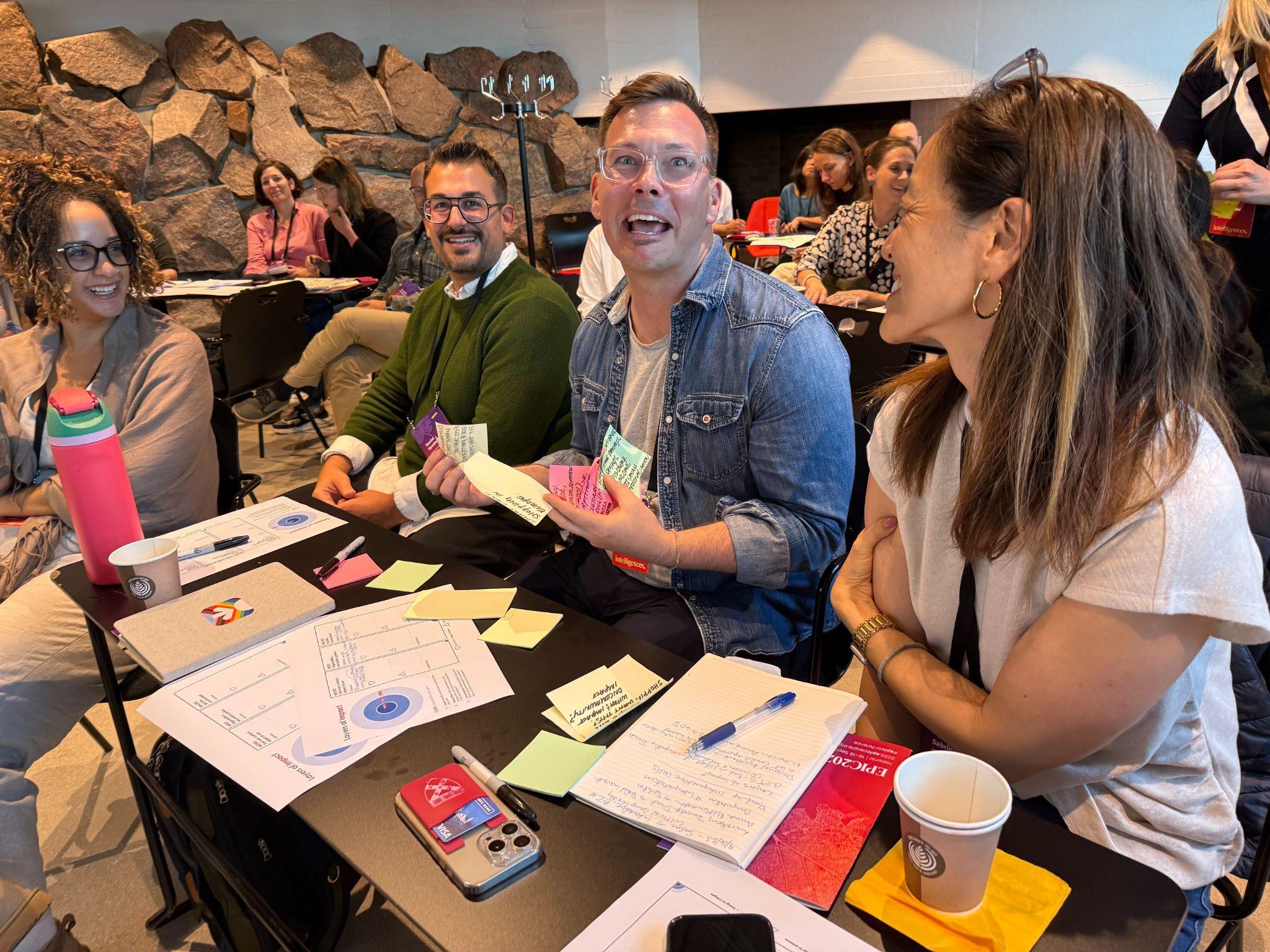
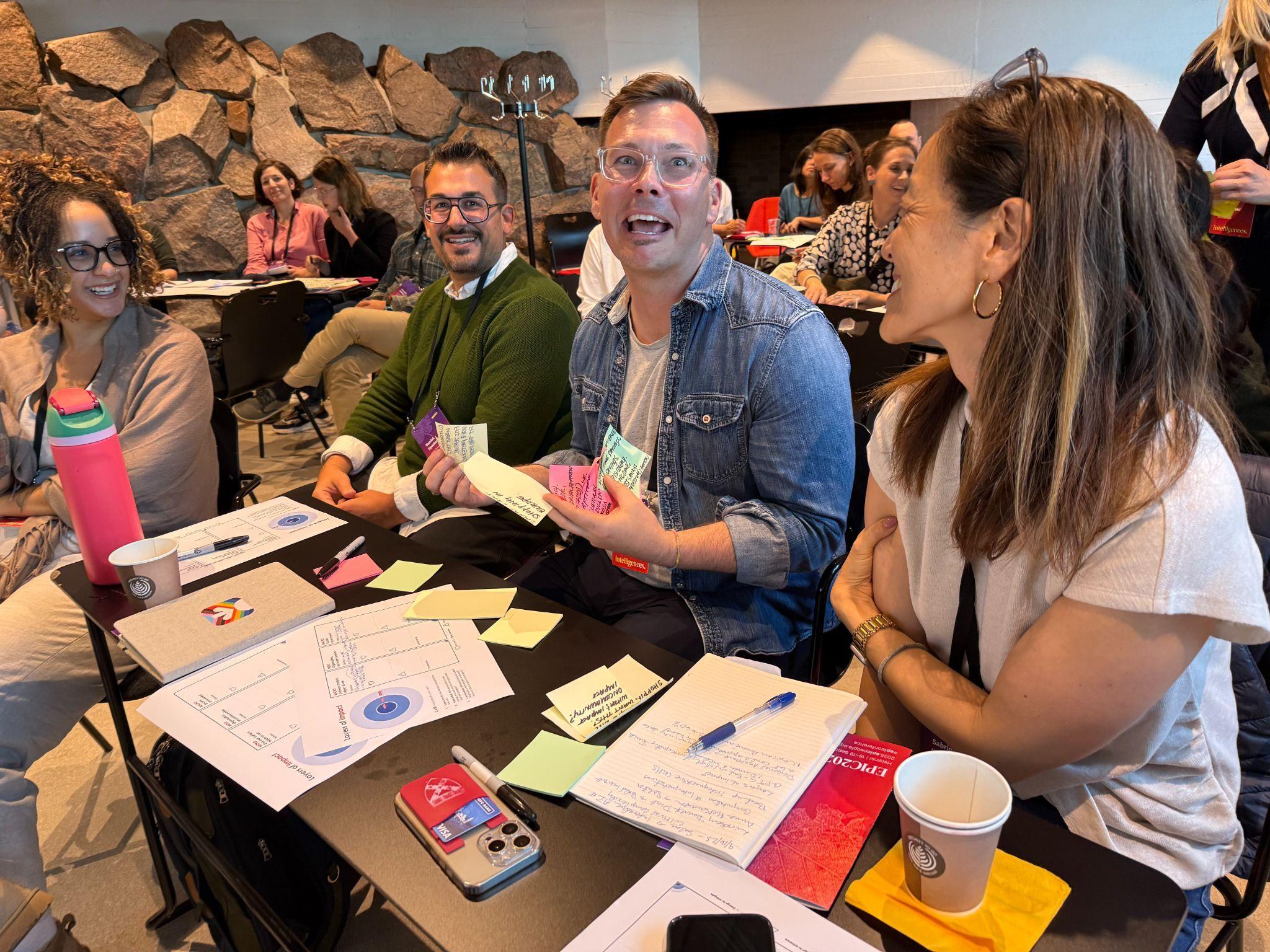
After a short collective walkthrough of a medical transcription example, the room divided into five groups. Each group selected a real or plausible AI application and analyzed its opportunities and risks across the three layers. Their outputs revealed recurring tensions between convenience and care, inclusion and overreach, automation and cultural sensitivity.
1. Personal Assistant for Purchasing
At the micro level, participants described the value of “being taken care of,” a feeling of support and personalization when AI assists with shopping decisions. Yet this sense of care could slide into detachment: gifts chosen without taste, loss of social connection, or spending encouraged beyond means. At the meso level, discussions centered on how gamified incentives and merchant partnerships reinforce these behaviors. At the macro level, participants noted the risk of cultural flattening as systems learn consumer preferences through a narrow, globalized lens that erases local nuance.
2. CPG Microtargeting for Hispanic Consumers, aka “Bubble Maker”
This case explored how consumer packaged goods companies might use AI to expand precision marketing to ethnic communities. At the micro level, participants saw potential value in better-tailored outreach that acknowledges underrepresented audiences, giving consumers greater agency in how they are recognized. Yet they also warned of the risk of overemphasizing ethnic identity, locking groups into static or stereotyped profiles. At the macro level, the group discussed how models trained on historic data fail to capture evolving cultures, leaving organizations unable to adapt messaging as communities change.
3. Financial Literacy for Youth
Participants examined AI-based financial education tools aimed at young users and families. At the micro level, these systems supported confidence and planning for the future. Yet some questioned whether the tools served the learners themselves or primarily benefited the organizations promoting them. Meso-level analysis considered how incentive structures shape curriculum design, often prioritizing behavioral nudges over reflection. At the macro level, participants reframed value as intergenerational: families may gain shared awareness of financial planning, but design defaults often reinforce Western, individualist notions of responsibility.
4. Smart Cart Shopping in Europe
This group analyzed AI-enabled retail carts that automate checkout and optimize purchase recommendations. Micro-level benefits included convenience, personalization, and time savings. Risks included privacy concerns, dependence on technical systems, and implicit national bias in what constitutes “good finance,” a framing that may not translate across contexts. At the meso level, participants highlighted challenges in adoption and training, noting potential cultural dilution as local retail practices adjust to automation. At the macro level, discussion turned to how such systems could reshape neighborhood economies and weaken community ties that form through traditional shopping habits.
5. AI-Driven Language Access Systems for Public Benefits and Services
The fifth group examined AI translation and interpretation systems in public administration. At the micro level, participants recognized clear benefits for access and inclusion, envisioning technology as a dialogical bridge that enables multilingual interaction. Risks included misinformation, dialect exclusion, and loss of trust when translations fail to capture intent. At the meso level, they noted disconnects between developers, ethics teams, and civil servants, each operating under different definitions of fairness. At the macro level, the conversation expanded to loss of linguistic diversity and the segmentation of users into those recognized by the model and those rendered invisible.
Shared Observations
The exercise produced patterns that cut across cases. Participants observed that AI systems often amplify the logic of efficiency at the expense of contextual understanding. Organizational goals shape model adoption more than user needs. Micro-level convenience can mask meso-level fragility and macro-level inequity. Even when well-intentioned, systems built for generalization tend to narrow the space for cultural variation.
The discussion also revealed an undercurrent of creative resistance. Participants spoke of hacking the lens, using frameworks like Layers of Impact to make complexity legible to executives and engineers. Several noted that framing cultural awareness as business intelligence helps shift it from moral appeal to strategic rationale. Others described how ethnographic thinking can reposition qualitative research as a safeguard against unintended harm rather than an obstacle to scale.
Reflection and Future Questions
The salon generated more questions than answers, consistent with its exploratory intent. Key takeaways included:
-
How can teams identify the cultural assumptions embedded in model training and deployment?
-
Which feedback loops help organizations detect when automation starts to erode diversity or trust?
-
Where can cultural intelligence create measurable business advantage?
-
How might interpretive practices keep pace with technical innovation rather than trail it?
Participants left with sharper tools for questioning rather than resolving complexity. The salon affirmed that AI’s cultural entanglements cannot be separated from its technical design. Each use case showed how human meaning, organizational context, and social scale intersect. No single framework can resolve these tensions, yet collective analysis helps reveal where responsibility sits. The discussion encouraged practitioners to keep asking how meaning is produced, maintained, or lost in the systems they build and study. The value of the salon lay not in consensus but in renewed attentiveness to the spaces between words, data, and lived worlds.
A shared NotebookLM with curated sources on AI and Cultural Complexity is available here: https://notebooklm.google.com/notebook/abeaf0ff-ff04-4972-a280-6d7e1bfaa616